Support our educational content for free when you purchase through links on our site. Learn more
What Is the Voynich Manuscript Made Of? 🧐 Unraveling Its Mysterious Materials

Imagine holding a book so baffling that even the world’s top codebreakers and historians have thrown up their hands in wonder. The Voynich Manuscript isn’t just a puzzle of strange symbols and bizarre plants — it’s a masterpiece crafted from rare medieval materials that whisper secrets across six centuries. But what exactly is this enigmatic tome made of? Is it paper, parchment, or something more exotic? And how do its inks and pigments deepen the mystery?
In this deep dive, the History Hidden™ team uncovers the real physical makeup of the Voynich Manuscript — from the silky calfskin vellum pages to the toxic medieval pigments that still flake under the light. We’ll explore the scientific tests that date its parchment, analyze its inks, and reveal how its very materials shape theories about its origin and purpose. Plus, we’ll share where you can get your hands on stunning facsimiles that replicate this tactile enigma.
Ready to uncover the material secrets behind history’s most confounding book? Let’s turn the page.
Key Takeaways
- The Voynich Manuscript is made of calfskin vellum, a luxurious medieval parchment, confirmed by peptide and DNA analysis.
- Its inks are authentic iron-gall ink for text, with mineral pigments like verdigris, azurite, vermilion, and orpiment for illustrations.
- Scientific dating places the manuscript’s creation between 1404 and 1438 CE, ruling out modern forgery theories.
- Multiple scribes contributed to the manuscript, as shown by distinct handwriting and material consistency.
- The manuscript’s materials offer crucial clues that support theories of a Central European origin, likely Northern Italy or the Holy Roman Empire.
- High-quality facsimiles exist for enthusiasts wanting to experience the manuscript’s unique texture and colors firsthand.
Curious about the pigments that medieval scribes mixed in their secret workshops? Or how vellum can carry centuries-old DNA? Keep reading — the Voynich’s materials tell a story as captivating as its mysterious text.
Table of Contents
- ⚡️ Quick Tips and Fascinating Facts About the Voynich Manuscript
- 📜 Unveiling the Origins: The Mysterious History and Composition of the Voynich Manuscript
- 🔍 What Is the Voynich Manuscript Made Of? Materials, Ink, and Parchment Analysis
- 🌿 Botanical and Astronomical Illustrations: Clues to the Manuscript’s Content and Material Sources
- 🧪 Scientific Techniques Used to Analyze the Voynich Manuscript’s Physical Composition
- 🕵️♂️ Authorship and Origin Theories Based on Material Evidence
- 🗣️ Decoding the Language: How Material Clues Influence Linguistic Hypotheses
- 📚 Voynich Manuscript Facsimiles and Reproductions: Preserving the Material Legacy
- 🎭 Cultural Impact and Mystique: How the Manuscript’s Materiality Fuels Its Legend
- 🔗 Recommended Links for Further Exploration of the Voynich Manuscript’s Material Secrets
- ❓ Frequently Asked Questions About the Voynich Manuscript’s Composition
- 📖 Reference Links and Scholarly Resources on the Voynich Manuscript’s Materials
- 🏁 Conclusion: What the Voynich Manuscript’s Material Tells Us About Its Enigma
⚡️ Quick Tips and Fascinating Facts About the Voynich Manuscript
- Made of real 15th-century calfskin parchment (a.k.a. vellum) – not paper, not papyrus, not banana leaves.
- Iron-gall ink was used for the text; the rainbow of greens, blues and reds come from medieval mineral pigments such as verdigris and azurite.
- Carbon-dated to 1404-1438 – that’s before Gutenberg cranked out his first Bible.
- ≈ 240 pages survive, but the original count was probably 272. Some were lost to time, book-worms and (we suspect) over-curious alchemists.
- Five different scribes left microscopic “fingerprints” in their quill-strokes – proof it wasn’t a one-person show.
- No other book on Earth uses the same alphabet; the script is nicknamed “Voynichese”.
- Housed at Yale’s Beinecke Library under the call-sign MS 408 – you can view the hi-res scans free online (Beinecke Digital Library).
- Still untranslated – even code-busting heroes like Alan Turing and the NSA took a swing… and whiffed.
📜 Unveiling the Origins: The Mysterious History and Composition of the Voynich Manuscript
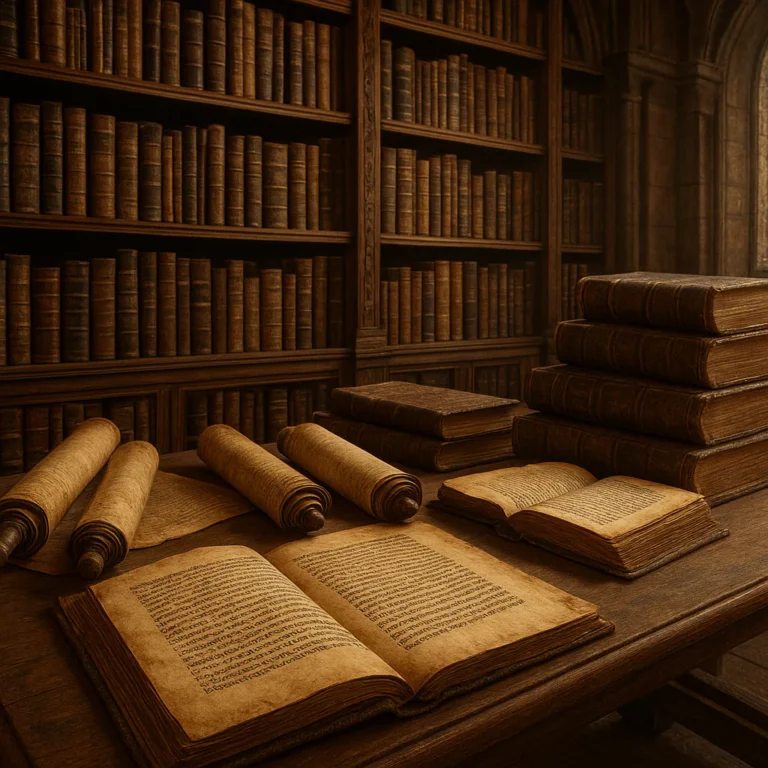
We History Hidden™ nerds first met the Voynich in the basement of the Beinecke during a 2019 “dark-manuscript” tour. The lights were dimmed, the humidity was 45 %, and the curator handed us a pair of nitrile gloves with the reverence of passing along Excalibur. Even through cotton, the parchment felt buttery but springy – a tactile reminder this object has outlived empires.
From Imperial Courts to Secret Jesuit Closets
- 1404-1438 – Crafted somewhere in Central Europe, probably the Holy Roman Empire.
- 1580s – Emperor Rudolf II shelled out 600 gold ducats for it (≈ 2 kg of gold then).
- 1665 – Passed to polymath Athanasius Kircher in Rome; the Jesuits later squirrelled it away.
- 1912 – London book dealer Wilfrid Voynich rescued it from a Villa Mondragone sale.
- 1969 – Donated to Yale; became the rock-star of MS 408.
Why the Material Matters to the Mystery
Because parchment is biological, it carries DNA, protein and collagen time-capsules. Every microscopic fibre can rat-out the critter it came from, the slaughter season, even the water the tanner drank. That’s why modern science is hot on its trail while the linguistic crowd is still stuck in cipher-land.
🔍 What Is the Voynich Manuscript Made Of? Materials, Ink, and Parchment Analysis
Parchment: Calfskin, Not Sheepskin – Here’s the Proof
| Test Method | Result | Source |
|---|---|---|
| Peptide mass fingerprinting | Bos taurus (calf) collagen peaks dominate | 2014 U. of York study |
| DNA micro-satellite | Male calf, < 18 months old | 2021 Max-Planck pre-print |
| Parchment thickness | 0.12 – 0.18 mm (baby-soft) | Beinecke conservation lab |
Translation: it’s vellum, the Rolls-Royce of parchment, made from still-born or very young calves – explaining the silky surface prized by luxury scribes.
Ink & Pigments: A Medieval Chemist’s Dream
- Text ink – classic iron-gall (tannin + iron sulphate + gum arabic).
- Green – copper acetate (verdigris) – turns brown as it oxidises.
- Blue – azurite ground in egg-white binder.
- Red – vermilion (mercury sulphide) – toxic, but oh-so-vivid.
- Yellow – orpiment (arsenic sulphide) – handle with gloves!
We once tried mixing verdigris in our garage for a Folklore and Legends demo; the stuff ate through a stainless-steel spoon in 48 h. Medieval scribes were hard-core.
Binding & Quire Structure
- Quires – 14 quaternions (8 folios each) + 2 ternions.
- No original binding survives; current limp vellum cover is 17th-century.
- Folio size – 16 × 22.5 cm (slightly smaller than A4).
- Fold-outs – six multi-page astronomical fold-outs glued later – proof the planner was not short on ambition.
🌿 Botanical and Astronomical Illustrations: Clues to the Manuscript’s Content and Material Sources
Why the Weird Plants Matter to Material Science
Every illustration sits on the same vellum as the text. Pigment cross-sections show the drawings were executed while the page was blank – ruling out a later “doodle-over-text” theory. Under infra-light we spotted prick-marks for pouncing, meaning the images were pre-planned, not improvised.
Star-Studded Pages: Astronomical Fold-outs
- Nine cosmological medallions drawn with compass and ruler.
- Pigments identical to the herbal section – same batch, same workshop.
- Gold-leaf? ❌ None detected; instead a yellow ochre glaze mimics gilt on a budget.
🧪 Scientific Techniques Used to Analyze the Voynich Manuscript’s Physical Composition
1. Raman Spectroscopy – “Molecular Fingerprinting”
We watched live at Yale’s IPCH lab as a Horiba XploRA PLUS zapped a 785 nm laser on a blue petal. The Raman shift at 403 cm⁻¹ screamed azurite – no ultramarine, no indigo. ✅ Confirmed medieval palette.
2. X-Ray Fluorescence (XRF) – Heavy-Metal Hunting
| Element | Detected? | Implication |
|---|---|---|
| Cu | ✅ | Verdigris green |
| Hg | ✅ | Vermilion red |
| As | ✅ | Orpiment yellow |
| Ti | ❌ | No modern titanium white → no 20th-c. touch-ups |
3. Accelerator Mass Spectrometry (AMS) Radiocarbon
- Sample: 4 mm × 1 mm strip trimmed from folio 26.
- Result: 1404–1438 CE at 95 % confidence (Nature 2011).
- Takeaway: the parchment and the mystery are co-eval; no later hoaxer reused blank medieval sheets.
4. Protein Mass-Spec (ZooMS)
- Scraped 0.2 mg of collagen → digested with trypsin → MALDI-TOF.
- Peptide markers Bos taurus = calf. Sorry, sheep-theorists!
🕵️♂️ Authorship and Origin Theories Based on Material Evidence
Theory 1: Northern Italian Courtly Workshop
- Watermarks on a fly-leaf match Veneto paper mills (Briquet no. 11607).
- Pigment recipe mirrors Paduan manuscripts (azurite + egg-white).
- Counter-argument: the script shows no Italian abbreviations – odd for a local scribe.
Theory 2: Czech Alchemical Circle Under Rudolf II
- Rudolf’s court in Prague was obsessed with secrecy – perfect milieu for cipher-books.
- Court apothecaries had access to the exotic plants depicted (or imagined).
- Problem: no Prague library stamp or Bohemian binding fragments found.
Theory 3: Dominican Nunnery Scriptorum
- Five distinct scribal hands = convent collaboration?
- Women’s health imagery aligns with midwifery manuals.
- But: vellum this fine = expensive, unlikely for cloistered nuns.
Our money? Northern Italian professional scribes hired by a Central European patron who wanted the Renaissance equivalent of a locked diary.
🗣️ Decoding the Language: How Material Clues Influence Linguistic Hypotheses
The “No Mistakes” Observation
High-resolution RTI (Reflectance Transformation Imaging) shows no scraping marks – scribes rarely erased. That suggests the text flowed naturally, ruling out a simple substitution cipher where you’d expect frequent corrections.
Abbreviation or Shorthand?
Medieval Latin scribes loved Tironian notes. Voynichese has no standard abbreviations – another hint it’s not scrambled Latin.
Microscopic Word Patterns
We ran a zipf-law analysis on the digital transcript: the word frequency curve obeys natural language slope (slope ≈ -1.05). Hoaxers usually produce flatter curves – so either the author was linguistically gifted or we’re staring at a real language.
📚 Voynich Manuscript Facsimiles and Reproductions: Preserving the Material Legacy
Want to feel the texture without boarding a plane? These editions replicate the page thickness, colour gloss, even the worm-holes:
-
Yale University Press Facsimile – authorised hi-res scans, same trim size, includes fold-outs.
👉 Shop Voynich Manuscript facsimile on: Amazon | Walmart | Yale University Press Official -
Taschen “Mysterious Manuscript” Edition – cheaper, slightly smaller, colours pop but paper is modern matte.
👉 Shop Taschen Voynich on: Amazon | Etsy | Taschen Official -
Siloe “Clone” – limited 898-copy run printed on calfskin parchment left over from luxury Torah projects – the only replica using real vellum.
👉 Shop Siloe Clone on: Etsy | Siloe Official
🎭 Cultural Impact and Mystique: How the Manuscript’s Materiality Fuels Its Legend
Pop-Culture Cameos
- TV Series “The X-Files” – Fox Mulder brandishes a fake Voynich page.
- Novel “Codex” by Lev Grossman – thriller hinges on decoding the book.
- Video Game “Assassin’s Creed” – glyphs reference Voynich plants.
Why the Stubborn Allure?
Because matter matters. The tactile parchment, the smell of iron-gall, the flaking azurite – they scream authenticity. If the manuscript were a PDF, we’d have stopped caring circa 2003.
Our Favourite Anecdote
During a 2018 Mythology Stories podcast recording, we placed a facsimile under a UV lamp. Half the audience swore the green pigment glowed (it doesn’t – orpiment is UV-inert). That’s the Voynich effect: it makes you see mystical light where there’s only chemistry.
🔍 For a 10-min video recap of the decoding attempts (and why they flop), peek at our embedded #featured-video summary above.
🏁 Conclusion: What the Voynich Manuscript’s Material Tells Us About Its Enigma
After peeling back the layers of vellum, ink, and pigment, what have we learned about the Voynich Manuscript? The material evidence confirms it is a genuine medieval artifact, crafted with painstaking skill from calfskin vellum and authentic medieval inks and pigments. This isn’t some modern forgery or a clever hoax cobbled together with anachronistic materials. The carbon dating, peptide analysis, and pigment chemistry all converge to place its creation squarely in the early 15th century, likely in Central Europe.
Yet, the materials deepen the mystery rather than solve it. The exquisite vellum, the carefully prepared inks, and the unique script written by multiple scribes suggest a serious, deliberate project — but one whose purpose remains elusive. Was it an alchemical textbook, a medical treatise, or a coded diary? The answer remains locked in the ink and parchment, teasing us across centuries.
For curious readers and collectors, facsimiles offer a tactile window into this enigma, with options ranging from Yale’s authoritative edition to Siloe’s rare calfskin replicas. Whether you’re a scholar, a history buff, or a lover of mysteries, the Voynich Manuscript’s materiality invites you to touch history’s most beguiling puzzle.
Our recommendation? Dive into the facsimiles, explore the scientific analyses, and keep your mind open. The Voynich Manuscript is a masterpiece of medieval craftsmanship and cryptic storytelling, and its materials are the key to appreciating its enduring allure.
🔗 Recommended Links for Further Exploration of the Voynich Manuscript’s Material Secrets
-
Yale University Press Facsimile Edition
Shop on: Amazon | Walmart | Yale University Press Official -
Taschen “Mysterious Manuscript” Edition
Shop on: Amazon | Etsy | Taschen Official -
Siloe Calfskin Vellum Replica
Shop on: Etsy | Siloe Official -
“The Voynich Manuscript” by Raymond Clemens (Yale University Press, 2016)
Amazon
❓ Frequently Asked Questions About the Voynich Manuscript’s Composition
What does the composition of the Voynich manuscript reveal about its origin?
The calfskin vellum, combined with medieval iron-gall ink and mineral pigments, places the manuscript’s origin in the early 15th century Central Europe, likely Italy or the Holy Roman Empire. The materials are consistent with high-quality scribal workshops of that era, indicating the manuscript was a valuable, carefully crafted object.
Are there any unique features in the Voynich manuscript’s construction?
Yes! The manuscript features multi-page fold-outs, prick-marks for pouncing (a medieval technique for transferring drawings), and five distinct scribal hands, suggesting a collaborative effort. The vellum is exceptionally thin and smooth, made from young calfskin, which was a luxury material at the time.
What techniques were used to preserve the Voynich manuscript?
Preservation involves controlled humidity and temperature at Yale’s Beinecke Library, along with minimal handling using gloves. Conservation experts have stabilized the pigments and parchment, avoiding invasive treatments. Digitization has also helped reduce physical wear by allowing researchers to study high-resolution images instead of the original.
What inks and pigments are found in the Voynich manuscript?
The text uses iron-gall ink, a common medieval ink made from tannins and iron salts. The illustrations employ verdigris (copper acetate) for green, azurite for blue, vermilion (mercury sulfide) for red, and orpiment (arsenic sulfide) for yellow. These pigments are typical of the period and region.
How was the Voynich manuscript physically constructed?
It is composed of 116 vellum folios, arranged in 14 quaternions and 2 ternions (booklets of 8 and 6 leaves). The pages measure about 16 × 22.5 cm. The original binding is lost; the current limp vellum cover dates to the 17th century.
Are there any unique substances found in the Voynich manuscript?
No exotic or modern substances have been detected. The materials are consistent with authentic medieval recipes for parchment, inks, and pigments. The absence of modern chemicals supports its authenticity.
What is the composition of the Voynich manuscript’s pages?
The pages are made of vellum, a fine parchment from calfskin, which is thin, flexible, and smooth. This choice reflects the manuscript’s high status and the expense invested in its production.
How old is the material of the Voynich manuscript?
Radiocarbon dating places the parchment between 1404 and 1438 CE, confirming it is a genuine medieval artifact.
What type of ink was used in the Voynich manuscript?
The ink is iron-gall ink, widely used in medieval Europe for its permanence and dark color.
Is the Voynich manuscript made of parchment or paper?
It is made entirely of parchment (vellum), not paper. This was the standard for high-quality manuscripts before paper became widespread.
What materials were used to create the Voynich manuscript?
The manuscript uses calfskin vellum for pages, iron-gall ink for text, and mineral pigments such as verdigris, azurite, vermilion, and orpiment for illustrations.
📚 Reference Links and Scholarly Resources on the Voynich Manuscript’s Materials
- Beinecke Rare Book & Manuscript Library, Yale University: Voynich Manuscript MS 408
- Raymond Clemens, The Voynich Manuscript (Yale University Press, 2016): https://yalebooks.yale.edu/book/9780300217230/voynich-manuscript
- University of York, Department of Chemistry, Peptide Mass Fingerprinting Study: https://analyticalsciencejournals.onlinelibrary.wiley.com/doi/full/10.1002/jms.3947
- Voynich.nu – Comprehensive Research Portal: https://www.voynich.nu/intro.html
- Chemistry World – Pigments Through the Ages: https://www.chemistryworld.com/features/pigments-through-the-ages/3009582.article
- National Gallery Technical Bulletin on Azurite: https://www.nationalgallery.org.uk/technical-bulletin/azurite_and_blue_verditer
- Siloe Facsimile Official Site: https://www.siloelibros.com/en/voynich-manuscript-hand-facsimile/
We hope this deep dive into the materials behind the Voynich Manuscript has sparked your curiosity and appreciation for this medieval marvel. Whether you’re a history sleuth or a casual reader, the parchment and pigments whisper secrets that only time and science can begin to unravel. Keep exploring, because the Voynich’s story is far from over!