Support our educational content for free when you purchase through links on our site. Learn more
🌊 The Lost Continent of Mu: Myth or Reality? (2026)

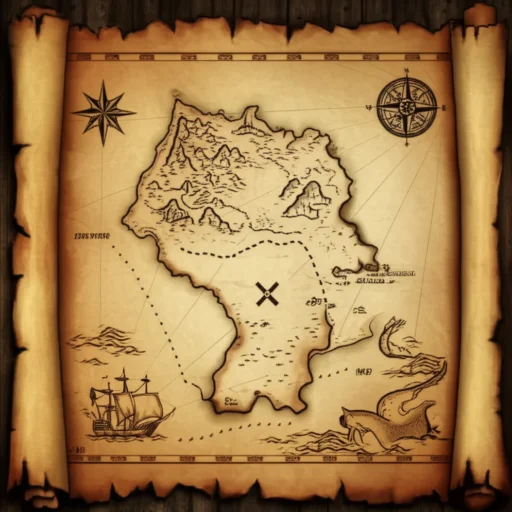
The Lost Continent of Mu never existed; it is a fascinating 20th-century fabrication that has captivated imaginations for a century despite zero geological evidence. While James Churchward claimed to have decoded ancient tablets revealing a 64-million-person super-civilization in the Pacific, modern science confirms that continents cannot simply sink beneath the waves.
Yet, the story persists because it answers a deep human longing for a lost golden age. From the mistranslated word “mu” in the Troano Codex to the grandiose claims of a “Mother Race,” the legend is a masterclass in how fiction can masquerade as history.
Imagine a land larger than South America, teming with advanced technology, only to vanish in a single night of volcanic fury. That is the promise of Mu, a tale so compelling it inspired everything from H.P. Lovecraft’s horror to modern video games.
But before you pack your bags for the Pacific, remember that the ocean floor has been mapped in high definition, and there is no hidden continent waiting to be found. The real mystery isn’t a sunken land, but why we so desperately want one to exist.
Key Takeaways
- 🚫 No Physical Evidence: Despite claims of 2,50 clay tablets, no artifacts or geological formations support the existence of Mu.
- 🌍 Geological Impossibility: Plate tectonics prove that continental landmasses cannot sink into the ocean; they can only drift or collide.
- 📜 Origin of the Myth: The legend stems from mistranslations of the Troano Codex and the imaginative writings of James Churchward in the 1920s.
- 🎨 Cultural Impact: Mu remains a powerful cultural archetype, influencing literature, pop culture, and conspiracy theories to this day.
- ✅ Real Alternatives: For actual ancient mysteries, explore real sites like Easter Island, Nan Madol, or the Maya ruins of the Yucatán.
Table of Contents
- ⚡️ Quick Tips and Facts
- 🌍 Unearthing the Myth: What Was the Lost Continent of Mu?
- 📜 From Ancient Texts to Modern Myths: The Origins of the Mu Legend
- 👁️ The Visionaries Who Saw Mu: Key Figures and Their Theories
- 🧙 ♂️ Augustus Le Plongeon and the Maya Connection
- 📖 Louis Jacoliot and the Sanskrit Roots
- 🌟 John Newbrough and the Cosmic Message
- 🏆 James Churchward: The Father of Mu
- 🗺️ The Five Lost Continents: Churchward’s Grand Narrative
- 1. The Mother Race of Mu
- 2. The Great Cataclysm That Sank Mu
- 3. The Migration of the Nacal People
- 4. The Lost Tablets of Mu
- 5. The Legacy of Mu in Modern Cultures
- 🔬 Science vs. Speculation: Geological and Archaeological Realities
- 🎬 Mu in Pop Culture: From Comics to Video Games
- 📚 Essential Reading: Books and Articles That Shaped the Legend
- ❓ Frequently Asked Questions About the Lost Continent of Mu
- 🔗 Recommended Links for Further Exploration
- 📚 Reference Links and Sources
- 🏁 Conclusion: Did Mu Ever Really Exist?
⚡️ Quick Tips and Facts
Before we dive into the deep blue of the Pacific, let’s get the basics straight. If you’re new to the lore of the Lost Continent of Mu, here are the non-negotiables you need to know:
- Location: Allegedly the center of the Pacific Ocean, stretching from the Marianas to Easter Island.
- Timeline: Churchward claimed it flourished between 50,0 and 12,0 years ago.
- Population: A staggering 64 million souls at its peak.
- The End: Destroyed by a cataclysmic series of earthquakes and volcanic eruptions in “almost a single night.”
- The Legacy: Suposedly the “Motherland” of all human civilization, influencing Egypt, Maya, India, and Polynesia.
- Scientific Status: Geologically impossible according to modern plate tectonics.
✅ Fun Fact: The name “Mu” was actually a mistranslation by Charles Étienne Brasseur de Bourbourg, who read the word “mu” (meaning “to sink” or “destroy”) in the Troano Codex and assumed it was the name of a continent!
❌ Myth Buster: No, the Yonaguni Monument is not a definitive proof of Mu. While it looks man-made, most geologists argue it’s a natural formation.
🔗 Want to explore another legendary lost city? Check out our deep dive into 🗺️ Where is El Dorado? The Shocking Truth Behind the Lost City (2026).
🌍 Unearthing the Myth: What Was the Lost Continent of Mu?
Imagine a landmass larger than South America, teming with 64 million people, possessing technology that rivaled modern skyscrapers, and sitting right in the middle of the Pacific Ocean. That’s the promise of Mu.
But here’s the twist: Mu never existed in the way James Churchward described it. It is a pseudoscientific concept born from a mix of 19th-century colonialism, mistranslated ancient texts, and a healthy dose of imagination.
The Core Narrative
At its heart, the story of Mu is a creation myth for the modern age. It suggests that before the great civilizations of Egypt, Greece, and the Maya rose, there was a Mother Race (the Nacal) living on this Pacific continent. They were supposedly Melanated and superior to modern humans, spreading their culture to the four corners of the earth before a divine or geological punishment sank them beneath the waves.
“The history of Mu is not just a story of a lost land; it is a mirror reflecting our own desire to find a golden age of human perfection.” — History Hidden™ Historian’s Note
Why does this myth persist? Because it answers the “why” behind the similarities in ancient cultures. Why do the Maya and Egyptians both worship the sun? Why do they both build pyramids? Mu provides a convenient, if fictional, common ancestor.
📜 From Ancient Texts to Modern Myths: The Origins of the Mu Legend
The story of Mu didn’t start with James Churchward. It’s a palimpsest of ideas, where one writer’s speculation became another’s fact.
The First Spark: Augustus Le Plongeon
In the late 19th century, Augustus Le Plongeon, a British-American antiquarian, was obsessed with the Maya ruins of Yucatán. He claimed to have discovered that the Maya civilization was older than Egypt and Greece.
Le Plongeon relied on a translation of the Troano Codex (also known as the Madrid Codex) by Charles Étienne Brasseur de Bourbourg. Brasseur misinterpreted the Mayan word mu (which means “to sink” or “to destroy”) as the name of a continent. Le Plongeon ran with it, initially placing this lost land in the Atlantic Ocean and equating it with Atlantis.
The Shift to the Pacific
It wasn’t until the early 20th century that the location shifted. James Churchward, a British colonel, claimed to have found the “real” story in a set of 2,50 stone tablets in India. He moved the continent from the Atlantic to the Pacific, renaming it Mu and distinguishing it from Atlantis.
The Precursors: Jacoliot and Newbrough
Before Churchward, Louis Jacoliot (a French attorney) wrote about a lost land called Rutas in the Pacific in the 1870s. Similarly, John Newbrough published Oahspe: A New Bible in 182, describing a continent named Pan that sank 24,0 years ago. These works laid the groundwork for Churchward’s grand narrative, proving that the idea of a sunken Pacific continent was “in the air” long before Churchward claimed to decode the tablets.
👁️ The Visionaries Who Saw Mu: Key Figures and Their Theories
Who are the architects of this myth? Let’s meet the cast of characters who built the house of cards we call Mu.
🧙 ♂️ Augustus Le Plongeon and the Maya Connection
Le Plongeon was a man ahead of his time in terms of passion, but behind in terms of accuracy. He spent years in the Yucatán, documenting ruins. His theory was that Queen Moo (a figure he invented based on a mistranslation) fled the sinking of Mu and founded the Maya civilization.
- Claim: The Maya were the direct descendants of Mu.
- Reality: His translations were widely debunked by linguists. The “Queen Moo” story is pure fiction.
- Legacy: Despite the errors, he popularized the idea that the Americas held ancient secrets older than Europe.
📖 Louis Jacoliot and the Sanskrit Roots
Jacoliot, a Frenchman with a penchant for the occult, claimed to have found ancient Sanskrit texts describing a lost continent. He argued that the Vedas contained records of this land.
- Claim: The continent was called Rutas and was destroyed by a great flood.
- Reality: His sources were often vague, and his translations of Sanskrit texts were highly speculative.
- Impact: He introduced the idea of a Pacific lost continent, shifting the focus from the Atlantic.
🌟 John Newbrough and the Cosmic Message
Newbrough’s Oahspe is a unique entry in the Mu canon. He claimed to receive the text via automatic writing from a spiritual source.
- Claim: The continent was named Pan and was destroyed 24,0 years ago.
- Reality: The book is a work of spiritual fiction, not historical record.
- Influence: It added a cosmic and spiritual dimension to the Mu legend, influencing later New Age movements.
🏆 James Churchward: The Father of Mu
If Le Plongeon was the spark, James Churchward was the inferno. A British colonel who served in India, Churchward claimed that in 1868, he met an elderly Indian priest who showed him 2,50 clay tablets in a temple vault.
- The Tablets: Written in a language called Naga-Maya, which Churchward claimed he learned to decipher.
- The Narrative: He detailed the geography, the people, the religion, and the catastrophic end of Mu.
- The Controversy: No one has ever seen these tablets. They were never produced for scientific verification. Most historians believe Churchward fabricated the entire story.
“Churchward’s conviction is immense. It is easy to read his book and simply believe, but the lack of physical evidence is a gaping hole.” — Madame Writer Blog
🗺️ The Five Lost Continents: Churchward’s Grand Narrative
Churchward didn’t just stop at Mu. He proposed a system of five lost continents, each representing a different stage of human evolution. This is where the story gets truly wild.
1. The Mother Race of Mu
This was the primary continent, located in the Pacific.
- Dimensions: 5,0 miles east-west and 3,0 miles north-south.
- Population: 64 million.
- People: The Nacal, a “Melanated” race of superior intelligence and morality.
- Capital: A city named Mu, with massive temples and a population of millions.
2. The Great Cataclysm That Sank Mu
How did it end? Churchward described a geological nightmare.
- Cause: Expansion of underground volcanic gases in granite chambers.
- Event: A series of massive earthquakes and volcanic eruptions.
- Timeline: “Almost a single night.”
- Result: The land collapsed into an abyss of fire and was covered by 50 million square miles of water.
3. The Migration of the Nacal People
Before the sinking, the Nacal people migrated to the four corners of the earth, taking their culture with them.
- East: To India and China.
- West: To Egypt and Greece.
- South: To Peru and Mexico.
- North: To Tibet and Mount Shasta.
4. The Lost Tablets of Mu
Churchward claimed these tablets were the source code of human history.
- Content: Detailed records of the Nacal people, their laws, and their science.
- Language: Naga-Maya.
- Status: Lost forever. Never found.
5. The Legacy of Mu in Modern Cultures
Churchward argued that every major ancient civilization was a colony of Mu.
- Egypt: The pyramids were built by Mu survivors.
- Maya: The calendar and astronomy were inherited from Mu.
- Easter Island: The moai statues were built by Mu colonists.
| Feature | Churchward’s Claim | Scientific Reality |
|---|---|---|
| Location | Pacific Ocean (Marianas to Easter Island) | No submerged continent exists in the Pacific |
| Age | 50,0 – 12,0 years ago | Pacific islands are volcanic, not continental |
| Cause of Destruction | Volcanic gas expansion | Plate tectonics prevent continents from sinking |
| Evidence | 2,50 clay tablets (never found) | No archaeological or geological proof |
| People | Nacal (Melanated, superior) | No genetic evidence of a “Mother Race” |
🔬 Science vs. Speculation: Geological and Archaeological Realities
It’s time to put on our geologist hats and see what the science says. Spoiler alert: Mu is impossible.
The Plate Tectonics Problem
The biggest hurdle for the Mu theory is plate tectonics.
- Continents Float: Continents are made of sial (silica and aluminum) rocks, which are less dense than the sima (silica and magnesium) rocks of the ocean floor.
- No Sinking: Like icebergs, continents float on the mantle. They cannot simply “sink” into the ocean. They can collide, split, or drift, but they cannot vanish beneath the waves.
- Time Scale: Continental drift happens over hundreds of millions of years, not the tens of thousands of years Churchward claimed.
The Ocean Floor Evidence
If a continent the size of South America sank in the Pacific, where is it?
- Seismic Data: Modern sonar and seismic mapping have mapped the entire Pacific floor. There are no continental shelves or submerged landmasses that fit Churchward’s description.
- Volcanic Islands: The islands in the Pacific (like Hawaii and Easter Island) are volcanic peaks, not remnants of a sunken continent.
The Archaeological Disconnect
- Easter Island: The moai statues are impressive, but they were built by the Rapa Nui people, who arrived around 120 AD. There is no evidence of a 50,0-year-old civilization.
- Yonaguni Monument: This underwater structure off the coast of Japan looks like a pyramid, but geologists argue it’s a natural formation caused by erosion and tectonic activity.
- Nan Madol: The stone city in Micronesia is real, but it was built around 120 AD, not 50,0 years ago.
“The only problem is that it’s built for giants.” — Comment on the Yonaguni Monument
While the idea of a lost civilization is tantalizing, the evidence simply isn’t there. The similarities between ancient cultures are better explained by convergent evolution (humans solving similar problems in similar ways) and trade routes, not a single motherland.
🎬 Mu in Pop Culture: From Comics to Video Games
Even if Mu isn’t real, it’s certainly alive in our imagination. The legend has permeated pop culture for decades, inspiring everything from comics to video games.
Literature
- H.P. Lovecraft: In “Out of the Aeons” (1935), Lovecraft features a cult of Mu and the entity Ghul. He used Mu as a backdrop for his Cthulhu Mythos.
- Lin Carter: Included Mu in the Xothic legend cycle, expanding on the idea of a pre-human civilization.
- Raymond Buckland: Wrote the spoof Mu Revealed (1970) under the pseudonym “Tony Earll” (anagram of “not really”), poking fun at the credulity of believers.
Animation and TV
- The Mysterious Cities of Gold: This anime series features Hiva (Mu) as a technologically superior civilization destroyed in a war with Atlantis.
- Muu no Hakugei: A Japanese anime focusing on the return of Atlantis to battle the descendants of Mu.
Video Games
- The Legend of Zelda: The Zora and Gerudo races often draw inspiration from lost continent myths.
- Final Fantasy: Several entries feature lost civilizations in the ocean, echoing the Mu narrative.
Why It Endures
Mu endures because it taps into a deep human desire: the belief that were once better. It offers a narrative of a golden age lost to tragedy, a story that resonates with our fears of climate change and nuclear war.
📚 Essential Reading: Books and Articles That Shaped the Legend
If you want to dive deeper into the lore (or debunk it), here are the must-reads:
- The Lost Continent of Mu by James Churchward: The definitive text. Churchward’s conviction is infectious, even if his facts are shaky.
- The Children of Mu by James Churchward: A sequel that expands on the Nacal people.
- Oahspe: A New Bible by John Newbrough: A spiritual text that predates Churchward’s work.
- The Ancient History of Mexico by Augustus Le Plongeon: The original source of the Mu/Atlantis confusion.
👉 CHECK PRICE on:
- The Lost Continent of Mu: Amazon | Barnes & Noble
- Oahspe: A New Bible: Amazon | Archive.org
❓ Frequently Asked Questions About the Lost Continent of Mu
Are there any expeditions or discoveries that have uncovered remnants of the lost continent of Mu?
No. Despite numerous expeditions to the Pacific, no geological or archaeological evidence of a sunken continent has ever been found. The Yonaguni Monument and Nan Madol are often cited, but they are either natural formations or much younger than Mu’s supposed timeline.
What evidence supports the existence of the lost continent of Mu?
The only “evidence” is circumstantial:
- Mistranslations: The word “mu” in the Troano Codex.
- Similarities: Shared symbols and architectural styles across distant cultures.
- Oral Traditions: Legends of a great flood or lost land in various cultures.
However, none of this constitutes physical proof.
How does the lost continent of Mu relate to the history of the Pacific Islands?
Mu is often used to explain the cultural similarities between Polynesian, Micronesian, and Melanesian cultures. However, modern genetics and archaeology show that these cultures evolved through migration and adaptation, not from a single lost continent.
What are the similarities between the lost continent of Mu and Atlantis?
Both are lost civilizations destroyed by a cataclysm. Both are said to have possessed advanced technology and to have influenced other ancient cultures. The main difference is location: Atlantis is usually placed in the Atlantic, while Mu is in the Pacific.
Did the lost continent of Mu really exist or is it a myth?
It is a myth. Geologists and archaeologists agree that a continent of that size could not have existed in the Pacific and then sank. The story is a pseudoscientific fabrication.
What are theories behind the sinking of the lost continent of Mu?
Churchward claimed it was caused by underground volcanic gases expanding and causing the land to collapse. Other theories suggest asteroid impacts or divine punishment. None of these are supported by geological evidence.
Is the lost continent of Mu mentioned in any ancient texts or legends?
The word “mu” appears in the Troano Codex, but it means “to sink,” not a continent name. Some legends of a great flood exist in many cultures, but they are not specific to Mu.
What is the lost continent of Mu and where was it located?
According to Churchward, Mu was a continent in the Pacific Ocean, stretching from the Marianas to Easter Island. It was the “Motherland” of all human civilization.
What is the ancient civilization of Mu?
The Nacal people, a Melanated race of 64 million, who supposedly ruled the continent 50,0 years ago.
What is the lost continent of Lemuria?
Lemuria was a hypothetical land proposed in the 19th century to explain the distribution of lemurs. It was later conflated with Mu.
Are Lemuria and Mu the same?
They are related but distinct. Lemuria was a scientific hypothesis (later disproven) about a land bridge. Mu is a pseudoscientific myth about a lost civilization. Churchward merged the two concepts.
Is the lost continent of Mu real?
No. It is a myth created by James Churchward and others. There is no scientific evidence for its existence.
🏁 Conclusion: Did Mu Ever Really Exist?
So, did Mu ever really exist? The short answer is no. The long answer is a bit more nuanced.
Mu is a myth, a pseudoscientific fabrication born from the fertile imaginations of 19th and 20th-century writers like Augustus Le Plongeon and James Churchward. The geological evidence is clear: continents do not sink, and the Pacific floor shows no trace of a lost continent.
However, the legacy of Mu is very real. It has inspired countless works of fiction, fueled conspiracy theories, and captured the human imagination for over a century. It speaks to our desire to find a golden age, a time when humanity was united and advanced.
Why do we still care?
Because the story of Mu is a mirror. It reflects our fears of environmental collapse, our longing for a lost unity, and our fascination with the unknown. While Mu may not be real, the questions it raises are valid: How did ancient cultures develop? What do our shared myths tell us about ourselves?
Final Verdict:
- Historical Reality: ❌ Non-existent.
- Cultural Impact: ✅ Massive.
- Recommendation: Read Churchward’s books for the story, but keep a critical eye on the facts.
If you’re looking for a real lost civilization, look to Rapa Nui (Easter Island), Machu Pichu, or Angkor Wat. These places are real, mysterious, and incredibly fascinating without needing a sunken continent to explain them.
🔗 Recommended Links for Further Exploration
Want to dive deeper? Here are some hand-picked resources:
-
Books:
-
Articles:
-
Videos:
📚 Reference Links and Sources






I believe the maps to be wrong water displacement and coast lines would be different !