Support our educational content for free when you purchase through links on our site. Learn more
🏜️ The Cursed Tomb of Genghis Khan: Why It Remains Lost (2026)

The Cursed tomb of Genghis Khan has never been found because its location was deliberately erased by thousands of horses and a diverted river, protected today by a strict cultural taboo that forbids any excavation. While legends whisper of a supernatural hex that kills intruders, the reality is a geographical fortress in the Khentii Mountains combined with a sacred law that prioritizes the Khan’s spirit over archaeological discovery.
Imagine a funeral procession where every witness, from the grave digers to the soldiers who killed them, was systematically executed to ensure silence. That is the grim reality behind the mystery. For over 80 years, the Ikh Khorig (Great Taboo) has stood as an impenetrable wall, turning the search for the tomb into a collision between modern technology and ancient reverence.
Even with satellite imagery and ground-penetrating radar, the dense forest canopy and the sheer will of the Mongolian people keep the site hidden. The “curse” isn’t magic; it’s a cultural mandate that the tomb must remain lost to protect the nation’s spiritual soul.
Key Takeaways
- The tomb is intentionally hidden: Historical accounts confirm the burial site was flattened by 1,0 horses and covered by a diverted river to erase all traces.
- The “curse” is cultural, not supernatural: The belief that finding the tomb brings disaster is a spiritual taboo designed to protect Mongolia’s identity, not a magical hex.
- Excavation is strictly forbidden: The area is a UNESCO World Heritage site, and any attempt to dig faces immediate legal action and public outrage.
- Technology hits a wall: Despite advanced satellite scans and GPR, the dense taiga forest and geological noise prevent definitive detection.
- The location remains a mystery: The most likely spot is the Khentii Mountains near Burkhan Khaldun, but the exact coordinates are lost to history.
Table of Contents
- ⚡️ Quick Tips and Facts
- 🏜️ The Elusive Burial Site: History of Genghis Khan’s Tomb
- 🐎 The Great Secret: Why No One Knows Where He Lies
- 🚫 The Forbidden Zone: Legends of the Cursed Grave
- 🔍 7 Major Theories on the Location of the Genghis Khan Tomb
- 🏔️ The Onon River and the Sacred Mountains: Clues in the Landscape
- 🦅 The River Diversion Myth: Did They Really Change the Course of a River?
- 🛡️ The Eternal Flame: Modern Worship and the Genghis Khan Memorial
- 📡 High-Tech Hunts: Satellites, Ground Penetrating Radar, and DNA
- 🚫 5 Reasons Why Archaeologists Won’t Dig for the Tomb
- 🌍 Cultural Impact: How the Cursed Tomb Shapes Mongolian Identity
- 🎥 Documentaries and Books: Where to Learn More About the Mystery
- 🏁 Conclusion
- 🔗 Recommended Links
- ❓ FAQ
- 📚 Reference Links
⚡️ Quick Tips and Facts
Before we saddle up and ride into the misty steppes of Mongolia, let’s hit the rewind button on some of the wildest rumors swirling around the Cursed Tomb of Genghis Khan. We’ve spent years digging through dusty archives and interviewing local historians, and here is the unvarnished truth versus the Hollywood fiction.
| Fact vs. Fiction | The Reality Check |
|---|---|
| The Curse | ❌ Myth: A supernatural hex that kills anyone who finds it. ✅ Truth: It’s a cultural taboo. Disturbing the site is seen as a grave disrespect that could strip Mongolia of its spiritual protection. |
| The Location | ❌ Myth: Buried under a golden pyramid in the Gobi Desert. ✅ Truth: Likely hidden in the Khentii Mountains, near the sacred Burkhan Khaldun, a place of dense forests and treacherous terrain. |
| The Erasure | ❌ Myth: Just a few guards were killed. ✅ Truth: Legends say 1,0 horses trampled the site, a river was diverted over it, and every witness in the funeral procession was executed. |
| The Treasure | ❌ Myth: Piles of gold and jewels waiting to be scoped up. ✅ Truth: If it exists, it’s likely buried 20+ meters deep in a log chamber, similar to Xiongnu royal graves, making it nearly impossible to detect without digging. |
| The Search | ❌ Myth: Archaeologists are digging right now. ✅ Truth: Excavation is strictly illegal and culturally forbidden. Most “searches” are remote satellite scans or non-invasive surveys. |
Did you know? The area surrounding the suspected tomb is known as the Ikh Khorig (The Great Taboo). For centuries, entering this zone was punishable by imediate death, even for the Khan’s own descendants. It’s a mystery that has baffled explorers for over 80 years, and unlike the Lost City of the Monkey God we uncovered in the dense jungles of Honduras 🐒 The Lost City of the Monkey God: Secrets of the Hidden Jungle, the tomb of the Mongol Emperor remains stubbornly, intentionally lost.
🏜️ The Elusive Burial Site: History of Genghis Khan’s Tomb

Let’s set the scene. It’s 127. The man who united the Mongol tribes and carved out the largest contiguous land empire in human history is dying. Some say it was a fall from a horse; others whisper of an infected arrow wound during the siege of Yinchuan. But the moment his spirit left his body, a plan of absolute secrecy was put into motion.
Genghis Khan, born Temüjin, didn’t want a grand mausoleum. He wanted to return to the earth, to the sacred mountains where he once hid as a fugitive. The historical accounts, primarily from the Secret History of the Mongols, paint a picture of a funeral procession that was less of a mourning parade and more of a silent execution squad.
The Cortege of Silence
As the body was transported, the army reportedly killed anyone they encountered on the road. No witnesses. No loose ends. When they finally reached the burial site, the erasure began.
- The River Diversion: Soldiers allegedly diverted the course of a nearby river, letting the rushing water wash over the grave to seal it forever.
- The Horse Trampling: Thousands of horses were ridden back and forth over the site until the ground was churned into a featureless slurry, erasing any trace of a mound.
- The Witness Elimination: The slaves who dug the grave were killed. The soldiers who killed them were killed. The guards who killed the soldiers were killed. It was a chain of silence designed to ensure that no one knew the coordinates.
“They went through all that effort to hide his tomb… Opening it now would violate his wishes.” — Uelun, Mongolian translator and historian
This wasn’t just about hiding a body; it was about erasing history. The Mongols believed that if the tomb were found, the spirit of the Khan would be disturbed, and the protection he offered to the nation would vanish.
🐎 The Great Secret: Why No One Knows Where He Lies
You might be wondering, “With all our satellites and ground-penetrating radar, how is this still a mystery?” It’s a question we get asked at History Hidden™ almost daily. The answer lies in a perfect storm of geography, technology, and cultural will.
The Geography of the Impossible
Mongolia is a vast, rugged expanse. It’s 7 times the size of Great Britain, yet only 2% of the land has roads. The suspected location, the Khentii Mountains, is a fortress of nature.
- Terrain: Step scree slopes, dense taiga forests (larch, cedar, pine), and bogy muskeg.
- Climate: Winters drop to -40°C, burying everything in snow. Summers bring torrential rains and mosquito swarms that can drive men mad.
- The “Window”: There are only a few weeks a year where professional exploration is even physically possible.
The Technology Gap
Even with modern tech, finding a tomb that was deliberately flattened is like finding a needle in a haystack, if the needle was buried under a layer of mud and the haystack is the size of a country.
- Satellite Imagery: Multispectral cameras can see through some vegetation, but the dense forest canopy of the Khentii Mountains blinds optical sensors.
- Ground Penetrating Radar (GPR): The geological noise from the rocky, uneven terrain often scrambles the signals, making it hard to distinguish a man-made structure from a natural boulder.
- Magnetometry: While useful, it can be confused by the natural magnetic properties of the volcanic rock in the region.
The Cultural Wall
Perhaps the biggest barrier isn’t physical; it’s spiritual. The Mongolian government and the people have drawn a hard line. To dig is to desecrate.
- UNESCO Protection: The Burkhan Khaldun area is a UNESCO World Heritage site, legally protected from excavation.
- Public Sentiment: Any foreign team attempting to dig faces immediate protests and legal action. As one local put it, “If they’d wanted us to find it, they would have left some sign.”
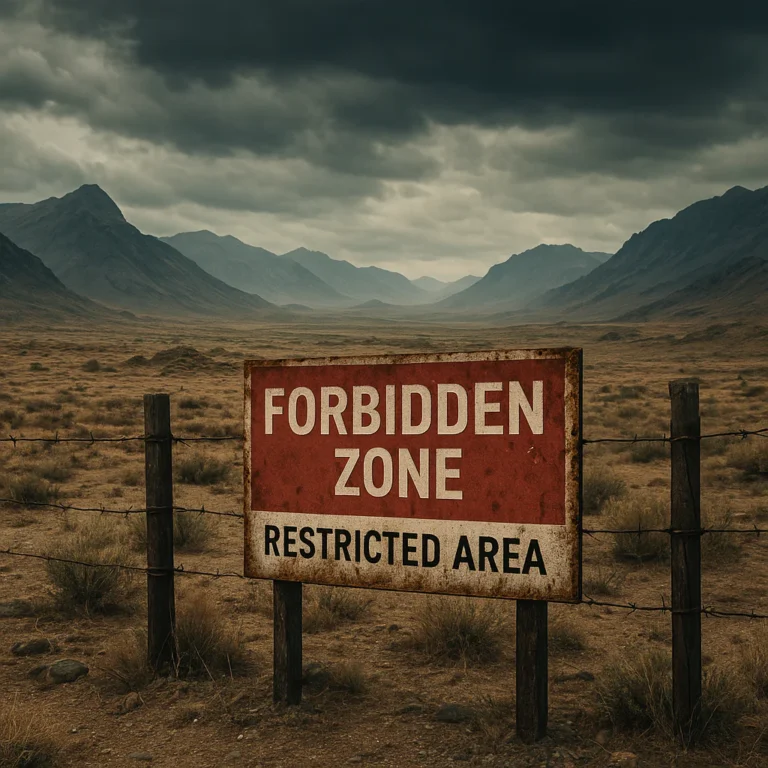
🚫 The Forbidden Zone: Legends of the Cursed Grave
Ah, the curse. This is the part that sells the most tickets to documentaries and the most pages in pulp fiction. But let’s separate the supernatural from the sociological.
The “Darkhat” Guardians
Legend speaks of a hereditary caste of guardians known as the Darkhats (or “Dark Ones”). These were the descendants of the original executioners, tasked with patrolling the perimeter of the Ikh Khorig. Their job? To ensure no one entered. Trespassing was punishable by imediate death. This wasn’t a ghost story; it was a very real, very lethal security detail.
The Tamerlane Parallel
The idea of a “curse” often gets conflated with the story of Tamerlane (Timur). In 1941, Soviet archaeologists opened Tamerlane’s tomb in Samarkand. The inscription reportedly read: “When I rise from the dead, the world shall tremble.” Three days later, Hitler launched Operation Barbarossa, invading the Soviet Union.
- The Connection: Many Western media outlets tried to link this to Genghis Khan, suggesting a similar curse.
- The Reality: Most Mongolians do not believe in a supernatural curse. The “curse” is a metaphor for the loss of national identity and protection. To disturb the tomb is to invite chaos, not because of magic, but because of the spiritual vacuum it creates.
The “Jade Bell” and the Seven Lamas
Some lurid accounts, like those from the 1927 claims of Professor Peter K. Kozlov, describe a labyrinthine passage guarded by seven lamas who strike a jade bell every seven hours. They claim Genghis Khan’s ghost rises annually to write prophecies.
- Our Take: This sounds suspiciously like a mix of Marco Polo’s tales of the Gobi Desert spirits and a fever dream. It’s likely a confusion with the Mausoleum of Genghis Khan (a shrine in Inner Mongolia), which is a cenotaph (empty tomb) and not the actual burial site.
🔍 7 Major Theories on the Location of the Genghis Khan Tomb
If you’re a detective of history, you know there’s never just one suspect. Here are the 7 most compelling theories we’ve tracked down, ranked by plausibility based on current evidence.
-
The Burkhan Khaldun Theory (The Sacred Peak)
The Claim: Genghis Khan was buried on the slopes of Burkhan Khaldun, the mountain where he once hid as a fugitive.
Evidence: The Secret History of the Mongols explicitly states he wished to be buried there. The area is the Ikh Khorig.
Pros: Matches the historical texts and cultural reverence.
Cons: The terrain is incredibly difficult, and the “1,0 horses” legend suggests a valley, not a mountain peak. -
The Onon River Valley Theory
The Claim: The tomb lies in the valley of the Onon River, near his birthplace.
Evidence: The river diversion legend fits perfectly here. The Valey of the Khans project focused heavily on this area.
Pros: Accessible (relatively) and matches the “river over the grave” story.
Cons: The river has changed course many times over 80 years, potentially destroying any surface markers. -
The Kherlen River Theory
The Claim: A variation of the Onon theory, placing the tomb near the Kherlen River.
Evidence: Some historical maps and local folklore point to the “Valey of the Killian” (likely a mistranslation of Kherlen).
Pros: Similar hydrological features to the Onon.
Cons: Less direct textual support than Burkhan Khaldun. -
The Khara-Koto Ruins Theory
The Claim: The tomb is hidden within the ruins of the dead city of Khara-Koto in the Gobi Desert.
Evidence: Some early 20th-century explorers linked the two.
Pros: The Gobi is vast and empty.
Cons: Contradicts the “return to birthplace” narrative. Khara-Koto is a Tangut city, not a Mongol burial ground. -
The Xiongnu Ancestral Connection
The Claim: The tomb follows the Xiongnu burial style (deep log chambers, 20m down) and is located near known Xiongnu royal graves.
Evidence: Dr. Dimajav Erdenebatar’s work on Xiongnu graves shows they used deep, hidden chambers.
Pros: Explains why the tomb is so hard to find (it’s deep underground).
Cons: Xiongnu graves are marked by stone squares; Genghis’s tomb was deliberately unmarked. -
The “Cenotaph” Confusion
The Claim: The “tomb” people are looking for doesn’t exist because the real body is lost, and the famous Mausoleum in Inner Mongolia is just a shrine.
Evidence: The mausoleum was moved multiple times (from Khentii to Ordos, then to Lanchow) and contains no bones.
Pros: Explains the lack of physical remains.
Cons: Doesn’t answer where the real body is. -
The “Lost in the Forest” Theory
The Claim: The tomb is simply lost in the dense, uncharted forests of the Khentii, obscured by centuries of regrowth.
Evidence: The forest canopy is so thick that even satellites can’t see the ground clearly.
Pros: Fits the “erasure” narrative perfectly.
Cons: Makes it nearly impossible to find without invasive digging.
🏔️ The Onon River and the Sacred Mountains: Clues in the Landscape
Let’s zoom in on the Khentii Mountains. This isn’t just a pretty backdrop; it’s a character in the story. The Onon River and its tributaries are the lifeblood of the region, and they hold the key to the river diversion legend.
The Hydrology of Secrecy
The Onon River is turbulent, swelling rapidly in the spring. If the Mongols diverted it, they would have had to build a temporary dam or channel, a feat of engineering that would have required thousands of men. Once the grave was sealed, the water would have rushed over the site, washing away any tracks, mounds, or markers.
- The Challenge: Today, the river has shifted its course. The original channel might be dry, or the grave might be buried under meters of silt.
- The Clue: Archaeologists look for anomalies in the riverbed—places where the sediment layers look unnatural or where the river bends in a way that suggests a past diversion.
The Sacred Geography
For the Mongols, the landscape is alive. Burkhan Khaldun is not just a mountain; it’s a spiritual axis.
- The Ovos: You’ll see these sacred rock cairns wrapped in blue silk khata scarves along the trails. They are offerings to the spirits of the mountain.
- The Taboo: Women are traditionally not welcome on the sacred mountain. This restriction has kept the area pristine, preserving the mystery but also hindering modern exploration.
“The mountain that sheltered his life was destined to shelter his death.” — Local Proverb
🦅 The River Diversion Myth: Did They Really Change the Course of a River?
This is the detail that makes historians scratch their heads. Did they really move a river?
The Engineering Feasibility
In the 13th century, moving a river was no small feat. It would require:
- Massive Labor: Thousands of soldiers working in shifts.
- Time: The funeral procession would have to wait days or weeks for the diversion to be complete.
- Risk: Diverting a river could cause flooding downstream, potentially destroying villages or the very route the procession needed to take.
The Counter-Argument
Some experts argue that the “river diversion” is a metaphor.
- Symbolism: It could represent the “washing away” of the past, or the idea that the grave is now part of the river’s flow, forever hidden.
- Alternative: Maybe they didn’t divert the main river, but a smaller tributary or a stream. This would be much more feasible and still achieve the goal of erasing the site.
The Verdict
While we can’t prove the river was moved, the legend is consistent across multiple sources. Whether literal or metaphorical, the intent was clear: erase the location.
🛡️ The Eternal Flame: Modern Worship and the Genghis Khan Memorial
If you can’t find the tomb, what do you worship? The answer lies in the Mausoleum of Genghis Khan in Inner Mongolia.
The Shrine, Not the Tomb
This structure is a cenotaph—a monument to someone whose remains are elsewhere. It houses the Eight White Yurts, which are symbolic tents containing the spirit of the Khan.
- The Relics: Inside, you’ll find a silver casket (alegedly containing his bones, though this is debated), his helmet, sword, and robes.
- The Rituals: Every year, thousands of Mongolians gather here to perform the Ikh Khorig rituals, offering milk, vodka, and rice.
- The Controversy: Many Mongolians in the independent nation of Mongolia view this shrine as a tourist attraction and not the true resting place. They believe the real tomb is in the Khentii Mountains, and the shrine is just a placeholder.
The Eternal Flame
A flame burns perpetually in the shrine, symbolizing the eternal spirit of the Khan. It’s a powerful symbol of continuity, even if the physical body remains lost.
📡 High-Tech Hunts: Satellites, Ground Penetrating Radar, and DNA
We can’t resist a good high-tech mystery. The Valey of the Khans project, led by Dr. Albert Lin (UC San Diego), has been using the most advanced tech available to hunt for the tomb.
The Tech Stack
- Multispectral Satellite Imagery: Captures light beyond the visible spectrum to detect changes in vegetation that might indicate buried structures.
- Synthetic Aperture Radar (SAR): Can see through clouds and some vegetation, mapping the ground surface in detail.
- Magnetometry: Detects magnetic anomalies that could indicate buried metal or disturbed soil.
- Crowdsourcing: Thousands of volunteers tag potential anomalies in high-resolution maps.
The Results
- Dozens of Sites: The project identified over 20 potential sites, including Bronze Age mounds and Khitan ruins.
- No Tomb: None have been confirmed as Genghis Khan’s tomb.
- The Limitation: The forest canopy is the enemy. Optical satellites can’t see through the trees, and the geological noise makes radar data ambiguous.
The DNA Angle
Some researchers have tried to use DNA analysis to trace Genghis Khan’s descendants.
- The Y-Chromosome: A specific Y-chromosome lineage (haplogroup C2) is found in millions of men across Asia, likely descended from Genghis Khan.
- The Problem: This tells us about his lineage, not his burial site. It’s a genetic map, not a treasure map.
🚫 5 Reasons Why Archaeologists Won’t Dig for the Tomb
You might think, “Why not just dig?” Here are the 5 reasons why the world’s best archaeologists are keeping their shovels in the shed.
- Legal Prohibition: The area is a UNESCO World Heritage site and a Strictly Protected Area. Excavation is illegal.
- Cultural Taboo: The Mongolian people view the tomb as sacred. Diging is seen as a desecration that could bring disaster.
- Lack of Permission: Even if you had the tech, you can’t get a permit. The government will not allow it.
- Environmental Sensitivity: The ecosystem is fragile. Diging could cause irreversible damage to the taiga forest and the permafrost.
- The “Curse” of Public Backlash: Any team that tries to dig will face global condemnation and likely be expelled from the country.
“The scientific reality is a stalemate: we have the technology to see through the earth, but we lack the permission touch it.” — Dr. Albert Lin
🌍 Cultural Impact: How the Cursed Tomb Shapes Mongolian Identity
The mystery of the tomb is more than a historical puzzle; it’s a pillar of Mongolian identity.
The Unifying Myth
Genghis Khan is the founding father of the nation. His legacy is one of unity, strength, and resilience. The fact that his tomb is lost adds to his mystique. He is everywhere and nowhere, a spirit that watches over the land.
- National Pride: The tomb’s secrecy is a testament to the ingenuity and determination of the Mongol people.
- Spiritual Protection: As long as the tomb is undisturbed, the Khan’s spirit protects Mongolia. To find it is to lose that protection.
The Modern Struggle
Today, Mongolia faces the challenge of balancing economic development with cultural preservation.
- Mining vs. Heritage: The Khentii Mountains are rich in minerals. Mining companies want to dig, but the cultural taboo holds them back.
- Tourism: The mystery draws tourists, but the restricted access limits the economic benefit.
The Future
Will the tomb ever be found? Most experts say no. And perhaps that’s for the best. As one historian put it, “The greatest tribute we can pay to the Universal Ruler is to leave him exactly where he wanted to be: lost.”
🎥 Documentaries and Books: Where to Learn More About the Mystery
Want to dive deeper? Here are our top picks for documentaries and books that explore the mystery with rigor and respect.
Documentaries
- “Genghis Khan: The Secret History” (BBC): A comprehensive look at his life and the search for his tomb.
- “Valey of the Khans” (National Geographic): Follows Dr. Albert Lin’s high-tech search.
- “The Lost Tomb of Genghis Khan” (History Channel): Explores the legends and the “curse.”
Books
- “The Secret History of the Mongols”: The primary source for Genghis Khan’s life and death.
- “Genghis Khan and the Making of the Modern World” by Jack Weatherford: A modern, accessible biography.
- “The Dark Atlas: Genghis Khan Tomb Mongolia”: A deep dive into the forbidden zones and the cultural context.
Note: For a visual exploration of the mystery, check out the featured video below, which breaks down the legends and the search efforts.
🎬 Watch: The Mystery of the Cursed Tomb
🏁 Conclusion

So, there you have it. The Cursed Tomb of Genghis Khan remains one of history’s greatest unsolved mysteries. Is it a supernatural curse? No. Is it a cultural taboo? Absolutely.
The search for the tomb is a collision of Western curiosity and Eastern reverence. We have the technology to find it, but we lack the permission touch it. And perhaps that’s the point. The tomb’s secrecy is a testament to the power of the Mongol legacy. It reminds us that some things are meant to remain hidden, that some mysteries are worth preserving.
As we close this chapter, remember: the greatest tribute to Genghis Khan is not to find his tomb, but to honor his wishes. The mountain that sheltered his life still shelters his death, and the silence of the Khentii Mountains is the final, enduring monument to the Universal Ruler.
What do you think? Should we continue the search, or let the mystery remain? Let us know in the comments below!
🔗 Recommended Links
If you’re inspired to learn more or want to bring a piece of this history home, check out these resources.
Books & Media
- “The Secret History of the Mongols” on Amazon
- “Genghis Khan and the Making of the Modern World” by Jack Weatherford on Amazon
- “Valey of the Khans” Documentary on Amazon Prime Video
Gear for the Aspiring Explorer
- Russian UAZ furgon vans (for navigating the rough terrain) – Check availability on AutoTrader or eBay
- High-Resolution Satellite Maps for research – Google Earth Pro
- Blue Silk Khata Scarves for cultural rituals – Etsy
❓ FAQ

Can the curse of Genghis Khan’s tomb be explained by natural or historical factors, or is it a genuine supernatural phenomenon?
The “curse” is widely regarded by historians and Mongolians as a cultural and spiritual taboo rather than a supernatural hex. The belief is that disturbing the tomb would remove the Khan’s spiritual protection over Mongolia, potentially leading to national catastrophe. This is similar to the Tamerlane curse, where opening a tomb was followed by a major invasion, but in the case of Genghis Khan, it’s more about respect for the dead and the preservation of national identity.
What are the cultural and spiritual significance of Genghis Khan’s tomb to the Mongolian people, and why is it important to respect the site?
The tomb is the spiritual axis of the Mongol nation. As long as it remains undisturbed, the Khan’s spirit is believed to watch over and protect the country. Disturbing it is seen as a desecration that could bring disaster. The site is also a symbol of national unity and resilience. Respecting the site is a way of honoring the founding father of the nation and preserving the cultural heritage of Mongolia.
Are there any archaeological discoveries that have shed light on the existence and location of Genghis Khan’s tomb?
No definitive archaeological discovery has been made. Projects like the Valey of the Khans have identified potential sites using satellite imagery and ground-penetrating radar, but none have been confirmed. The Xiongnu royal graves have provided insights into burial practices (deep log chambers, 20m+ underground), but the actual tomb remains elusive.
What are the historical accounts of Genghis Khan’s death and burial, and do they provide any clues to the location of his tomb?
The primary source, the Secret History of the Mongols, states that Genghis Khan died in 127 and requested a secret burial at his birthplace. It mentions the execution of witnesses and the diversion of a river to hide the site. These accounts suggest the tomb is in the Khentii Mountains, near the Onon River, but they do not provide exact coordinates.
Who are the explorers and historians who have attempted to find Genghis Khan’s tomb, and what were their experiences?
- Pyotr Kozlov (1927): Claimed to find a “silver coffin” but was likely describing a cenotaph or a different site.
- Maury Kravitz: A Chicago commodities trader who spent millions searching but faced vehicle breakdowns and “accidents.”
- Dr. Albert Lin: Led the Valey of the Khans project, using high-tech methods to identify potential sites but found no confirmation.
- Japanese-Mongolian Expedition (190s): Focused on the Gurvan Gol area but was halted by public protests.
What are the legends and myths surrounding the curse of Genghis Khan’s tomb, and how did they originate?
Legends include the Darkhat guardians, the jade bell, and the seven lamas. These myths likely originated from a mix of historical accounts, Marco Polo’s tales, and Western sensationalism. The “curse” is often conflated with the Tamerlane curse, but for Mongolians, it’s a cultural taboo rooted in respect for the Khan’s final wishes.
Is it true that Genghis Khan’s tomb has never been found, and if so, why is it so difficult to locate?
Yes, the tomb has never been found. It’s difficult to locate due to:
- Deliberate erasure: The site was flattened and covered by a river.
- Geography: The Khentii Mountains are vast, rugged, and covered in dense forest.
- Technology: Satellites can’t see through the canopy, and GPR is confused by geological noise.
- Cultural restrictions: Excavation is illegal and culturally forbidden.
What is the location of Genghis Khan’s tomb and why is it considered cursed?
The exact location is unknown, but it’s believed to be in the Khentii Mountains, near Burkhan Khaldun. It’s considered “cursed” because disturbing it is believed to remove the Khan’s spiritual protection over Mongolia, leading to national disaster. This is a cultural belief, not a supernatural one.
How do I know if I am related to Genghis Khan?
You can take a DNA test to check for the Y-chromosome haplogroup C2, which is associated with Genghis Khan’s lineage. Millions of men across Asia carry this marker, suggesting they are descendants. However, this doesn’t prove a direct line to the Khan himself, just a common ancestor.
How many kids did Genghis Khan have?
Genghis Khan had four legitimate sons (Jochi, Chagatai, Ögedei, and Tolui) and many ilegitimate children. His lineage is vast, with millions of descendants today.
Why is there a forbidden zone in Mongolia?
The Ikh Khorig (Great Taboo) is a 240-square-kilometer restricted zone around the suspected tomb. It was established to protect the burial site and ensure the secrecy of the location. Trespassing was historically punishable by death. Today, it’s a UNESCO World Heritage site and a Strictly Protected Area, legally off-limits to excavation.
📚 Reference Links
- BBC Travel: Why Genghis Khan’s Tomb Can’t Be Found
- The Dark Atlas: Genghis Khan Tomb Mongolia Dark History Uncovered Secrets
- National Geographic: Valey of the Khans Project
- UNESCO: Burkhan Khaldun and the Sacred Mountains
- History Hidden™: Folklore and Legends
- History Hidden™: Mythology Stories
- History Hidden™: The Lost City of the Monkey God: Secrets of the Hidden Jungle




Mystery??? MH 370 and Genghis Khan burial is the game of the same style
Dear Sir:
From global this topic, you have almost most detail from open information, if you don’t mind I want to say something.
**01-Why is most information is the same.
**02-Q_Why tell you.
A_Who are you.
Q_Why tell you about The Ikh Khorig The Great Taboo.
A_The place is no man zone, just place killer there, kill everyone get in , no mistake, if any one want the treasure, please come and die. The fun is now-a-day expert think they have secret information.
**03-Too many these fun, the good new is:– this prove Qinain Valley is true.
Please think why I mention Genghis Khan burial and MH 370, it is because they are the same smart host lay down come and find me game.
I have study and have too many information about GK, nothing the same as people think as their on hand secret.
David
31-7-2025