Support our educational content for free when you purchase through links on our site. Learn more
🏛️ Anasazi Disappearance: The 7 Truths They Hid (2026)

For centuries, the silence of the Four Corners region has whispered a single, haunting question: Where did the Anasazi go? The prevailing myth suggests a civilization that simply vanished into thin air, leaving behind empty cliff dwellings and silent great houses as a testament to a sudden, catastrophic end. But as we peel back the layers of history at History Hidden™, the truth is far more fascinating—and far less tragic. The “disappearance” wasn’t a ghost story; it was a mass migration driven by a perfect storm of drought, deforestation, and social upheaval.
Imagine standing in the shadow of Cliff Palace, watching the sun dip below the canyon rim, and realizing that the people who built this marvel didn’t die out. They packed their turquoise jewelry, carried their sacred kachina dolls, and walked hundreds of miles to the Rio Grande and Hopi mesas to build new lives. In this comprehensive guide, we unravel the seven leading theories that explain this great exodus, debunk the wild conspiracy theories about aliens and lost tribes, and reveal how the Ancestral Puebloans are very much alive today through their descendants.
Key Takeaways
- The “Disappearance” is a Myth: The Anasazi did not go extinct; they migrated and evolved into the modern Pueblo peoples (Hopi, Zuni, Acoma, etc.).
- A Perfect Storm of Causes: The exodus was triggered by a combination of a 13th-century megadrought, severe deforestation, and escalating internal warfare.
- Living Legacy: Their culture, language, and religious traditions continue to thrive today, proving that their story is one of resilience, not ruin.
- Debunking the Myths: There is zero evidence supporting alien involvement or a “Lost Tribe of Israel” theory; the archaeological record points to indigenous adaptation.
- 7 Leading Theories: We break down the top seven historical explanations for the migration, from environmental collapse to religious transformation.
Table of Contents
- ⚡️ Quick Tips and Facts
- 🏛️ Unearthing the Ancestral Puebloans: A Brief History of the Anasazi
- 🤔 The Great Mystery: Did the Anasazi Really Disappear?
- 🌪️ 7 Leading Theories on the Anasazi Exodus and Collapse
- 1. The Devastating Drought of the 13th Century
- 2. Social Unrest and Internal Conflict
- 3. Environmental Degradation and Deforestation
- 4. Religious Shifts and Cultural Transformation
- 5. Migration to the Rio Grande and Hopi Mesas
- 6. The Role of External Threats and Warfare
- 7. A Perfect Storm of Multiple Factors
- 🏜️ Life in the Canyon: Daily Habits, Architecture, and Survival
- 🗺️ Where Did They Go? Mapping the Migration Routes
- 🧬 Modern Descendants: Connecting the Anasazi to Today’s Pueblo Peoples
- 📜 Decoding the Clues: Archaeology, Potery, and Oral Histories
- 🚫 Debunking Myths: Aliens, Lost Tribes, and Other Conspiracy Theories
- 🏞️ Top 5 Sites to Visit to Walk in Their Footsteps
- 💡 Quick Tips and Facts for the Aspiring Archaeologist
- 🏁 Conclusion: The Legacy That Never Faded
- 🔗 Recommended Links for Further Exploration
- ❓ Frequently Asked Questions (FAQ)
- 📚 Reference Links and Sources
⚡️ Quick Tips and Facts
Before we dive into the dusty canyons and unravel the greatest mystery of the American Southwest, let’s hit the ground running with some hard-hitting facts that will change how you see the “disappearance” of the Anasazi.
- They Didn’t Vanish: The most important thing to remember is that the Anasazi did not go extinct. They migrated, integrated, and evolved into the modern Pueblo peoples (Hopi, Zuni, Acoma, Laguna, and Rio Grande Pueblos). The term “Anasazi” is actually a Navajo word often translated as “ancient enemies” or “ancient ones,” which is why many prefer the term Ancestral Puebloans today.
- The Timeline: Their civilization flourished from roughly 10 AD to 130 AD. The “disappearance” wasn’t a sudden overnight event but a rapid migration and aggregation that occurred primarily between 1275 and 130 AD.
- Architectural Marvels: They built structures that still baffle engineers today. Pueblo Bonito in Chaco Canyon, for instance, contained over 80 rooms and 37 great kivas, standing as a testament to their sophisticated social organization.
- The “Why” is Complex: It wasn’t just one thing. It was a perfect storm of drought, deforestation, social unrest, and religious shifts.
- Violence Was Real: Recent archaeological evidence, including myoglobin found in cooking pots, suggests that cannibalism and intense warfare were part of the final chapters of their story in the Four Corners region.
If you’re still wondering exactly when the last family packed up their clay pots and left, you’re not alone. We tackled that specific timeline in our deep dive: 🏛️ When Did the Anasazi Go Extinct? The Shocking Truth (2026). Spoiler alert: They didn’t die out; they moved!
🏛️ Unearthing the Ancestral Puebloans: A Brief History of the Anasazi

Let’s set the scene. Imagine the American Southwest not as a barren wasteland, but as a bustling metropolis of stone and clay. This is the world of the Ancestral Puebloans.
From Basket Makers to Cliff Dwellers
The story begins with the Basketmaker II period (approx. 10–50 AD). These early folks were semi-nomadic, living in pit houses and relying heavily on hunting and gathering, though they were beginning to dabble in maize agriculture. They were the innovators who introduced the bow and arrow, a game-changer for hunting efficiency.
As time marched on, the Pueblo I and Pueblo II periods saw a shift. They started building above-ground masonry structures. By the Pueblo III period (10–130 AD), we see the iconic cliff dwellings and massive great houses that define the culture in the popular imagination.
Did you know? The Ancestral Puebloans were master astronomers. Many of their structures, like the Sun Dagger at Chaco Canyon, were aligned with the solstices and equinoxes, allowing them to track the seasons for planting and harvesting with incredible precision.
The Rise of Chaco Canyon
Around 850 AD, Chaco Canyon became the cultural and economic heart of the region. It wasn’t just a village; it was a regional center connected by a network of roads stretching hundreds of miles.
- Trade: They traded turquoise, shells from the Pacific coast, and copper bells from Mexico.
- Architecture: The “Great Houses” were multi-storied complexes, some reaching five stories high.
- Roads: They built straight, wide roads (some 30 feet wide) that cut through the desert, often without a clear destination, suggesting they were ceremonial or for rapid movement of people.
For a deeper look into the myths and legends that surround these ancient roads and the people who walked them, check out our collection on Folklore and Legends.
🤔 The Great Mystery: Did the Anasazi Really Disappear?
Here is the million-dollar question that has kept historians, archaeologists, and conspiracy theorists up at night for centuries: Where did they go?
The term “disappearance” is a misnomer. It implies a vanishing act, like a magician pulling a rabbit out of a hat and then making the rabbit vanish into thin air. But the Ancestral Puebloans didn’t vanish. They relocated.
The Narrative of the “Vanishing”
For a long time, the prevailing narrative was one of tragedy. The idea was that a great civilization collapsed under the weight of its own hubris or the wrath of nature, leaving behind empty, silent cities. This narrative was fueled by the fact that when Spanish explorers arrived in the 16th century, they found the great houses of Chaco and Mesa Verde abandoned.
However, modern archaeology has rewritten this story. The “disappearance” was actually a mass migration.
- The Push: Environmental stress and social conflict pushed them out of the Four Corners region.
- The Pull: New opportunities, religious movements, and established trade routes pulled them toward the Rio Grande and the Little Colorado River.
The Continuity of Culture
The descendants of the Ancestral Puebloans are very much alive today. The Hopi, Zuni, Acoma, Laguna, and various Rio Grande Pueblo tribes trace their lineage directly back to these ancient people.
- Language: Their languages belong to the Keresan and Tanoan language families, which have roots in the ancient tongue of the Ancestral Puebloans.
- Traditions: Many modern Pueblo ceremonies, pottery styles, and agricultural techniques are direct continuations of Ancestral practices.
If you’re interested in the broader context of how ancient cultures transform rather than vanish, you might enjoy our articles on Mythology Stories, where we explore how legends evolve over millennia.
🌪️ 7 Leading Theories on the Anasazi Exodus and Collapse
Why did they leave such magnificent cities? Was it the weather? War? Religion? Or a combination of all three? Let’s break down the seven leading theories that historians and archaeologists debate today.
1. The Devastating Drought of the 13th Century
This is the most famous theory. Tree-ring data (dendrochronology) reveals a megadrought that struck the region from 1276 to 129 AD.
- The Evidence: Some years received virtually no rain. The water tables dropped, and crops failed.
- The Impact: Without water, maize (corn) couldn’t grow. The Ancestral Puebloans were heavily dependent on agriculture. A failed harvest meant starvation.
- The Counterpoint: They had survived droughts before (like the one in the 1th century). Why did this one cause a mass exodus? This suggests that drought was a trigger, but not the sole cause.
2. Social Unrest and Internal Conflict
As resources became scarce, social cohesion likely crumbled.
- Archaeological Proof: Excavations at sites like Castle Rock Pueblo and Sand Canyon Pueblo reveal evidence of violent deaths. Skulls were bashed in, and bodies were left unburied.
- The Theory: Competition for dwindling water and food led to inter-village warfare. The shift from open villages to fortified cliff dwellings and walled pueblos supports this. They were building fortresses, not just homes.
3. Environmental Degradation and Deforestation
The Ancestral Puebloans were great builders, but they needed wood. Lots of it.
- The Problem: To build the massive roofs of their great houses and to fuel their fires, they cut down the surrounding forests.
- The Consequence: Deforestation led to soil erosion and a loss of the microclimate that supported agriculture. The land simply couldn’t support the population anymore.
- The Result: A feedback loop where the environment degraded, making farming harder, which increased the need for more wood and labor, further degrading the land.
4. Religious Shifts and Cultural Transformation
Sometimes, people move for spiritual reasons.
- The Kachina Cult: There is evidence of a shift in religious practices around the time of the migration. The emergence of the Kachina cult (a complex system of deities and rituals) may have provided a new “social glue” that encouraged people to aggregate in new locations.
- The “Pull” Factor: Perhaps a new religious movement was spreading from the south, drawing people toward the Rio Grande and Little Colorado River valleys.
5. Migration to the Rio Grande and Hopi Mesas
This isn’t a cause, but a destination. The migration wasn’t random.
- The Pattern: People moved in organized groups, often following established trade routes.
- The Evidence: Potery styles and architectural techniques found in the new settlements match those of the abandoned sites in the Four Corners.
- The Strategy: They moved to areas with more reliable water sources, such as the Rio Grande and the Little Colorado River, where they could re-establish their agricultural base.
6. The Role of External Threats and Warfare
While internal conflict is well-documented, external threats may have played a role.
- The Navajo and Apache: Later arrivals to the region, such as the Navajo and Apache, may have exerted pressure on the Ancestral Puebloans. However, most evidence suggests the major violence occurred before these groups arrived in force.
- The Theory: It’s possible that the Ancestral Puebloans were caught in a pincer movement of internal strife and external pressure, forcing them to consolidate in defensible locations.
7. A Perfect Storm of Multiple Factors
The most likely explanation is that all of the above happened at once.
- The Synergy: A severe drought (Theory 1) exacerbated resource scarcity, leading to deforestation (Theory 3) and social unrest (Theory 2). This created a crisis that was compounded by a religious shift (Theory 4) and the availability of better lands elsewhere (Theory 5).
- The Result: A civilization that was already stressed by environmental factors made the decision to migrate en masse to survive.
🏜️ Life in the Canyon: Daily Habits, Architecture, and Survival
What was it actually like to live in a cliff dwelling? Let’s step into their shoes.
Architecture: Engineering Marvels
The cliff dwellings of Mesa Verde are the most famous examples, but they were just one type of housing.
- Cliff Dwellings: Built into the alcoves of canyon walls, these offered natural protection from the elements and potential enemies. They were often accessed by ladders or hand-hewn steps that could be pulled up at night.
- Great Houses: In Chaco Canyon, the architecture was monumental. Walls were made of sandstone blocks fitted together with incredible precision. They used mud mortar and wooden beams (vigas) that were often imported from distant mountains.
- Kivas: These were circular, subterranean rooms used for religious ceremonies and community gatherings. They often had a sipapu, a small hole in the floor symbolizing the place of emergence from the underworld.
Daily Habits: Farming and Food
- Agriculture: They were master farmers, growing maize, beans, and squash (the “Three Sisters”). They used check dams and terracing to manage water and prevent soil erosion.
- Hunting: They hunted deer, rabbit, and turkey. Turkey feathers were used for blankets and clothing.
- Potery: They were skilled potters, creating intricate black-on-white and polychrome pottery. These vessels were not just for storage but also for cooking and trade.
Survival Strategies
- Water Management: They built reservoirs and canals to capture and store rainwater.
- Community: Life was highly communal. Decisions were made collectively, and resources were shared.
- Adaptability: They were incredibly adaptable, changing their housing styles, agricultural techniques, and social structures in response to environmental changes.
🗺️ Where Did They Go? Mapping the Migration Routes
The migration of the Ancestral Puebloans was not a chaotic scattering but a directed movement.
The Two Main Coridors
- The Rio Grande Coridor: Many groups moved east and south to the Rio Grande valley in New Mexico. Here, they established the large pueblos that still exist today, such as Taos, Santa Clara, and San Ildefonso.
- The Little Colorado River Coridor: Others moved west to the Little Colorado River in Arizona. This area is home to the Hopi mesas and the Zuni pueblo.
Evidence of the Journey
- Potery Trails: Archaeologists can trace the migration by following the distribution of pottery styles. As groups moved, they carried their pottery traditions with them, leaving a trail of shards that map their path.
- Architectural Continuity: The layout of the new pueblos often mirrors the layout of the abandoned great houses, suggesting a deliberate transfer of knowledge and culture.
- Oral Histories: The oral traditions of the Hopi and Zuni peoples speak of their journey from the “place of emergence” to their current homes, often describing the hardships they faced along the way.
🧬 Modern Descendants: Connecting the Anasazi to Today’s Pueblo Peoples
The story of the Ancestral Puebloans doesn’t end in the 13th century. It continues today.
The Living Legacy
- Hopi: The Hopi people consider themselves the direct descendants of the Ancestral Puebloans. Their villages on the Hopi Mesas are among the oldest continuously inhabited settlements in the United States.
- Zuni: The Zuni people also trace their lineage to the Ancestral Puebloans. Their language and culture are deeply rooted in the traditions of the ancient people.
- Rio Grande Pueblos: The various pueblos along the Rio Grande, such as Acoma, Laguna, Taos, and Santa Clara, all share a common heritage with the Ancestral Puebloans.
Cultural Continuity
- Religion: The Kachina religion, which is central to modern Pueblo life, has its roots in the spiritual practices of the Ancestral Puebloans.
- Potery: Modern Pueblo potters continue to use traditional techniques and designs that have been passed down for centuries.
- Agriculture: Many Pueblo farmers still use the same dry-farming techniques and crop varieties that their ancestors used.
The Importance of Respect
It is crucial to approach this topic with respect. The term “Anasazi” is often considered offensive by some Pueblo people because of its Navajo origins. The preferred term is Ancestral Puebloans. When visiting these sites or learning about their history, it is important to acknowledge the living culture that continues to thrive.
📜 Decoding the Clues: Archaeology, Potery, and Oral Histories
How do we know all this? The answer lies in the clues left behind.
Archaeology: The Science of the Past
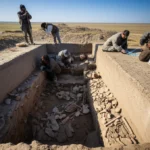
- Excavations: Archaeologists have excavated thousands of sites, uncovering tools, pottery, and human remains.
- Dendrochronology: By counting the rings in wooden beams, scientists can date the construction of buildings with year-by-year precision. This has been crucial in understanding the timeline of the Ancestral Puebloans.
- Isotope Analysis: By analyzing the isotopes in human bones and teeth, scientists can determine where a person grew up and what they ate. This has helped trace migration patterns.
Potery: The Story in the Clay
- Style and Design: Potery styles changed over time and varied by region. By studying these changes, archaeologists can track the movement of people and the exchange of ideas.
- Function: Different types of pottery were used for different purposes, from cooking to storage to ritual. The design and decoration of the pottery often reflect the beliefs and values of the people who made it.
Oral Histories: The Voice of the Ancestors
- Living Traditions: The oral histories of the Hopi, Zuni, and other Pueblo peoples provide a unique perspective on the past. These stories are not just myths; they are historical records passed down through generations.
- The Place of Crying: One story tells of a “place of crying” where the people left their old homes. This story aligns with the archaeological evidence of abandonment and migration.
🚫 Debunking Myths: Aliens, Lost Tribes, and Other Conspiracy Theories
With such a mysterious history, it’s no surprise that conspiracy theories have sprung up. Let’s separate fact from fiction.
Myth 1: The Anasazi Were Aliens
- The Theory: Some claim that the sophisticated architecture and astronomical knowledge of the Ancestral Puebloans could only have been achieved with alien assistance.
- The Reality: The Ancestral Puebloans were highly intelligent and resourceful humans. They developed their skills over centuries of observation, experimentation, and cultural transmission. There is no evidence of extraterestrial contact.
Myth 2: They Were a Lost Tribe of Israel
- The Theory: In the 19th century, some theorists suggested that the Ancestral Puebloans were one of the Ten Lost Tribes of Israel.
- The Reality: Genetic and linguistic evidence clearly shows that the Ancestral Puebloans are indigenous to the Americas. Their DNA is consistent with other Native American populations, and their languages belong to the Uto-Aztecan family.
Myth 3: They Were Wiped Out by a Single Catastrophe
- The Theory: Some believe that a single event, such as a volcanic eruption or a massive earthquake, wiped out the entire civilization.
- The Reality: The “disappearance” was a gradual process of migration and aggregation. While there was violence and environmental stress, there is no evidence of a single catastrophic event that wiped out the population.
Myth 4: The “Lost City” of Gold
- The Theory: Legends of Cíbola and other cities of gold lured Spanish explorers to the Southwest.
- The Reality: The “cities of gold” were actually the pueblos of the Ancestral Puebloans and their descendants. While they had turquoise and other valuable materials, there was no gold.
🏞️ Top 5 Sites to Visit to Walk in Their Footsteps
Ready to see the legacy of the Ancestral Puebloans for yourself? Here are the top five sites to visit.
1. Mesa Verde National Park (Colorado)
- Why Visit: Home to the most famous cliff dwellings in the world, including Cliff Palace and Balcony House.
- Highlights: Guided tours of the cliff dwellings, the Mesa Verde Museum, and the Chapin Mesa Archaeological Museum.
- Tip: Book your tours in advance, especially during the summer season.
2. Chaco Culture National Historical Park (New Mexico)
- Why Visit: The heart of the Chacoan world, featuring massive great houses like Pueblo Bonito and Chetro Ketl.
- Highlights: The Sun Dagger site, the Chaco Road system, and the Night Sky Program (one of the best stargazing spots in the US).
- Tip: The park is remote, so bring plenty of water and supplies.
3. Canyon de Chelly National Monument (Arizona)
- Why Visit: A stunning canyon with cliff dwellings and rock art that are still part of the living landscape of the Navajo Nation.
- Highlights: The Spider Rock spire, the White House Ruin, and guided tours by Navajo guides.
- Tip: Respect the sacred nature of the canyon and follow all park rules.
4. Bandelier National Monument (New Mexico)
- Why Visit: Features cliff dwellings carved into volcanic tuff and a network of canyons and pictographs.
- Highlights: The Long House, the Frijoles Canyon, and the Tyuonyi Ruin.
- Tip: Hike the Frijoles Canyon Trail for a great overview of the site.
5. Hovenweep National Monument (Colorado/Utah)
- Why Visit: A remote and lesser-known site with unique tower structures and cliff dwellings.
- Highlights: The Hovenweep Castle, the Square Tower House, and the Cajon Ruin.
- Tip: This site is less crowded, offering a more solitary experience.
💡 Quick Tips and Facts for the Aspiring Archaeologist
Want to learn more or even get involved? Here are some tips for the aspiring archaeologist.
- Respect the Sites: Never remove artifacts or disturb the ruins. They are protected by law and are sacred to the descendant communities.
- Volunteer: Many parks and organizations, such as the Crow Canyon Archaeological Center, offer volunteer opportunities for the public.
- Read Up: There are many excellent books and documentaries on the Ancestral Puebloans. Check out our Recommended Links section for some great starting points.
- Support Native Communities: When visiting these sites, consider supporting the local Native American communities by buying authentic crafts and respecting their traditions.
- Stay Curious: The story of the Ancestral Puebloans is still being written. New discoveries are made all the time, and there is always more to learn.
🏁 Conclusion: The Legacy That Never Faded

So, did the Anasazi disappear? Absolutely not.
The narrative of a vanished civilization is a romantic one, but it’s a myth. The Ancestral Puebloans didn’t vanish into the ether; they adapted, migrated, and survived. They moved from the harsh, drought-stricken canyons of the Four Corners to the more fertile valleys of the Rio Grande and the Little Colorado River. They brought their culture, their religion, their pottery, and their stories with them.
Today, their descendants—the Hopi, Zuni, Acoma, Laguna, and Rio Grande Pueblos—continue to thrive. They maintain their traditions, speak their languages, and practice their religions. The “disappearance” was not an end, but a new beginning.
The legacy of the Ancestral Puebloans is a testament to human resilience and adaptability. They faced environmental challenges, social unrest, and the uncertainty of the unknown, and they found a way to survive. Their story reminds us that civilizations are not static; they are dynamic, evolving entities that must adapt to changing circumstances to endure.
As we look to the future, the lessons of the Ancestral Puebloans are more relevant than ever. In a world facing climate change and social upheaval, their ability to migrate, innovate, and maintain their cultural identity offers a powerful example of how to navigate uncertainty.
The mystery of the Anasazi is not about where they went, but about who they are and who they remain. They are here, alive and well, and their story is far from over.
🔗 Recommended Links for Further Exploration
Ready to dive deeper? Here are some excellent resources to continue your journey.
Books
- House of Rain: Tracking a Vanished Civilization Across the American Southwest by Craig Childs
- Amazon | Barnes & Noble | Publisher
- The Anasazi: A People of the Southwest by Linda S. Cordell
- Amazon | Barnes & Noble | University Press
- Chaco Canyon: Archaeologists Explore the Lives of an Ancient Society by Stephen H. Lekson
- Amazon | Barnes & Noble | Oxford University Press
Websites
- National Park Service: Mesa Verde National Park
- Visit the Site
- National Park Service: Chaco Culture National Historical Park
- Visit the Site
- Crow Canyon Archaeological Center
- Learn More
- Smithsonian Magazine: Riddles of the Anasazi
- Read the Article
Documentaries
- Secrets of the Dead: The Mystery of the Anasazi (PBS)
- Watch on PBS
- Ancient Aliens: The Anasazi (History Channel)
- Watch on History
❓ Frequently Asked Questions (FAQ)
What can be learned from the Anasazi disappearance in terms of sustainable living and environmental stewardship?
The Ancestral Puebloans provide a powerful case study in sustainability. Their eventual migration suggests that even the most advanced societies can be overwhelmed by environmental degradation if they do not adapt. Their use of check dams, terracing, and crop rotation shows a deep understanding of local ecosystems. However, their reliance on a single agricultural system and the deforestation of their surroundings ultimately contributed to their vulnerability. The lesson is clear: diversity and adaptability are key to long-term survival.
How did the Anasazi people adapt to their harsh desert environment before their disappearance?
They were masters of water management. They built reservoirs, canals, and check dams to capture and store rainwater. They also developed dry-farming techniques that allowed them to grow crops in arid conditions. Their architecture, including thick walls and small windows, helped regulate indoor temperatures. They also relied on a diverse diet that included hunting and gathering, not just agriculture.
Are there any remaining Anasazi ruins or artifacts that can be visited today?
Yes! There are many well-preserved ruins that are open to the public. Mesa Verde National Park, Chaco Culture National Historical Park, Canyon de Chelly, Bandelier, and Hovenweep are just a few examples. These sites offer guided tours and educational programs that allow visitors to experience the legacy of the Ancestral Puebloans firsthand.
What role did climate change play in the disappearance of the Anasazi?
Climate change, specifically a megadrought in the 13th century, was a major trigger for the migration. The lack of rain caused crop failures and water shortages, making it difficult to sustain the population. However, climate change alone does not explain the entire story. It was likely a combination of environmental stress, social unrest, and religious shifts that led to the migration.
Read more about “🏛️ When Did the Anasazi Go Extinct? The Shocking Truth (2026)”
Did the Anasazi people migrate to other areas or were they completely wiped out?
They migrated. The Ancestral Puebloans did not go extinct. They moved to the Rio Grande and Little Colorado River valleys, where they established new communities. Their descendants, the Hopi, Zuni, and other Pueblo peoples, continue to live in these areas today.
What were the social and environmental factors that led to the Anasazi disappearance?
The factors were multifaceted. Environmentally, a severe drought and deforestation made the land less hospitable. Socialy, resource scarcity led to internal conflict and violence. Religiously, a shift in beliefs may have encouraged people to move to new areas. It was a perfect storm of these factors that led to the migration.
Read more about “Why Did the Anasazi Disappear? 5 Shocking Truths Revealed 🏜️”
How did the Anasazi civilization contribute to the modern Native American culture?
The Ancestral Puebloans are the direct ancestors of many modern Pueblo peoples. Their language, religion, potery, and agricultural practices have been passed down through generations. The Kachina cult, for example, is a direct continuation of their spiritual traditions. Their legacy is alive and well in the Pueblo communities of the Southwest.
What were the main theories behind the Anasazi disappearance?
The main theories include drought, deforestation, social unrest, religious shifts, and migration. Most experts agree that it was a combination of these factors, rather than a single cause, that led to the migration.
How did the Anasazi collapse?
The Ancestral Puebloans did not “collapse” in the traditional sense. They migrated in response to a combination of environmental stress and social conflict. They left their great houses and cliff dwellings behind, but they survived and thrived in new locations.
What are theories about the disappearance of the Anasazi?
Theories range from drought and warfare to religious movements and migration. The most widely accepted theory is that a perfect storm of environmental and social factors led to a mass migration to more hospitable areas.
When did the Anasazi go extinct?
They did not go extinct. The migration occurred primarily between 1275 and 130 AD. Their descendants continue to live in the Southwest today.
Read more about “When did the Anasazi go extinct?”
Why did tribes such as the Anasazi disappear?
They didn’t disappear. They migrated to new areas in response to environmental stress and social conflict. The term “disappearance” is a misnomer that implies extinction, which is not the case.
Read more about “Why did tribes such as the Anasazi disappear?”
📚 Reference Links and Sources
- Smithsonian Magazine: Riddles of the Anasazi
- Read the Article
- National Park Service: Mesa Verde National Park
- Official Site
- National Park Service: Chaco Culture National Historical Park
- Official Site
- Crow Canyon Archaeological Center
- Official Site
- Loveland Archaeological Society: The Mystery of the Anasazi
- Read the Article
- NPR: Tracking a Vanished Civilization in the Southwest
- Listen to the Segment
- University of Colorado: Stephen Lekson’s Research
- Learn More
- American Anthropological Association: Ancestral Puebloans
- Read the Overview