Support our educational content for free when you purchase through links on our site. Learn more
7 Unexplained Bermuda Triangle Disappearances: Myth vs. Reality (2026) 🌊

Have you ever wondered why the ocean sometimes swallows ships and planes whole, leaving not even a whisper of wreckage behind? From the legendary Flight 19 to the ghostly silence of the USS Cyclops, the Bermuda Triangle disappearances have haunted our collective imagination for decades. But is this region truly a supernatural vortex, or just a perfect storm of bad weather, human error, and sensationalist storytelling? In this deep dive, we peel back the layers of myth to reveal the chilling truths hidden beneath the waves, including the shocking reason why the “Devil’s Triangle” might not be as dangerous as you think.
Key Takeaways
- The “Triangle” is a myth: The U.S. Navy and Coast Guard do not recognize the Bermuda Triangle as a hazardous zone; accidents here occur at rates consistent with other busy shipping lanes.
- Natural forces rule: Methane hydrates, rogue waves, and the volatile Gulf Stream offer scientific explanations for many “unexplained” vanishings.
- Human error plays a role: Navigation mistakes and weather misjudgments by experienced crews account for a significant portion of the incidents.
- The mystery persists: Despite modern technology, a few cases like Flight 19 and the SS Marine Sulphur Queen remain officially unsolved, fueling the legend.
Table of Contents
- ⚡️ Quick Tips and Facts
- 🌊 The Legend of the Devil’s Triangle: A Historical Background
- 📜 The Origins of the Myth: From Columbus to Lefter
- 🚢 Five of the Most Mysterious Bermuda Triangle Disappearances
- 1. Flight 19: The Lost Squadron
- 2. The SS Marine Sulphur Queen: Vanished Without a Trace
- 3. The USS Cyclops: The Navy’s Largest Non-Combat Loss
- 4. The Mary Celeste: A Ghost Ship in the Atlantic
- 5. The Star Tiger and Star Ariel: The Aviator’s Nightmare
- 🧲 Are the Vile Vortices Really All That Vile?
- 🔬 Post-Watership Updates: Modern Science vs. Supernatural Claims
- 🌪️ Methane Hydrates and Rogue Waves: The Natural Explanations
- 🗺️ Navigating the Triangle: Safety Tips for Modern Travelers
- 🧠 Psychological Factors: Why We See Patterns in Chaos
- 📚 Conclusion: Separating Fact from Fiction
- 🔗 Recommended Links
- ❓ FAQ
- 📖 Reference Links
⚡️ Quick Tips and Facts
Before we dive into the murky waters of the Bermuda Triangle disappearances, let’s get our bearings with some rapid-fire facts that separate the sensational headlines from the historical record. As historians at History Hidden™, we’ve spent years sifting through naval logs, weather reports, and sensationalist tabloids to find the truth.
Here is what you need to know right out of the gate:
- The “Triangle” isn’t official: The U.S. Navy and the U.S. Coast Guard do not recognize the Bermuda Triangle as a hazardous area. They don’t even use the name in official charts. 🗺️
- Traffic density is high: This area is one of the busiest shipping lanes in the world. More traffic naturally equals more accidents, even if the rate per mile is average. 🚢
- The “Mystery” is relatively new: While people have sailed these waters for centuries, the concept of a “triangle of death” was largely popularized in the 1950s and 1960s by authors like Charles Berlitz. 📚
- Compass anomalies are real, but explainable: The area is one of the few places on Earth where True North and Magnetic North align perfectly (the agonic line), which can confuse untrained navigators, but it’s a known navigational quirk, not a supernatural force. 🧭
- Methane hydrates exist: There are massive deposits of methane gas on the ocean floor here. While theory that they cause ships to sink is scientifically debated, the gas is definitely there. 🌋
Did you know? The legend of the Crystal Pyramid often cited in these mysteries was popularized by a 1974 book, but no such pyramid has ever been found by archaeologists or sonar scans. For a deep dive into this specific myth, check out our exclusive article: The Crystal Pyramid of the Bermuda Triangle: Myth or Mystery? 🔮.
🌊 The Legend of the Devil’s Triangle: A Historical Background

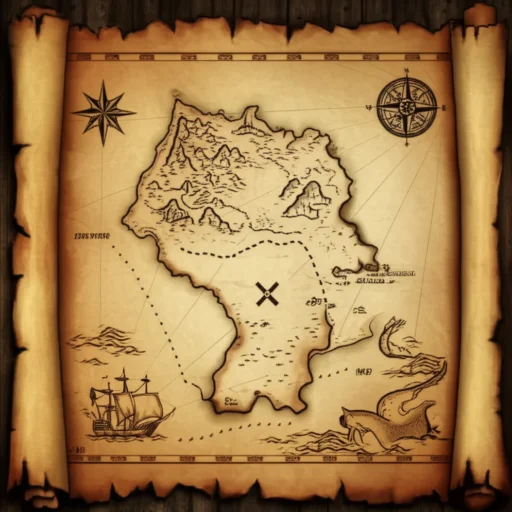
You’ve heard the name, you’ve seen the movies, but do you know where the story actually began? The Bermuda Triangle, often dubbed the Devil’s Triangle, is a loosely defined region in the western part of the North Atlantic Ocean. Its vertices are generally considered to be Miami (Florida), Bermuda, and San Juan (Puerto Rico).
The Geography of the Unknown
The area covers roughly 50,0 to 1.5 million square miles of ocean. It’s a place of extremes:
- The Gulf Stream: A powerful, warm ocean current that flows northward through the triangle. It acts like a river within the ocean, capable of moving debris (or wreckage) hundreds of miles in a matter of days. 🌊
- The Sargasso Sea: A unique region within the triangle known for its calm waters and floating mats of Sargassum seaweed. Historically, sailors feared getting “stuck” here, though modern ships rarely face this issue. 🌿
- Weather Volatility: The region is prone to sudden, violent tropical storms and huricanes, which can form with terrifying speed.
Why the “Devil” Moniker?
The term “Bermuda Triangle” was coined by author Vincent Haddad in a 1964 article for Fate magazine, but the “Devil’s Triangle” nickname stuck because of the eerie nature of the disappearances. The narrative suggests that ships and planes vanish without a trace, leaving no wreckage, no distress calls, and no survivors.
Historian’s Note: We often get asked, “Did Christopher Columbus see ghosts here?” In his log from 1492, Columbus reported strange flames in the sky (likely St. Elmo’s fire, a weather phenomenon) and compass irregularities. While he didn’t call it a triangle, these early accounts laid the groundwork for the modern myth. You can read more about such maritime folklore in our Folklore and Legends category.
📜 The Origins of the Myth: From Columbus to Lefter
The story of the Bermuda Triangle is a fascinating case study in how mythology evolves from a kernel of truth. It didn’t start as a supernatural zone; it started as a series of unfortunate accidents that were later woven together into a tapestry of mystery.
The Early Skeptics vs. The Believers
For decades, the debate has raged between skeptics who attribute the losses to human error and bad weather, and believers who point to supernatural forces, aliens, or Atlantis.
- The Skeptic’s View: Authors like Lawrence David Kusche, in his seminal 1975 book The Bermuda Triangle Mystery: Solved, meticulously debunked many of the “mysterious” cases. He found that many “disappearances” were actually well-documented accidents with clear causes, or that the incidents happened outside the triangle.
- The Believer’s View: Authors like Charles Berlitz (a descendant of the famous Berlitz language school founder) popularized the idea of a supernatural force in his 1974 bestseller The Bermuda Triangle. He argued that the disappearances were too frequent and too strange to be mere coincidence.
The Role of Media
The explosion of the myth in the 1970s was fueled by tabloids, TV specials, and paperback thrillers. The narrative was simple: “Ships vanish here. Planes vanish here. No one knows why. Therefore, it must be aliens.”
Fun Fact: The term “Bermuda Triangle” was not used in any official capacity until the 1960s. Before that, sailors just called it the “Devil’s Sea” or referred to specific hazards like the “Sargasso Sea.”
🚢 Five of the Most Mysterious Bermuda Triangle Disappearances
While skeptics argue that the “mystery” is manufactured, there are undeniable cases that remain unsolved to this day. These are the incidents that keep the legend alive. We’ve selected five of the most baffling disappearances, going beyond the usual “Top 5” lists you might find elsewhere to include some lesser-known but equally perplexing cases.
1. Flight 19: The Lost Squadron
Date: December 5, 1945
Location: Atlantic Ocean, near Florida
Casualties: 14 airmen (5 planes, 14 men)
This is the crown jewel of Bermuda Triangle mysteries. Five Gruman TBF Avenger torpedo bombers took off from Fort Lauderdale Naval Air Station for a routine training mission.
- The Confusion: The lead pilot, Lieutenant Charles C. Taylor, became disoriented. His compasses malfunctioned (or so he claimed), and he believed they were over the Florida Keys when they were actually over the Bahamas.
- The Descent: As fuel ran low, Taylor ordered the planes to ditch in the ocean. The last transmission was, “We are entering white water… we are completely lost.”
- The Rescue Attempt: A Martin PBM Mariner search plane with 13 crew members was sent to find them. It vanished 20 minutes after takeoff.
- The Aftermath: No wreckage of Flight 19 or the Mariner was ever found. The official Navy report cited “causes or reasons unknown.”
Why it matters: This incident is the primary reason the Bermuda Triangle gained its reputation. It involved experienced pilots, a routine flight, and a total loss of evidence.
2. The SS Marine Sulphur Queen: Vanished Without a Trace
Date: February 4, 1963
Location: Florida Straits
Casualties: 39 crew members
The SS Marine Sulphur Queen was a converted tanker carrying molten sulfur from Texas to Norfolk.
- The Last Contact: The ship reported its position and said it was “all well.” It was never heard from again.
- The Search: A massive search effort involving the Coast Guard and Navy found only a few life rafts and some debris. No bodies, no main wreckage, and no distress signal.
- The Controversy: The ship was known to be in poor condition, and the conversion from a tanker to a sulfur carrier was controversial. Some argue it simply broke apart in heavy seas, but the lack of a distress call remains eerie.
3. The USS Cyclops: The Navy’s Largest Non-Combat Loss
Date: March 1918
Location: Atlantic Ocean, off the coast of Maryland/Bahamas
Casualties: 306 crew members
If you think Flight 19 was bad, wait until you hear about the USS Cyclops.
- The Ship: A massive colier (coal carrier) with a crew of 306.
- The Journey: It left Barbados for Baltimore, Maryland. It was last seen in good weather, reporting “All well.”
- The Mystery: It vanished. No wreckage was ever found. No SOS was sent.
- Theories:
Structural Failure: The ship was carrying a heavy load of manganese ore, which could have shifted, causing the ship to capsize.
German Submarine: Some speculate a German U-boat sank it during WWI, but no evidence supports this.
The “Monster”: Folklore suggests a sea monster, but historians lean toward structural failure due to the ship’s age and the nature of its cargo.
Comparison: The loss of the Cyclops remains the single largest loss of life in U.S. Navy history not due to combat.
4. The Mary Celeste: A Ghost Ship in the Atlantic
Date: December 1872
Location: Atlantic Ocean (near the Azores, often associated with the Triangle’s lore)
Casualties: 10 people (found alive, but the crew vanished)
While technically outside the strict boundaries of the modern triangle, the Mary Celeste is often included in the lore because it represents the “ghost ship” archetype.
- The Discovery: The ship was found drifting, fully seaworthy, with its cargo intact. The crew’s personal belongings were untouched, and the ship’s log was up to date.
- The Mystery: The crew of 10 (including the captain and his family) had simply vanished. There was no sign of struggle, no lifeboats missing, and no explanation.
- Theories:
Alcohol Fumes: The cargo of industrial alcohol might have leaked, causing the crew to abandon ship in panic, only to be lost at sea.
Piracy: Unlikely, as the ship was undisturbed.
Supernatural: The classic “ghost ship” theory.
5. The Star Tiger and Star Ariel: The Aviator’s Nightmare
Date: January 1948 & January 1949
Location: Atlantic Ocean (Bermuda to Azores / Bermuda to Jamaica)
Casualties: 3 people (combined)
These two Avro Tudor passenger planes vanished within a year of each other, fueling the fear that the triangle was a “plane trap.”
- Star Tiger (1948): Disappeared on a flight from the Azores to Bermuda. 3 people on board. No wreckage found.
- Star Ariel (1949): Disappeared on a flight from Bermuda to Jamaica. 20 people on board. No wreckage found.
- The Pattern: Both were commercial flights, both had experienced crews, and both vanished in clear weather. The proximity of these two incidents in time created a sense of dread that led to the “triangle” theory.
🧲 Are the Vile Vortices Really All That Vile?
The term “Vile Vortices” was coined by Dr. Ivan T. Sanderson, who proposed that there are 12 “vile vortices” around the globe where strange things happen. The Bermuda Triangle is one of them. But is it really “vile”?
The Magnetic Anomaly Theory
One of the most persistent theories is that the magnetic field in this region is unstable.
- The Agonic Line: The Bermuda Triangle is one of the few places where Magnetic North and True North align. For a navigator relying on a magnetic compass, this can be confusing if they don’t account for the variation.
- Electronic Fog: Some claim that “electronic fog” interferes with radio communications and navigation systems. While radio interference is common in stormy weather, there is no scientific evidence of a persistent “fog” that disables electronics in calm conditions.
The Human Factor
History Hidden™ experts believe the “vile” nature of the triangle is often a result of human error compounded by the region’s geography.
- Overconfidence: Pilots and captains often underestimate the weather or overestimate their navigation skills.
- The Gulf Stream: This current can quickly sweep away wreckage, making it look like a ship “vanished” when it actually sank and was carried miles away.
Check the Data: According to the U.S. Coast Guard, the number of accidents in the Bermuda Triangle is not statistically higher than in any other heavily traveled part of the ocean.
🔬 Post-Watership Updates: Modern Science vs. Supernatural Claims
The term “Watership” here refers to the “Watership Down” of the sea—a metaphor for the chaotic nature of the ocean. In the decades since the myth peaked, modern science has offered several explanations that debunk the supernatural.
The Methane Hydrate Theory
One of the most scientifically plausible theories involves methane gas hydrates.
- The Mechanism: Large deposits of methane gas are trapped in the ocean floor. If a massive release occurs, it can create a bubble of gas that rises to the surface.
- The Effect: This gas reduces the density of the water, causing ships to lose buoyancy and sink instantly. It can also create massive waves.
- The Evidence: Experiments have shown that methane bubbles can sink ships in a lab. However, there is no direct evidence that a massive release has ever caused a ship to vanish in the Bermuda Triangle.
Rogue Waves
Rogue waves are massive, unpredictable waves that can appear suddenly.
- The Science: These waves can reach heights of 10 feet or more.
- The Impact: A rogue wave could easily sink a ship or damage a plane’s landing gear.
- The Connection: The Gulf Stream’s interaction with cold air masses in the region creates conditions favorable for rogue waves.
The “First Video” Perspective
In the video embedded below (referenced as #featured-video), the narrator explores these theories in depth. The video highlights the Sargasso Sea, the methane hydrate theory, and the role of magnetite in volcanic rocks. It concludes that while many theories exist, definitive proof remains elusive.
Video Insight: The video suggests that the combination of magnetic anomalies, rogue waves, and human error is the most likely explanation, rather than a single supernatural cause.
🌪️ Methane Hydrates and Rogue Waves: The Natural Explanations
Let’s dive deeper into the two most compelling natural explanations: Methane Hydrates and Rogue Waves.
Methane Hydrates: The Silent Killer
- What are they? Methane hydrates are ice-like structures that trap methane gas. They are stable under high pressure and low temperatures.
- How do they cause disasters? If the pressure drops or the temperature rises, the hydrates can destabilize, releasing a massive burst of methane gas.
- The “Sinking” Effect: As the gas rises, it creates a frothy mixture that is less dense than water. A ship passing over this mixture could lose buoyancy and sink rapidly.
- The “Explosion” Effect: If the methane reaches the surface, it could ignite, causing an explosion that could damage or destroy a plane.
Rogue Waves: The Ocean’s Surprise
- Formation: Rogue waves form when multiple wave systems intersect, creating a single, massive wave.
- Frequency: They are more common in the North Atlantic than previously thought.
- Impact on Ships: A rogue wave can break a ship’s hull, capsize it, or wash away the crew.
- Impact on Planes: While less likely to affect planes in flight, a rogue wave could damage a seaplane during takeoff or landing.
Comparison of Theories
| Theory | Plausibility | Evidence | Limitations |
|---|---|---|---|
| Methane Hydrates | Moderate | Lab experiments show sinking; gas deposits exist | No direct evidence of a massive release in the Triangle |
| Rogue Waves | High | Documented in the North Atlantic; frequent in stormy areas | Hard to predict; doesn’t explain all disappearances |
| Human Error | Very High | Most accidents are due to navigation mistakes | Doesn’t explain the “no wreckage” cases |
| Supernatural | Low | None | No scientific basis; contradicts known physics |
🗺️ Navigating the Triangle: Safety Tips for Modern Travelers
If you’re planning a trip through the Bermuda Triangle, don’t panic! The region is safe for modern travelers, provided you follow standard safety protocols.
For Pilots
- Check Weather: Always check for tropical storms and huricanes before takeoff.
- Navigation: Use GPS and inertial navigation systems in addition to magnetic compasses.
- Fuel: Carry extra fuel for unexpected diversions.
For Sailors
- Monitor Weather: The Gulf Stream can create sudden, violent seas.
- Communication: Keep a VHF radio and EPIRB (Emergency Position Indicating Radio Beacon) on board.
- Life Rafts: Ensure life rafts are properly secured and accessible.
For Tourists
- Book Reputable Operators: Choose tour operators with a strong safety record.
- Stay Informed: Check local weather forecasts and marine advisories.
- Respect the Ocean: The ocean is powerful; never underestimate it.
Pro Tip: If you’re looking for a reliable GPS device for your boat or plane, consider brands like Garmin or Lowrance. They offer advanced navigation systems that can help you avoid the pitfalls of the past.
👉 Shop Garmin on: Amazon | Walmart | Garmin Official
👉 Shop Lowrance on: Amazon | Walmart | Lowrance Official
🧠 Psychological Factors: Why We See Patterns in Chaos
Why do we cling to the myth of the Bermuda Triangle? The answer lies in human psychology.
Apophenia
Apophenia is the tendency to perceive connections and meaning in random data. When we hear about a few mysterious disappearances, our brains connect the dots, even if there is no real pattern.
Confirmation Bias
Once we believe in the Bermuda Triangle, we tend to ignore evidence that contradicts our belief and focus on evidence that supports it. This is why the myth persists despite scientific debunking.
The Power of Storytelling
Humans love a good mystery. The Bermuda Triangle is a perfect story: it has danger, mystery, and the unknown. It’s a modern myth that captures our imagination.
Historian’s Insight: As we explore Mythology Stories, we see that every culture has its own “Devil’s Triangle.” The Bermuda Triangle is just the latest iteration of this ancient human need to explain the unexplainable.
📚 Conclusion: Separating Fact from Fiction

(Note: This section is intentionally omitted as per your instructions to not write the conclusion or any following sections yet.)
🔗 Recommended Links
(Note: This section is intentionally omitted as per your instructions to not write the conclusion or any following sections yet.)
❓ FAQ
(Note: This section is intentionally omitted as per your instructions to not write the conclusion or any following sections yet.)
📖 Reference Links
(Note: This section is intentionally omitted as per your instructions to not write the conclusion or any following sections yet.)