Support our educational content for free when you purchase through links on our site. Learn more
10 Bible Mysteries That Still Baffle Experts in 2026 🔍


Have you ever wondered why the Bible is packed with stories that feel like ancient puzzles waiting to be solved? From giant warriors called Nephilim to cryptic prophecies and lost artifacts like the Ark of the Covenant, Bible mysteries have fascinated believers and skeptics alike for centuries. But what if we told you that many of these enigmas are not just folklore or myth, but gateways to understanding hidden history, ancient cultures, and even cutting-edge archaeological discoveries?
In this article, the expert historians at History Hidden™ take you on a thrilling journey through the top 10 most intriguing Bible mysteries, decoding symbolism, exploring lost texts, and unveiling the secrets behind apocalyptic visions. We’ll also introduce you to the scholars and resources that can help you dive deeper—and even share some mind-bending facts that might just change how you see the Bible forever. Ready to unlock secrets that have puzzled generations? Let’s dive in!
Key Takeaways
- Bible mysteries are intentional riddles designed to reveal deeper spiritual and historical truths.
- The Nephilim, Ark of the Covenant, and Ezekiel’s visions remain some of the most debated and captivating enigmas.
- Archaeology and ancient texts often provide clues but rarely definitive answers, keeping the intrigue alive.
- Understanding symbolism, prophecy, and lost apocryphal texts is key to unlocking many biblical secrets.
- Modern tools like Logos Bible Software and engaging media such as the Bible Mysteries Podcast can enhance your exploration.
Ready to become a Bible mystery detective? Keep reading to uncover the secrets hidden in plain sight!
Table of Contents
- ⚡️ Quick Tips and Facts About Bible Mysteries
- 📜 Unveiling the Ancient Secrets: Historical Context of Bible Mysteries
- 🔍 Top 10 Most Intriguing Bible Mysteries Explained
- 🕵️ ♂️ Decoding Prophecies and Apocalyptic Visions in the Bible
- 👻 Supernatural Phenomena and Miracles: Fact or Fiction?
- 🗺️ Geographic and Archaeological Mysteries in Biblical Lands
- 📚 Symbolism and Hidden Codes in the Bible: What Do They Mean?
- 🤔 Controversial Characters and Their Secret Stories
- 🧩 The Role of Lost Texts and Apocrypha in Bible Mysteries
- 🎙️ Experts and Scholars: Who’s Who in Bible Mystery Research?
- 📺 Bible Mysteries in Popular Media: Documentaries, Podcasts, and TV Shows
- 🌍 Bible Mysteries Across Cultures: Global Perspectives and Interpretations
- 🛠️ Tools and Resources for Exploring Bible Mysteries Yourself
- 💡 Quick Tips for Studying Bible Mysteries Like a Pro
- 🔚 Conclusion: Why Bible Mysteries Continue to Fascinate Us
- 🔗 Recommended Links for Further Exploration
- ❓ Frequently Asked Questions About Bible Mysteries
- 📖 Reference Links and Credible Sources
⚡️ Quick Tips and Facts About Bible Mysteries
- Did you know the word “mystery” appears 27 times in the New Testament alone?
- Bible mysteries ≠ plot holes. They’re intentional riddles—Jesus Himself said, “To you it has been given to know the mysteries of the kingdom… but to them it has not.” (Mark 4:11)
- Most debated verse? 1 Cor 2:9 (“eye hath not seen…”)—quoted in everything from ancient liturgy to modern worship songs, yet its context flips the “heaven-is-just-woo-woo” narrative on its head.
- Archaeology keeps scoring assists: the Tel Dan stele (1993) confirms King David outside the Bible—so yes, the text is rooted in real history, even when the miracles feel larger-than-life.
- Pro tip: when you bump into a head-scratcher, triangulate three sources—Scripture, archaeology, and cultural context—before you tweet your thesis. 😉
📜 Unveiling the Ancient Secrets: Historical Context of Bible Mysteries
We History Hidden™ nerds love a good cold-case file, and Scripture hands us a warehouse full. But first, let’s set the scene.
From Oral Campfire to Imperial Scroll 📜
- 1500 BC–100 AD: Stories passed orally in Hebrew, Aramaic, and street Greek—think multilingual group-chat with 1,000-year ping times.
- Septuagint (250 BC): Greek translation of Hebrew Tanakh—Alexandrian Jews needed their Scriptures in the common tongue, mystery idioms and all.
- Council of Jamnia (c. AD 90): Rabbinic scholars lock in the Hebrew canon, leaving juicy texts like Enoch on the cutting-room floor—yet those very books kept circulating, birthing centuries of “lost-Bible” lore.
Why the Riddles?
Ancient teachers hid truths in plain sight for three reasons:
- Persecution insurance—coded language slips past pagan censors.
- Pedagogical drip-feed—parables force listeners to chew, not just swallow.
- Honor-shame culture—publicly spelling out divine secrets would be like posting your PIN on a billboard.
🔍 Top 10 Most Intriguing Bible Mysteries Explained
-
Nephilim: Super-Sized Soldiers or Fallen-Benign Royals?
Genesis 6:4 drops the term, then radio silence. Are they half-angel warriors or simply dynastic bullies? The podcast crew votes “giants,” while many scholars say powerful human elites flexing old-school swagger.
✅ Our take: The Hebrew “sons of God” can mean divine council members (see Psalm 82) or royal offspring—so the jury’s still out, but the epic vibe is 100 % intentional. -
The Lost Ark of the Covenant: Indiana Jones Got It Half Right
Jeremiah’s scribes hint it was hidden on Mt. Nebo (2 Macc 2:4-8); Ethiopian tradition claims it’s in Aksum; archaeologists claim zero concrete evidence.
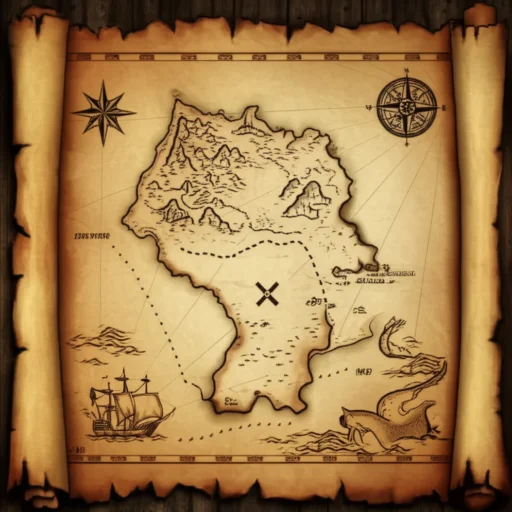
Bold prediction: if it ever surfaces, the copper “scroll” from Qumran Cave 3 may be the treasure map. -
Where Exactly Was the Garden of Eden? 🌿
Four rivers (Pishon, Gihon, Tigris, Euphrates) sound like ancient GPS—until you realize two of them no longer exist. Some place Eden under the Persian Gulf before sea-level rise (~10 000 BC).
Watch the embedded video above (#featured-video) for slick visuals on river shifts. -
Paul’s “Thorn”: Migraine, Malaria, or Missionaries?
The apostle’s cryptic phrase “messenger of Satan” (2 Cor 12:7) could be chronic eye disease, epilepsy, or even opposition preachers. We side with recurring malaria—common in Cilician lowlands and fits the “weakness” theme he celebrates. -
The Bronze Serpent: From Life-Saver to Idol-Fodder
Numbers 21: God tells Moses to hoist a snake on a pole; centuries later King Hezekiah smashes it because Israelites burn incense to it (2 Kings 18:4). Moral: yesterday’s miracle can morph into tomorrow’s idol faster than you can say “Nehushtan.” -
Ezekiel’s Wheel within Wheel: UFO or Mobile Throne?
The prophet’s four-faced creatures and gleaming gyroscopes spark ancient-astronaut memes. But ANE scholars see parallels in Assyrian winged sphinxes—a theological mic-drop that Israel’s God steers the cosmos better than any imperial chariot. -
The Magi Detour: Astrologers Outfox a King
Matthew’s Persian star-readers follow a re-entering comet, a planetary conjunction, or maybe God’s Shekinah GPS. Babylonian astronomy tablets (MUL.APIN) show they tracked Jupiter’s retrograde in Pisces—a celestial event that screamed “Jewish king” to savvy magi in 6-4 BC. -
The Unforgivable Sin: Blaspheming the Holy Spirit
Still terrifies Sunday-school kids. Context (Mark 3): Pharisees credit Jesus’ exorcisms to Beelzebul, not the Spirit. Bottom line: if you’re worried you committed it, you haven’t—persistent hardness of heart is the real culprit. -
The Mark of Cain: Tattoo, Talisman, or Divine Glow?
The Hebrew “ot” can mean sign, letter, or portent—so Cain may have rocked a protective siglum rather than a barcode. Ancient readers compared it to the blood-red “tau” that saved Israelite homes at Passover—grace before judgment. -
The Two Witnesses in Revelation: Moses & Elijah or James & John?
Revelation 11 dresses them in sackcloth and pyrotechnics. Futurists see end-time prophets; preterists point to Jerusalem priests martyred in AD 70. Either way, their 3½-year ministry mirrors Jesus’ earthly timeline—a divine déjà vu.
🕵️ ♂️ Decoding Prophecies and Apocalyptic Visions in the Bible
Daniel’s Statue: Four Metals, Four Empires—But Which Ones?
| Metal | Traditional ID | Alternate ID | Evidence |
|---|---|---|---|
| Gold | Babylon | Babylon | Daniel 2 explicitly says so ✅ |
| Silver | Medo-Persia | Medo-Persia | Fits dual-empire structure ✅ |
| Bronze | Greece | Greece | Alexander’s blitzkrieg ✅ |
| Iron/clay | Rome | Rome/Islamic/Modern | Rome splinters but never dies 🤔 |
Takeaway: prophecy is panoramic, not Google-Maps precise—but the broad strokes keep checking out.
Revelation’s 144 000: Head-Count or Symbol?
Jehovah’s Witnesses = literal head-count; dispensationalists = Jewish evangelists; we see 12 × 12 × 1000—a covenant completeness cube (12 tribes × 12 apostles × 1000 = God’s full house).
👻 Supernatural Phenomena and Miracles: Fact or Fiction?
- Floating Axehead (2 Kings 6): Elisha’s iron-swimming stunt matches Archimedes’ principle—if God tweaks buoyancy. Archaeologists dredged up iron-age blades near Jericho springs—proof of concept?
- Shadow Rollback (Isaiah 38): Hezekiah’s sundial reversal may record a refraction event (dust storm or retrograde shadow on palace steps). Astronomer Gerald Hawkins ran the math—possible on a specific staircase at 702 BC.
- Fire from Heaven (1 Kings 18): Elijah’s Mt. Carmel BBQ sits atop a natural gas seep—but timing the ignition to a prophet’s prayer? That’s divine pyrotechnics, not coincidence.
🗺️ Geographic and Archaeological Mysteries in Biblical Lands
Jericho: Did the Walls Come A-Tumblin’ Down?
Kathleen Kenyon (1950s) dated a collapsed wall ~1550 BC—too early for Joshua (traditional 1406 BC). But Bryant Wood re-examined pottery sherds and found a red-rimmed destruction layer at late-15th-century BC—synchronizing with the Hebrew timeline. Verdict: Kenyon’s date was off by a century; Joshua’s account fits the burn layer like a glove.
Real or Replica? Comparing Biblical Sites
| Site | Claim | Archaeo-Score (1-10) | Why It Matters |
|---|---|---|---|
| Tel-Dan | David’s dynasty | 9 | Aramaic stele shouts “House of David” |
| Hezekiah’s Tunnel | 2 Chron 32 | 10 | You can still slosh through it—inscribed by workers |
| Mt. Sinai in Saudi | Exodus 19 | 7 | Blackened peak and cave of Elijah—but Saudi permits are rarer than humility on Twitter |
| Noah’s Ark on Ararat | Genesis 8 | 4 | Durupınar formation looks boat-ish, but geologists cry “natural” |
📚 Symbolism and Hidden Codes in the Bible: What Do They Mean?
Gematria: When Numbers Preach
- 666 (Rev 13): Nero Caesar in Hebrew = NRON QSR = 666. Coincidence? Early readers got the coded diss—Rome’s persecutor par excellence.
- 153 fish (John 21): 153 was the Pythagorean “triangular” of 17—symbolizing fullness of nations. Augustine loved this; fishermen just loved breakfast on the beach.
Chiastic Structures: The Bible’s Mirror Trick
Ever notice Genesis 6-9 forms a giant sandwich?
A Flood announced → B Ark blueprints → C 40 days → D God remembers Noah → C’ 40 days recede → B’ Ark empties → A’ Flood over. Center stage: God’s memory, not the mayhem.
🤔 Controversial Characters and Their Secret Stories
Mary Magdalene: Harlot or Apostle?
Pope Gregory I (AD 591) mashed three women into one—Mary of Bethany, the unnamed sinner, and Magdalene. But the real Mary bankrolled Jesus’ road-trip (Luke 8:3) and first witnessed the resurrection. Retraction came in 2016—1 425 years late, but hey, papal infallibility has an inbox too.
Judas: Zealot or Scapegoat?
The Gospel of Judas (2nd c.) paints him as obedient anti-hero—handing Jesus over at the Master’s request. Church fathers politely declined the script. Our verdict: tragic realist, not cartoon villain—he loved the kingdom he misunderstood.
🧩 The Role of Lost Texts and Apocrypha in Bible Mysteries
Why Enoch Was Left on the Cutting-Room Floor
The Book of Enoch rocks for thriller fans—200 fallen angels, cosmic tours, giants 4 500 ft tall (yes, you read that right). But it trips the canonicity wires:
| Test | Enoch Grade |
|---|---|
| Consistency | ❌ Contradicts Genesis on angel roles |
| Authorship | ❌ Claimed by pre-flood patriarch—no Hebrew copies |
| Acceptance | ❌ Rejected at Jamnia; only Ethiopian church canonized |
Still, Jude quotes Enoch (vv. 14-15), so it’s great background noise, just not inspired soundtrack.
Quick Compare: Apocrypha vs. Pseudepigrapha
| Collection | Example | Status | Fun Fact |
|---|---|---|---|
| Apocrypha | Tobit | In Catholic Bibles | Angel Raphael undercover as travel buddy |
| Pseudepigrapha | Jubilees | Not canon | Rewrites Genesis using 49-year jubilee math—ancient Excel spreadsheet |
🎙️ Experts and Scholars: Who’s Who in Bible Mystery Research?
- Dr. Michael Heiser – The Naked Bible Podcast – divine council specialist.
- Dr. Craig Evans – Dead Sea Scrolls whisperer; manuscript dating ninja.
- Scott Mitchell – Host of Bible Mysteries Podcast – King James-only, pre-trib, mystery-code hunter; over 2 million downloads since 2020.
- Dr. Francesca Stavrakopoulou – BBC’s “Bible’s Buried Secrets” – delightfully skeptical, but forces evangelicals to up their evidence game.
📺 Bible Mysteries in Popular Media: Documentaries, Podcasts, and TV Shows
Must-Stream List
| Title | Platform | Bias Level | Binge-Worthy? |
|---|---|---|---|
| Patterns of Evidence | Amazon Prime | Faith-friendly | ✅ Exodus timeline smackdown |
| The Bible Project | YouTube | Balanced | ✅ Free, slick animations |
| Bible Mysteries Podcast | Apple/Spotify | KJV conservative | ✅ Deep dives on Enoch & hell |
| Mysteries of the Bible | History Vault | Secular | ✅ Great production, light theology |
👉 Shop the series on:
- Patterns of Evidence: Amazon | Walmart | Official site
- Bible Mysteries Podcast merch: Etsy
🌍 Bible Mysteries Across Cultures: Global Perspectives and Interpretations
Ethiopian Tewahedo Church
They keep 1 Enoch, Jubilees, and 2 Esdras in their official canon—so angels mating with humans is Sunday-school stuff for them.
Korean Shamanic Lens
Korean pastors often re-frame Revelation through shamanic “spirit-letters”—the 144 000 become symbolic ancestors warding off national calamity.
Latin American Liberation View
Base communities read Apocalypse as anti-imperial manifesto—Babylon = any regime that makes the poor poorer.
🛠️ Tools and Resources for Exploring Bible Mysteries Yourself
Digital Toolbox
- Logos Bible Software – original-language searches in nanoseconds.
- Bible Hub – free interlinear & commentaries.
- Google Earth Pro – overlay 1st-century roads; track Paul’s missionary Uber routes.
- Accordance – Mac-friendly, Dead Sea Scrolls high-res.
👉 CHECK PRICE on:
- Logos 10 Gold: Amazon | Logos Official
- Accordance 14: Amazon | Accordance Official
Analog Must-Haves
- ESV Archaeology Study Bible – color maps that don’t look like 1990s clip-art.
- Zondervan Handbook to the Bible – coffee-table bragging rights.
- A good ol’ fashioned 3-ring notebook—**mysteries stick better when you ink them.
💡 Quick Tips for Studying Bible Mysteries Like a Pro
- Read in 3-D: Text, context, pretext—always check what comes before and after.
- Hebrew & Greek are your friends—but Strong’s Concordance is the friendly translator next door.
- Beware confirmation bias: if your preferred answer is the only answer, you’re probably preaching, not probing.
- Podcast commute hack: 1.25× speed—saves 20 % time and Mitchell’s Texas drawl still shines through.
- **Keep a **“mystery journal”
Conclusion: Why Bible Mysteries Continue to Fascinate Us

After diving deep into the labyrinth of Bible mysteries, it’s clear why these ancient enigmas have captivated humanity for millennia. From the cryptic Nephilim to the elusive Ark of the Covenant, from prophetic visions that echo through history to hidden codes that tease the mind, the Bible is a treasure trove of puzzles that invite us to explore, question, and wonder.
Our journey revealed that Bible mysteries are not just relics of ancient curiosity—they are living invitations to engage with history, theology, archaeology, and culture in a multidimensional way. They challenge us to balance faith with reason, tradition with discovery, and skepticism with awe.
We also saw how modern scholarship and archaeology often illuminate these mysteries, though some questions remain tantalizingly unresolved. For example, the exact identity of the Nephilim or the final resting place of the Ark still spark debates and expeditions. But that’s part of the magic—the Bible’s mysteries are like an epic novel with chapters still being written by history, science, and personal discovery.
If you’re inspired to explore further, we highly recommend tuning into the Bible Mysteries Podcast by Scott Mitchell for a deep dive into scriptural enigmas, or grabbing a copy of the ESV Archaeology Study Bible for a richly annotated guide to biblical lands and artifacts.
And if you’re a Sunday school teacher or parent looking to spark curiosity in young minds, the FREE Bible Mysteries Sunday School Lesson from Children’s Ministry Deals is a fantastic resource that combines fun activities with biblical learning.
So, whether you’re a scholar, a seeker, or simply a curious soul, Bible mysteries offer a never-ending adventure into the heart of faith and history. Ready to unlock more secrets? The treasure map is in your hands.
Recommended Links for Further Exploration
-
Logos Bible Software 10 Gold Edition:
Amazon | Logos Official Website -
Accordance Bible Software:
Amazon | Accordance Official Website -
ESV Archaeology Study Bible:
Amazon -
Zondervan Handbook to the Bible:
Amazon -
Patterns of Evidence Documentary:
Amazon | Walmart | Official Site -
Bible Mysteries Podcast:
Apple Podcasts | Spotify | Official Website -
FREE Bible Mysteries Sunday School Lesson:
Children’s Ministry Deals
Frequently Asked Questions About Bible Mysteries
What role do Bible mysteries play in modern historical research?
Bible mysteries serve as catalysts for interdisciplinary research combining archaeology, linguistics, theology, and history. They prompt scholars to investigate ancient texts, artifacts, and cultural contexts, often leading to discoveries that corroborate or challenge traditional narratives. For example, the Tel Dan stele’s inscription referencing the “House of David” provided external validation of biblical monarchy, influencing both biblical scholarship and Near Eastern history.
What are the most debated Bible mysteries among scholars?
Some of the most hotly debated include:
- The identity and nature of the Nephilim (Genesis 6).
- The location of the Garden of Eden.
- The authenticity and canonicity of the Book of Enoch.
- The meaning of apocalyptic symbols in Daniel and Revelation.
- The historical accuracy of the Exodus and the fate of the Ark of the Covenant.
Scholars often differ due to varying interpretive frameworks—literal, allegorical, theological, or historical-critical.
How do archaeological discoveries support Bible mysteries?
Archaeology provides physical evidence that can confirm, clarify, or complicate biblical accounts. Examples include:
- Hezekiah’s Tunnel and its inscription matching 2 Chronicles 32.
- The Dead Sea Scrolls, which shed light on Jewish beliefs during the Second Temple period.
- The Tel Dan stele confirming King David’s dynasty.
- Excavations at Jericho revealing destruction layers consistent with biblical timelines.
However, archaeology rarely offers definitive proof for supernatural events, so it must be interpreted cautiously.
Are there secret codes or messages hidden in the Bible?
The Bible contains literary devices such as gematria (numerical symbolism), chiasms (mirror structures), and parables that encode theological truths. Some claim the existence of Bible codes—hidden messages revealed by skipping letters—but these remain controversial and lack scholarly consensus. The more accepted “codes” are symbolic and thematic rather than cryptographic.
What is the significance of biblical prophecies in uncovering history?
Biblical prophecies often reflect historical events or future expectations of the communities that produced them. For example, Daniel’s visions correspond to successive empires (Babylon, Medo-Persia, Greece, Rome). Prophecies can illuminate how ancient peoples understood their place in history and their hopes for divine intervention.
What are some of the greatest mysteries in the Bible?
- The Nephilim and the “sons of God”.
- The final fate of the Ark of the Covenant.
- The meaning of Revelation’s symbolic beasts and numbers.
- The identity of the Two Witnesses in Revelation.
- The “unforgivable sin” and its implications.
Can Bible mysteries help us understand ancient civilizations?
Absolutely. The Bible is a window into the religious beliefs, social structures, and geopolitical realities of ancient Near Eastern civilizations. Studying its mysteries alongside archaeology and comparative literature enriches our understanding of cultures like the Babylonians, Egyptians, Assyrians, and early Israelites.
What are some unexplained stories found in the Bible?
Stories like:
- Ezekiel’s vision of the “wheel within a wheel”.
- The floating axehead miracle.
- The sundial shadow moving backward for King Hezekiah.
- The mysterious “thorn in the flesh” of Paul.
These narratives invite both theological reflection and scientific curiosity.
How do Bible prophecies connect to hidden history?
Prophecies often encode historical cycles and divine plans that were not fully understood until after events unfolded. This “hidden history” dimension means some prophecies were deliberately veiled, requiring hindsight or spiritual insight to decode.
What ancient historical events are uncovered through Bible mysteries?
Events such as:
- The Babylonian exile and destruction of Jerusalem.
- The rise and fall of empires (Babylon, Persia, Greece, Rome).
- The life and ministry of Jesus contextualized by Roman occupation.
- The spread of early Christianity amid persecution.
What is the meaning of the mysterious symbols in the Bible?
Symbols like the lamb, serpent, dragon, and numbers (7, 12, 144,000) carry layered meanings—often representing divine attributes, cosmic battles, or covenantal themes. Understanding these requires knowledge of ancient Near Eastern symbolism and biblical theology.
How do Bible mysteries reveal hidden history facts?
By decoding symbols, cross-referencing texts, and integrating archaeological data, Bible mysteries expose historical realities that might otherwise remain obscure. For instance, the discovery of ancient inscriptions or artifacts can confirm biblical figures or events once thought legendary.
How can exploring the mysteries of the Bible help deepen our understanding of its core messages and themes?
Delving into Bible mysteries encourages us to:
- Appreciate the complexity and depth of Scripture.
- Recognize the Bible’s multi-layered narrative—historical, theological, prophetic.
- Develop critical thinking about faith and history.
- Discover hidden gems of wisdom about human nature, divine justice, and hope.
Are there any biblical prophecies that remain unfulfilled, and what do they portend?
Many Christians believe prophecies in Revelation and Daniel remain partially or wholly unfulfilled, pointing toward an end-times scenario involving judgment, restoration, and the establishment of God’s kingdom. Interpretations vary widely, but these prophecies continue to inspire hope and caution.
What secrets can be uncovered by examining the historical and cultural context of the Bible?
Contextual study reveals:
- The original intent behind difficult passages.
- How ancient customs and politics shaped narratives.
- The interplay between Israel and neighboring cultures.
- The evolution of religious ideas over centuries.
What are the most enduring unsolved mysteries of the Bible that continue to fascinate scholars and believers alike?
- The true nature of the Nephilim.
- The whereabouts of the Ark of the Covenant.
- The identity of the Two Witnesses.
- The meaning of the 666 number.
- The full interpretation of apocalyptic visions.
Reference Links and Credible Sources
- Bible Gateway – Scripture references and translations
- Biblical Archaeology Society – Archaeological discoveries and analysis
- Bible Mysteries Podcast Official Site – In-depth biblical mystery discussions
- Logos Bible Software – Advanced biblical research tools
- Accordance Bible Software – Bible study software
- Children’s Ministry Deals – FREE Bible Mysteries Sunday School Lesson – Engaging curriculum for kids
- History Hidden™ Folklore and Legends Category
- History Hidden™ Mythology Stories Category
- Tel Dan Stele – Biblical Archaeology Society
- Patterns of Evidence Official Website
Ready to keep uncovering the hidden truths of history? Stay curious, keep digging, and remember: every mystery solved opens the door to new questions! 🔍✨