Support our educational content for free when you purchase through links on our site. Learn more
🌿 The Hanging Gardens of Babylon Location: Nineveh or Babylon? (2026)


The Hanging Gardens of Babylon location was almost certainly Nineveh, not Babylon, built by King Sennacherib rather than Nebuchadnezzar II. Despite centuries of textbooks pointing to the ruins of Babylon, modern archaeology and newly deciphered cuneiform inscriptions reveal a stunning case of historical misatribution.
Imagine standing in the scorching heat of ancient Mesopotamia, looking for a lush, mountain-like paradise that shouldn’t exist in a desert. For years, historians chased this ghost in the wrong city, ignoring the very king who braged about his “wonder for all peoples.” The truth is buried not in the mud of Babylon, but in the stone aqueducts of Nineveh.
This isn’t just a debate about geography; it’s a story of how Greek writers confused two rival empires, swapping names and locations for over two millennia. We are finally peling back the layers to reveal the real site of the only Wonder of the Ancient World with no physical remains.
Key Takeaways
- The Real Location: The gardens were likely located in Nineveh (modern-day Mosul, Iraq), not Babylon.
- The True Builder: Evidence points to King Sennacherib (Assyrian) as the creator, not Nebuchadnezzar II.
- The Missing Evidence: No contemporary Babylonian texts mention the gardens, while Assyrian inscriptions describe them in detail.
- Engineering Marvel: The site featured an advanced aqueduct system and water-raising screws that predated Archimedes.
- Current Status: The specific garden site remains unexcavated, though the surrounding ruins and aqueducts are accessible.
Table of Contents
- ⚡️ Quick Tips and Facts
- 🏛️ Unearthing the Mystery: The Real Location of the Hanging Gardens of Babylon
- 1. The Traditional Babylon Theory: Why Most Maps Point Here
- 2. The Nineveh Hypothesis: Did Sennacherib Steal the Spotlight?
- 3. The Archaeological Dead End: What Excavations Actually Found
- 📜 Ancient Chronicles: How Classical Writers Described the Lost Wonder
- 🌿 Engineering Marvels: Irrigation Systems and Botanical Secrets
- 🕵️ ♀️ The Great Debate: Did the Gardens Ever Actually Exist?
- 🗺️ Modern Exploration: Visiting the Ruins of Babylon and Nineveh Today
- 🧠 Myth vs. Reality: Separating Legend from Historical Fact
- 🏆 Final Verdict: Where Do We Stand on the Location?
- ✅ Conclusion
- 🔗 Recommended Links
- ❓ FAQ
- 📚 Reference Links
⚡️ Quick Tips and Facts
Before we dig into the dusty archives and muddy riverbanks of ancient Mesopotamia, let’s hit the highlights. If you’re here to solve the mystery of the Hanging Gardens of Babylon location, here is your cheat sheet:
- The Big Mystery: The Hanging Gardens are the only one of the Seven Wonders of the Ancient World whose location has never been definitively confirmed by archaeology. 🕵️ ♂️
- The Classic Theory: For centuries, everyone agreed they were in Babylon, built by King Nebuchadnezzar II for his wife, Queen Amytis.
- The Twist: Modern scholars, including the brilliant Dr. Stephanie Daley, argue they were actually in Nineveh, built by King Sennacherib.
- The Missing Link: No contemporary Babylonian texts mention the gardens. Not one. 📜❌
- The Engineering: Whether in Babylon or Nineveh, the gardens required a water-raising screw (an early Archimedes’ screw) to lift water to the top terraces.
- The Current Status: The site of Babylon is in modern-day Iraq, near the city of Hillah. The site of Nineveh is near Mosul. Both are accessible, though security varies.
If you’ve ever wondered how a “hanging” garden stays green in a desert, or why the Greeks might have mixed up two ancient superpowers, you’re in the right place. We’re about to unravel a 2,0-year-old case of mistaken identity.
🏛️ Unearthing the Mystery: The Real Location of the Hanging Gardens of Babylon
The quest to find the Hanging Gardens of Babylon location is less like a treasure hunt and more like a historical detective story where the suspect keeps changing their name. For decades, the consensus was simple: Babylon. But as we peel back the layers of history, the picture gets murkier.
1. The Traditional Babylon Theory: Why Most Maps Point Here
Let’s start with the elephant in the room: Babylon. If you open a standard history textbook or look at a map from 1950, the gardens are right there, nestled in the ruins of Nebuchadnezzar’s palace.
The story goes that Nebuchadnezzar II (ruled 605–562 BC) built these terraced gardens to cure his wife, Queen Amytis, of her homesickness. She missed the green, mountainous hills of her native Media (modern-day Iran). To recreate this paradise, he supposedly constructed a series of stone terraces filled with exotic trees, vines, and flowers, watered by a complex system lifting water from the Euphrates River.
Why we believed it:
- Greek Historians: Writers like Strabo and Diodorus Siculus described the gardens in vivid detail, placing them firmly in Babylon.
- The “Pensile Paradise”: The Jewish historian Josephus quoted the Babylonian priest Berossus, who claimed Nebuchadnezzar built a “pensile paradise” (hanging garden) to resemble a mountain.
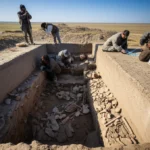
- Archaeological Hopes: In the late 19th century, German archaeologist Robert Koldewey excavated Babylon. He found a building with arched vaults and a strange well that he thought was the water-lifting mechanism. He was convinced he had found the spot.
The Problem:
Koldewey’s “evidence” was circumstantial. The “arches” might have been storage rooms, and the “well” could have been a cistern for a different purpose. More damningly, no Babylonian inscription from Nebuchadnezzar’s reign mentions the gardens. If a king built a wonder that would be remembered for 2,0 years, why didn’t he brag about it in his own writings?
💡 Fun Fact: The word “Babylon” itself became a byword for luxury and confusion. It’s possible that later Greek writers, hearing stories of a “hanging garden” in the region, simply assumed it was in the most famous city of the area: Babylon.
2. The Nineveh Hypothesis: Did Sennacherib Steal the Spotlight?
Enter Dr. Stephanie Daley, an Oxford scholar who turned the academic world on its head. In her groundbreaking research, she proposed that the Hanging Gardens of Babylon were actually the Gardens of Nineveh, built by the Assyrian King Sennacherib (reigned 704–681 BC).
The Case for Nineveh:
- The Textual Smoking Gun: Sennacherib left detailed inscriptions describing his own “wonder for all peoples.” He wrote about a garden with cedars, cypresses, and exotic plants, watered by a massive aqueduct system he built.
- The Name Game: Sennacherib renamed the gates of Nineveh after Babylonian gods and even called his new palace “Babylon.” It’s easy to see how later historians confused the two cities.
- The Engineering Match: Sennacherib built an aqueduct at Jerwan (over 80 km long) using stone arches and waterproof cement. This matches the description of the water system needed for the Hanging Gardens far better than anything found in Babylon.
- The Bas-Relief: A carving from the North Palace of Ashurbanipal (Sennacherib’s grandson) depicts a lush garden with a waterfall and trees, clearly inspired by Sennacherib’s work.
Why this matters:
If Daley is right, the “Hanging Gardens of Babylon” is a case of historical misatribution. The gardens existed, but they were in Nineveh (near modern Mosul), not Babylon.
🤔 Curiosity Check: If the gardens were in Nineveh, why did the Greeks call them the “Gardens of Babylon”? We’ll get to that in the “Myth vs. Reality” section, but the short answer is: confusion. The Assyrian and Babylonian empires were rivals, but their cultures blended, and names got swapped over centuries.
3. The Archaeological Dead End: What Excavations Actually Found
So, where does the physical evidence stand?
| Location | Excavator | Key Findings | Verdict |
|---|---|---|---|
| Babylon | Robert Koldewey (189) | Arched vaults, a well, brick walls. | Inconclusive. No definitive proof of gardens. |
| Nineveh | Various (19th-20th C) | Sennacherib’s aqueduct, bas-reliefs of gardens. | Strong Corelation. Matches descriptions, but specific garden site unexcavated. |
| Jerwan | Various | Massive stone aqueduct with waterproof cement. | Supports Nineveh Theory. Proves advanced irrigation existed. |
The Babylonian Problem:
The Euphrates River shifted its course over the centuries. Much of western Babylon, where the palace was, is now under the riverbed. Excavating there is dangerous and often impossible. This means we might never find the “smoking gun” in Babylon.
The Nineveh Advantage:
The site of Nineveh is on land, but it has been heavily damaged by modern conflicts and urban development. However, the aqueducts and inscriptions are there, waiting to be read.
🌍 Travel Tip: If you want to visit the potential sites, Babylon is a UNESCO World Heritage site near Hillah, Iraq. Nineveh is near Mosul, which has seen significant restoration efforts after recent conflicts. Always check current travel advisories!
📜 Ancient Chronicles: How Classical Writers Described the Lost Wonder
The story of the Hanging Gardens is largely told through the eyes of Greek and Roman writers. These authors lived centuries after the gardens supposedly fell into ruin, relying on second-hand accounts and oral traditions.
The Key Descriptions:
- Diodorus Siculus (1st Century BC): Described the gardens as a “mountain of trees” with terraces rising 50 cubits (about 75 feet). He mentioned a screw pump to lift water.
- Strabo (1st Century BC): Noted that the gardens were built on a citadel and watered by the Euphrates.
- Quintus Curtius Rufus (1st Century AD): Described the gardens as being on a citadel 20 stadia in circumference.
The “Syrian” King Clue:
One of the most intriguing details comes from Quintus Curtius Rufus, who referred to the builder as a “Syrian” king. This is a major red flag for the Babylon theory. The Babylonians were not Syrians. However, the Assyrians (who ruled Nineveh) often controlled the region known as Syria. This supports the Nineveh theory.
📚 Deep Dive: For more on how ancient myths shape our understanding of history, check out our article on Folklore and Legends.
🌿 Engineering Marvels: Irrigation Systems and Botanical Secrets
Regardless of the location, the engineering required to create the Hanging Gardens was nothing short of miraculous.
The Water-Lifting Mechanism
The most famous feature of the gardens was the water-raising screw. While Archimedes is often credited with inventing this device, Sennacherib’s inscriptions describe a similar mechanism used centuries earlier.
- How it worked: A screw inside a cylinder, turned by hand or animal power, lifted water from a lower source to the upper terraces.
- The Challenge: In Babylon, the water source was the Euphrates. In Nineveh, it was the Tigris or mountain springs via aqueducts.
The Flora: A Botanical Time Capsule
What grew in these gardens? Classical texts mention a mix of native and exotic plants:
- Native: Olive, Fig, Date Palm, Tamarisk.
- Exotic: Cedar, Cypress, Ebony, Pomegranate, Walnut, Myrrh.
The presence of cedars and cypresses is significant. These trees are native to the mountains of Lebanon and Iran, not the flat plains of Mesopotamia. This suggests a massive import operation, further supporting the idea of a wealthy, powerful king like Sennacherib or Nebuchadnezzar.
🌱 Botanical Fact: The “hanging” aspect likely referred to the terraced structure, where plants overhung the edges, creating a “green waterfall” effect.
🕵️ ♀️ The Great Debate: Did the Gardens Ever Actually Exist?
Here is the million-drachma question: Did the Hanging Gardens of Babylon ever exist?
The Skeptics:
Some historians argue that the gardens were a myth, a poetic invention of Greek writers who wanted to create a perfect wonder.
- No Babylonian Records: The absence of any mention in Babylonian texts is a huge hole in theory.
- Herodotus’s Silence: Herodotus, the “Father of History,” visited Babylon and wrote extensively about it. He never mentioned the gardens.
The Believers:
Others argue that the gardens were real but destroyed or misidentified.
- The Nineveh Evidence: The detailed descriptions of Sennacherib’s gardens and the existence of his aqueduct system make a strong case for their existence.
- The “Lost” Theory: The gardens may have been destroyed by an earthquake or flood in the 1st century AD, leaving no trace.
🎥 Video Insight: In the first YouTube video on this topic, the narrator highlights the contributions of Robert Koldewey and Stephanie Daley. Koldewey’s excavation in Babylon found intriguing but inconclusive evidence, while Daley’s research in 2013 provided a compelling alternative: the gardens were in Nineveh. You can watch the full discussion here.
🗺️ Modern Exploration: Visiting the Ruins of Babylon and Nineveh Today
If you’re a history buff, you might be wondering: Can I visit the Hanging Gardens?
Babylon:
- Location: Near Hillah, Iraq.
- What to see: The Ishtar Gate (reconstructed), the Processional Way, and the ruins of Nebuchadnezzar’s palace.
- Status: A UNESCO World Heritage site, though restoration efforts have been controversial.
Nineveh:
- Location: Near Mosul, Iraq.
- What to see: The ruins of the North Palace, the Kuyunjik mound, and the Jerwan Aqueduct.
- Status: Heavily damaged by recent conflicts, but restoration is underway.
🛡️ Safety First: Travel to Iraq requires careful planning. Always check the latest travel advisories and consider guided tours with reputable agencies.
🧠 Myth vs. Reality: Separating Legend from Historical Fact
Let’s separate the wheat from the chaff.
| Myth | Reality |
|---|---|
| Built by Nebuchadnezzar II | Likely built by Sennacherib in Nineveh. |
| Located in Babylon | Likely located in Nineveh. |
| Watered by the Euphrates | Watered by Tigris or mountain springs via aqueducts. |
| Mentioned by Herodotus | Never mentioned by Herodotus. |
| Destroyed by an earthquake | Possibly destroyed by flood or war. |
The confusion stems from the blending of cultures. The Assyrians and Babylonians were rivals, but their histories are intertwined. When the Greeks arrived, they heard stories of a “hanging garden” and assumed it was in the most famous city: Babylon.
🏆 Final Verdict: Where Do We Stand on the Location?
After sifting through the evidence, the Nineveh theory seems the most plausible. The textual evidence from Sennacherib, the archaeological proof of his aqueducts, and the lack of evidence in Babylon all point to Nineveh.
However, until a definitive inscription is found in Babylon or a specific garden site is excavated in Nineveh, the mystery remains unsolved. The Hanging Gardens of Babylon are a testament to the power of human ingenuity and the fragility of historical memory.
🏁 The Answer: The Hanging Gardens were likely in Nineveh, built by Sennacherib, but history has mislabeled them as the “Gardens of Babylon.”
✅ Conclusion

The search for the Hanging Gardens of Babylon location has taken us from the banks of the Euphrates to the ruins of Nineveh. While the traditional story of Nebuchadnezzar II and Queen Amytis is romantic, the evidence points to Sennacherib and Nineveh as the true creators of this wonder.
Key Takeaways:
- The gardens were likely in Nineveh, not Babylon.
- Sennacherib built an advanced aqueduct system to water them.
- The confusion arose from historical misatribution by Greek writers.
- The gardens may have been destroyed by natural disasters or war.
Our Recommendation:
If you’re a history enthusiast, read Dr. Stephanie Daley’s book, “The Mystery of the Hanging Garden of Babylon”. It’s a masterclass in historical detective work. And if you ever get the chance to visit Iraq, make sure to see both Babylon and Nineveh. You’ll see the layers of history firsthand.
🌟 Final Thought: The Hanging Gardens remind us that history is not just about facts; it’s about the stories we tell. Whether in Babylon or Nineveh, the legacy of these gardens lives on in our imagination.
🔗 Recommended Links
Books & Resources:
- The Mystery of the Hanging Garden of Babylon: Amazon | Oxford University Press
- Secrets of the Dead: The Lost Gardens of Babylon: PBS
Travel & Exploration:
- Babylon UNESCO Site: UNESCO
- Nineveh Restoration Project: Iraqi State Board of Antiquities
❓ FAQ

What are some of theories about the possible location of the Hanging Gardens of Babylon?
The two main theories are:
- Babylon Theory: Built by Nebuchadnezzar II in the city of Babylon.
- Nineveh Theory: Built by Sennacherib in the city of Nineveh.
How did the Hanging Gardens of Babylon get their name and what does it signify?
The name “Hanging Gardens” comes from the Greek word kremastos, meaning “overhanging.” It refers to the terraced structure where plants overhung the edges, creating a “hanging” effect.
Are there any remains of the Hanging Gardens of Babylon that can be visited today?
No definitive remains have been found. The site of Babylon has ruins, but no specific garden structure. The site of Nineveh has aqueducts and inscriptions, but the garden itself is unexcavated.
In which city were the Hanging Gardens of Babylon supposedly located?
Traditionally, they were located in Babylon. However, modern research suggests they were in Nineveh.
What is the historical evidence for the existence of the Hanging Gardens of Babylon?
There is no contemporary Babylonian evidence. The evidence comes from Greek and Roman writers and Assyrian inscriptions from Sennacherib.
Were the Hanging Gardens of Babylon one of the Seven Wonders of the Ancient World?
Yes, they are listed as one of the Seven Wonders of the Ancient World.
Is the location of the Hanging Gardens of Babylon still disputed among historians?
Yes, the location is still disputed. While the Nineveh theory is gaining traction, the Babylon theory remains popular in traditional accounts.
What were the Hanging Gardens of Babylon used for?
They were likely built as a royal pleasure garden to recreate the mountainous homeland of a queen.
Who destroyed the Hanging Gardens of Babylon?
The exact cause is unknown, but they were likely destroyed by an earthquake or flood in the 1st century AD.
Is the Hanging Gardens of Babylon still standing today?
No, the gardens are gone. Only ruins and inscriptions remain.
Read more about “💰 The Lost Treasure of Lima: Myth, Mutiny & The Billion-Dollar Hunt (2024)”
Where is Babylon located today?
Babylon is located near Hillah, in the Babil province of Iraq.
Read more about “🏺 The Ark of the Covenant Location: 10 Theories & The Truth (2026)”
Where is the Hanging Gardens of Babylon located?
If the Nineveh theory is correct, they were located near Mosul, in Iraq.
📚 Reference Links
- Wikipedia: Hanging Gardens of Babylon
- PBS: Q&A with Dr. Stephanie Daley
- Oxford University Press: The Mystery of the Hanging Garden of Babylon
- UNESCO: Babylon World Heritage Site
- Iraqi State Board of Antiquities: Nineveh Restoration