Support our educational content for free when you purchase through links on our site. Learn more
🎬 Is There a Movie Based on the Dyatlov Pass Incident?

Yes—Devil’s Pass (2013) is a horror thriller inspired by the Dyatlov Pass Incident, but its dramatic explanation is fictional. For a nonfiction look at the mystery, An Unknown Compelling Force (2021) explores the case without pretending that every unanswered question has a tidy ending.
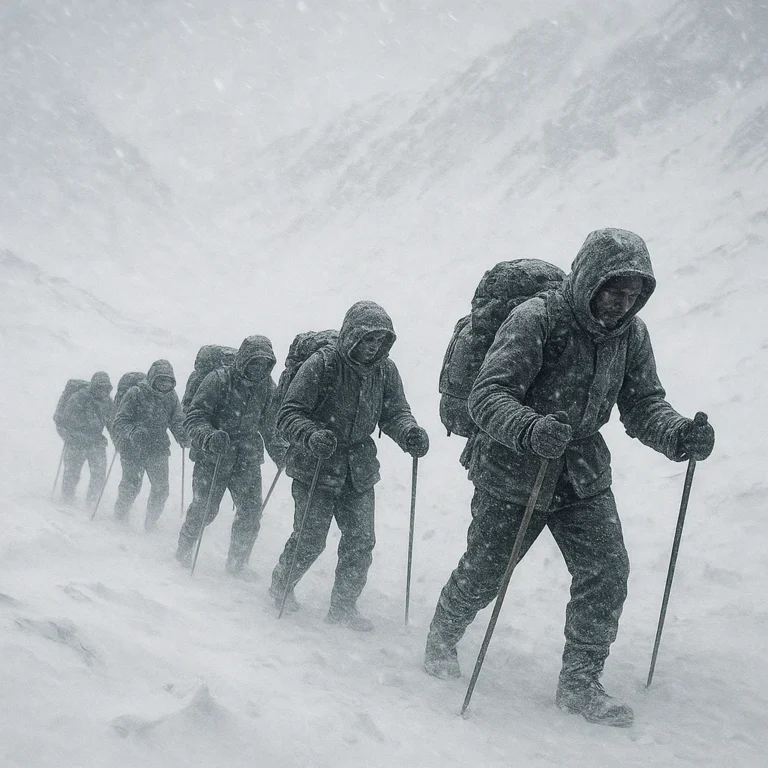
The real tragedy happened in 1959, when nine Soviet hikers died in the Ural Mountains. One detail has kept audiences wondering for decades: searchers found the group’s tent damaged on a mountainside, while the hikers were discovered elsewhere in the freezing landscape. It’s the kind of unsettling starting point filmmakers can’t resist—and Devil’s Pass takes it in a decidedly cinematic direction.
Key Takeaways
- Yes, there is a movie: Devil’s Pass is the best-known fictional film inspired by the Dyatlov Pass Incident.
- It is not a true account: The movie uses real case details but invents its central science-fiction explanation.
- For a documentary, try An Unknown Compelling Force: It examines the incident and its theories without claiming to solve the mystery.
- Keep history and storytelling separate: The case has plausible natural explanations, but the evidence remains debated.
Table of Contents
- ⚡️ Quick Tips and Facts
- 🏔️ The Dyatlov Pass Incident: A Brief History
- What happened to the nine hikers?
- Theories about the tragedy
- 🎬 Is There a Movie Based on the Dyatlov Pass Incident?
- Devil’s Pass (2013): The Dyatlov Pass horror movie
- Other films and documentaries about the Dyatlov Pass
- 📖 Devil’s Pass Plot: What Happens in the Movie?
- How the film’s story differs from the real events
- Spoiler-free overview
- 🎭 Devil’s Pass Cast and Characters
- 🎥 Production: Renny Harlin’s Found-Footage Approach
- Where was Devil’s Pass filmed?
- Why the movie changes the Dyatlov Pass story
- 📅 Release, Streaming, and Where to Watch
- ⭐ Reception: Reviews and Audience Reactions
- 🧭 How Accurate Is Devil’s Pass?
- Real details the film gets right
- Fictional elements and dramatic inventions
- 👻 Why the Dyatlov Pass Still Inspires Horror Movies
- ✅ Is Devil’s Pass Worth Watching?
- Who might enjoy the movie
- What to watch if you want a more factual account
- 🔗 Recommended Links
- ❓ FAQ
- What is the movie based on the Dyatlov Pass Incident called?
- Is Devil’s Pass a true story?
- Is Devil’s Pass the same as The Dyatlov Pass Incident?
- Where can I watch Devil’s Pass?
- Are there documentaries about the Dyatlov Pass Incident?
- 📚 Reference Links
⚡️ Quick Tips and Facts
Yes: there is a feature film inspired by the Dyatlov Pass Incident. The best-known is Devil’s Pass (2013), a found-footage horror thriller directed by Renny Harlin. It borows the real 1959 tragedy as its starting point, then heads into fictional science-fiction territory.
For the historical event itself, begin with our guide to the Dyatlov Pass Incident. The key distinction is simple: a movie can be based on a real mystery without its explanation being historical fact.
| Quick fact | What to know |
|---|---|
| Best-known fictional film | Devil’s Pass (originaly titled The Dyatlov Pass Incident) |
| Release year | 2013 |
| Director | Renny Harlin |
| Format | Found-footage horror / science-fiction thriller |
| Historical inspiration | The deaths of nine Soviet hikers in the northern Ural Mountains in 1959 |
| Documentary option | An Unknown Compelling Force (2021) |
| Is the film a true account? | No. It uses the real incident as a launchpad for an invented story |
| Best viewing tip | Watch the film for its atmosphere; use reliable historical sources to assess the real case |
The movie’s central question is whether the hikers encountered something extraordinary. The more useful question for viewers is: where does the documented history end and the screenplay begin? We’ll mark that boundary as we go.
🏔️ The Dyatlov Pass Incident: A Brief History

The Dyatlov Pass Incident refers to the deaths of nine members of a Soviet hiking group in the northern Ural Mountains in February 1959. The expedition was led by experienced hiker Igor Dyatlov. The group’s tenth member, Yuri Yudin, turned back earlier because of illness and survived.
The hikers’ tent was later found damaged on a mountainside, and the search party discovered the group’s bodies in the surrounding area. The case drew lasting attention because of the harsh winter conditions, the hikers’ apparent flight from the tent, and injuries that became sensationalized in later retellings. For a grounded overview, see the Dyatlov Pass Foundation’s historical materials and our incident history.
What happened to the nine hikers?
The group set out on a winter expedition in the Ural region in January 1959. After they failed to return as expected, a search operation began. Searchers eventually found the tent and the hikers’ remains at different locations on the slope and in a nearby ravine.
A Soviet investigation concluded that the hikers died because of an “unknown compelling force”—a phrase that helped turn a tragic, incomplete investigation into a durable mystery. It was not proof of a paranormal event. It was the investigation’s broad conclusion, made amid limited evidence and uncertainty.
In 2019, Russian authorities reopened the inquiry and said they were examining natural explanations, including an avalanche, a snow slab, and a hurricane-like wind. A later scientific study proposed that a small, delayed slab avalanche could account for important aspects of the evidence; that proposal remains an explanation to evaluate, not a magic key that makes every detail disappear. See the peer-reviewed study in Communications Earth & Environment and the BBC’s report on the renewed investigation.
Theories about the tragedy
Theories range from ordinary mountain hazards to murder, military activity, UFOs, and secret experiments. Some are more testable than others.
| Explanation | Why it attracts attention | What to keep in mind |
|---|---|---|
| Snow slab or avalanche | Could explain a sudden perceived threat and the hikers’ urgent departure | Researchers debate how the terrain, snow conditions, and injuries fit specific avalanche models |
| Severe weather and exposure | Cold, wind, darkness, and difficult terrain were real dangers | Exposure explains many outcomes, but not necessarily every disputed detail on its own |
| Human conflict or military activity | Offers a dramatic explanation for secrecy and uncertainty | Extraordinary claims require evidence; popular retellings often exceed what records establish |
| UFOs or paranormal events | Makes for compelling mystery storytelling | No reliable evidence establishes an extraterestrial or supernatural cause |
| Fictional science-fiction explanations | Used by films such as Devil’s Pass | These belong to the screenplay, not the historical record |
We can understand the appeal of the wilder theories without treating them as equally supported. A strange detail is not automatically evidence of a strange cause. The case has also become part of modern folklore and legend, a useful lens for exploring how uncertainty grows into storytelling. See History Hidden’s Folklore and Legends and Mythology Stories collections.
🎬 Is There a Movie Based on the Dyatlov Pass Incident?
Yes. Devil’s Pass is the best-known narrative feature film based on the incident. It follows a group of American students who travel to Russia to investigate the hikers’ deaths. Its found-footage format gives the story a documentary-like surface, but the plot eventually turns toward speculative horror and science fiction.
There is also An Unknown Compelling Force (2021), a documentary that investigates the case through interviews, historical discussion, and a journey to the region. These works serve different purposes: one invents a thriller around the mystery; the other examines the mystery as a real historical event.
Devil’s Pass (2013): The Dyatlov Pass horror movie
Originally released as The Dyatlov Pass Incident in some markets, Devil’s Pass was directed by Renny Harlin and written by Vikram Wet. It stars Holly Goss, Matt Stokoe, Luke Albright, Ryan Hawley, and Gema Atkinson. The feature runs about 96 minutes.
The setup is familiar to mystery fans: a student expedition retraces the hikers’ route, records its progress, and begins uncovering clues that seem to point beyond a straightforward mountain tragedy. The film uses real names, locations, and case details to build credibility, then adds fictional discoveries and an invented explanation.
That blend is the film’s main attraction and its main drawback. If you enjoy conspiracy-flavored horror, the real case gives the movie a chilling foundation. If you want a careful historical reconstruction, the invented plot may feel like the movie has wandered off the mountain.
Other films and documentaries about the Dyatlov Pass
| Title | Year | Format | Best for |
|---|---|---|---|
| Devil’s Pass | 2013 | Found-footage horror / science fiction | Viewers wanting a fictional thriller inspired by the incident |
| An Unknown Compelling Force | 2021 | Documentary | Viewers wanting interviews, competing explanations, and an investigation-focused account |
An Unknown Compelling Force, written and directed by Liam Le Guillou, includes interviews with people connected to the case, including Yuri Yudin, the expedition member who turned back. It explores theories but does not claim to settle the mystery. Apple describes it as a documentary examining the incident and the competing explanations; see the Apple TV listing.
If the video featured above is available, the featured YouTube video covers The Devil’s Pass and introduces the film’s premise. It can help you decide whether the found-footage approach sounds appealing before you watch.
📖 Devil’s Pass Plot: What Happens in the Movie?
Devil’s Pass follows five Oregon college students who travel to Russia to investigate the deaths of the nine hikers. They retrace the expedition, document their journey, and encounter clues that suggest the original tragedy may have involved more than weather and terrain.
As the students’ expedition grows more dangerous, the story moves from historical mystery into a heightened science-fiction horror plot. The film introduces hidden facilities, unusual phenomena, and a time-loop twist. Those elements are fictional narrative devices, not findings from the 1959 investigation.
How the film’s story differs from the real events
The movie takes recognizable elements from the case—winter travel, the remote mountain setting, a damaged tent, and unanswered questions—and reshapes them for suspense.
| In the film | In the historical case |
|---|---|
| American students investigate the tragedy | A Soviet hiking group undertook the expedition |
| New discoveries propel the plot | The surviving historical record is incomplete and contested |
| A secret, science-fiction explanation drives the ending | No reliable evidence establishes the film’s extraordinary explanation |
| The story is built around a horror-movie reveal | Historical research compares records, terrain, weather, and testimony |
The movie’s invented explanation is not an alternative historical theory backed by evidence. It is the payoff to a fictional thriller. That distinction matters because the film’s confident visual storytelling can make invented details feel like archival discoveries.
Spoiler-free overview
Without giving away the ending, expect:
- A found-footage structure built around the students’ recordings.
- A gradual shift from investigation to survival horror.
- Cold, remote-location atmosphere and conspiracy-style clues.
- A finale that prioritizes a dramatic science-fiction explanation over historical restraint.
Our viewing advice: go in knowing the film is fiction inspired by a real tragedy. That lets you enjoy the suspense without confusing a plot twist for a historical conclusion.
🎭 Devil’s Pass Cast and Characters
The film’s main characters are the student investigators rather than dramatized versions of the original hikers.
| Actor | Role |
|---|---|
| Holly Goss | Holly |
| Matt Stokoe | Jensen |
| Luke Albright | Andy |
| Ryan Hawley | JP |
| Gema Atkinson | Denise |
The student team gives the story a contemporary point of entry: viewers learn about the case as the characters investigate it. That approach works well for exposition, though it also means the film’s historical figures remain more mysterious than fully developed.
For verified film details and credits, consult the BFI’s film database or the film’s listings from established film databases and distributors.
🎥 Production: Renny Harlin’s Found-Footage Approach
Director Renny Harlin, known for action and thriller films including Die Hard 2 and Cliffhanger, frames the story as recordings made during an expedition. The shaky-camera format is designed to make the students’ investigation feel immediate—and to give the audience the unsettling impression that it is watching recovered evidence.
That style has a clear benefit: the remote landscape feels more intimate and unstable. Its drawback is equally clear: found footage can make exposition clumsy, and deliberate camera movement is not everyone’s idea of a relaxing movie night.
Where was Devil’s Pass filmed?
The film was produced as a UK-Russia project and its story takes place in Russia’s Ural region. Production accounts commonly describe filming in northern Russia, though the film’s locations should not be confused with a documentary record of the hikers’ actual route.
When a film says it retraces a real expedition, it is worth separating three things: the historical location, the production location, and the fictional geography created by editing. The onscreen landscape helps establish mood; it does not independently verify the plot.
Why the movie changes the Dyatlov Pass story
A film built only around unresolved evidence risks ending without a conventional reveal. Devil’s Pass solves that storytelling problem by creating one. Its secret installations and science-fiction elements provide a concrete antagonist and a final explanation, even though the historical case does not offer that kind of neat closure.
That choice has two sides:
- ✅ It gives horror fans a bold, memorable payoff.
- ✅ It turns obscure historical details into an accessible thriller.
- ❌ It can blur the line between sourced fact and invented plot.
- ❌ It may disappoint viewers seeking a sober account of the hikers’ deaths.
📅 Release, Streaming, and Where to Watch
Devil’s Pass was released in 2013, with the title The Dyatlov Pass Incident used in some markets. Availability varies by country and can change, so check your local listings through legitimate digital stores and streaming services rather than relying on an old “watch it here” article.
The documentary An Unknown Compelling Force was released digitally in 2021. Apple provides a current title page; availability and viewing options may differ by region.
| If you want… | Look for… |
|---|---|
| A fictional horror-thriller | Devil’s Pass / The Dyatlov Pass Incident |
| A documentary investigation | An Unknown Compelling Force |
| Historical context before watching | The Dyatlov Pass Foundation archive and our incident overview |
⭐ Reception: Reviews and Audience Reactions
Reviews of Devil’s Pass have been mixed. Critics have praised its intriguing premise and atmosphere while criticizing familiar found-footage conventions and the gap between its real-world inspiration and increasingly outlandish plot.
The competing reviews summarized for this article capture that split. SFX reportedly called the film “a scare-free thriller,” while Dread Central described it as “a thoroughly intriguing mash-up of sci-fi, horror and real-life mystery.” Those judgments are not really contradictory: one reviewer may be measuring scares and originality, another the appeal of the premise and genre blend.
The 2021 documentary received a more investigation-oriented response. An Unknown Compelling Force has been described as entertaining and researched, while reviewers have also questioned its presentation and noted that it reaches no definitive conclusion. That is a fair expectation for a documentary about disputed evidence: a worthwhile investigation can clarify arguments without solving the case.
Our take: approach Devil’s Pass as a late-night genre movie, not a history lesson. For a nonfiction companion, watch the documentary with a healthy eye for how interviews and theories are framed.
🧭 How Accurate Is Devil’s Pass?
The movie is inspired by the incident, but its central explanation is fictional. It borows the basic premise of an investigation into the hikers’ deaths, then builds an invented science-fiction story around it.
To judge accuracy, compare each claim with the historical record rather than asking whether the film “fels true.” The Dyatlov Pass Foundation collects case materials, while the peer-reviewed avalanche study offers one scientific model for a possible natural explanation.
Real details the film gets right
At a broad level, the film draws on several real features of the case:
- Nine hikers died during a winter expedition in 1959.
- The damaged tent and the hikers’ location away from it became central details in later discussion.
- The investigation left questions that encouraged competing interpretations.
- The remote, severe mountain environment is essential to understanding the event.
These facts establish the film’s historical foundation. They do not validate the movie’s fictional discoveries or its ending.
Fictional elements and dramatic inventions
The American student team, its discoveries, and the film’s extraordinary scientific explanation belong to the screenplay. The secret-facility and time-loop material is not an established part of the historical case.
A useful viewing checklist:
- Identify the claim. Is it about a known event, or a new revelation created for the film?
- Check the source. Does a primary record or reputable historical analysis support it?
- Separate evidence from interpretation. A physical detail may be documented while its cause remains debated.
- Treat cinematic certainty cautiously. A dramatic reveal is satisfying storytelling, not proof.
The case has attracted a wide range of theories, but not all are equally supported. A natural explanation such as a snow slab can be assessed against terrain and weather evidence; a claim involving secret experiments needs direct evidence of those experiments. Suspense is not a source citation.
👻 Why the Dyatlov Pass Still Inspires Horror Movies
The incident has a potent horror-movie structure: a remote winter landscape, a group cut off from help, unexplained decisions, scattered evidence, and an investigation that does not offer a universally accepted answer. Those ingredients leave room for both careful research and extravagant invention.
There is also a deeper reason the story endures. People tend to prefer a clear cause to an unresolved tragedy. A movie supplies answer—even a fictional one—while history often has to leave several questions open. That tension links the case to broader folklore and legends and to the way modern mysteries become cultural stories.
The most responsible approach is not to drain the case of its mystery, but to distinguish what is known, what is plausible, and what exists only for the screen.
✅ Is Devil’s Pass Worth Watching?
Yes, if you want a mody found-footage thriller and understand that it fictionalizes the Dyatlov Pass story. It is a less suitable choice if your main goal is historical accuracy or a definitive explanation of the tragedy.
| Viewer type | Recommendation |
|---|---|
| Found-footage horror fan | ✅ Try it for the atmosphere and conspiracy-style escalation |
| Dyatlov Pass history enthusiast | ✅ Watch it as an adaptation, then compare it with historical sources |
| Viewer seeking documentary evidence | ❌ Start with An Unknown Compelling Force or archival material |
| Viewer who dislikes shaky-camera films | ❌ The format may become a distraction |
| Viewer expecting a fact-based ending | ❌ The fictional reveal is likely to frustrate you |
Who might enjoy the movie
You’re more likely to enjoy Devil’s Pass if you like:
- Found-footage films such as The Blair Witch Project.
- Remote-setting survival stories.
- Conspiracy thrillers that turn historical puzzles into genre plots.
- Films that take big swings, even when the science-fiction explanation stretches credibility.
The movie’s strongest asset is the real mystery as a premise. Its weakest point, for historically minded viewers, is the way it uses that premise to deliver a made-up answer.
What to watch if you want a more factual account
Choose An Unknown Compelling Force for a documentary treatment with interviews and competing explanations. It explores theories without resolving the incident, and its Apple TV page describes the film’s investigative focus.
For further reading, compare the documentary with the Dyatlov Pass Foundation’s case materials and the peer-reviewed study of a possible snow-slab avalanche. A strong research habit is to compare the film, the evidence, and the interpretation separately.