Support our educational content for free when you purchase through links on our site. Learn more
9 Biggest Mysteries About the Pyramids Uncovered in 2026 🏺

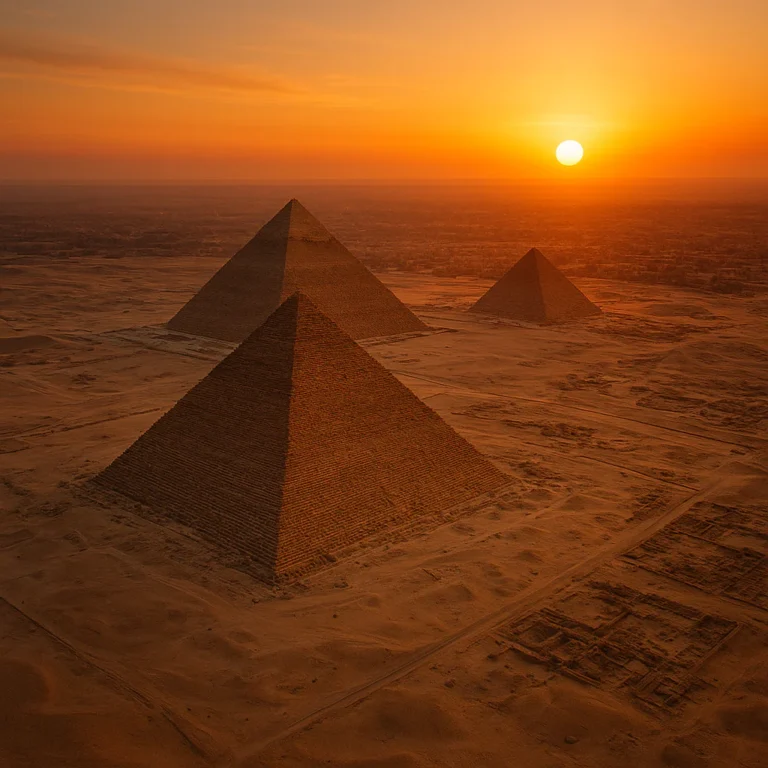
The Egyptian pyramids have fascinated humanity for millennia, standing as silent sentinels to a lost world of ancient secrets. But despite centuries of study, these colossal stone monuments still guard some of history’s most tantalizing mysteries. How exactly were they built with such precision? What hidden chambers lie within the Great Pyramid of Khufu? And why did the Egyptians suddenly stop constructing these monumental tombs?
In this deep dive, the History Hidden™ team unpacks 9 of the biggest pyramid mysteries, blending cutting-edge scientific discoveries with ancient lore. From the enigmatic Bent Pyramid’s strange shape to the astonishing alignment of these structures with the stars, we’ll explore every angle. Plus, we reveal how modern technology like muon tomography is peeling back the layers of time, uncovering secrets that even the pharaohs might not have known. Ready to unravel the greatest enigmas of Egypt’s pyramids? Let’s get started!
Key Takeaways
- Pyramids were built using ingenious combinations of ramps, sledges, and water transport, not slave labor or alien technology.
- The Great Pyramid contains hidden voids and cavities detected by muon tomography, sparking new theories about their purpose.
- The Bent Pyramid’s unusual shape reveals early architectural experimentation and challenges.
- Pyramid construction ceased due to religious shifts, tomb robbing, and political changes around 1500 BCE.
- The pyramids’ precise cardinal alignment reflects advanced astronomical knowledge and sacred geometry.
- Modern science continues to unlock pyramid secrets with non-invasive imaging and satellite surveys.
- Many popular myths and conspiracy theories lack credible evidence and should be approached critically.
Curious about the secret chambers or the mysterious Nile branch that helped transport massive stones? Keep reading to uncover these and more fascinating insights!
Table of Contents
- ⚡️ Quick Tips and Fascinating Facts About the Egyptian Pyramids
- 🏛️ Ancient Marvels Unveiled: The History and Origins of the Egyptian Pyramids
- 1️⃣ Pyramid Mystery #1: How Were the Pyramids of Egypt Built? Engineering Secrets and Theories
- 2️⃣ Pyramid Mystery #2: What’s Inside the Mysterious Cavities of the Great Pyramid of Khufu?
- 3️⃣ Pyramid Mystery #3: Why Did the Egyptians Suddenly Stop Building Pyramids? Cultural and Political Shifts Explored
- 4️⃣ Pyramid Mystery #4: The Enigma of the Bent Pyramid—Why the Odd Shape?
- 5️⃣ Pyramid Mystery #5: How Did Ancient Egyptians Transport Massive Stone Blocks Without Modern Machinery?
- 6️⃣ Pyramid Mystery #6: The Alignment Puzzle—Why Are the Pyramids Perfectly Oriented to the Cardinal Points?
- 7️⃣ Pyramid Mystery #7: The Purpose of the Pyramids—Tombs, Temples, or Astronomical Observatories?
- 8️⃣ Pyramid Mystery #8: The Hidden Chambers and Secret Passages—Fact or Fiction?
- 9️⃣ Pyramid Mystery #9: The Role of Mathematics and Sacred Geometry in Pyramid Construction
- 🔍 Modern Science and Technology: How Are Researchers Unlocking Pyramid Secrets Today?
- 🧩 Debunking Myths and Conspiracy Theories About the Pyramids
- 🌍 The Global Impact: How the Egyptian Pyramids Influence Modern Culture and Architecture
- 📚 Recommended Links for Further Exploration on Pyramid Mysteries
- ❓ Frequently Asked Questions (FAQ) About the Egyptian Pyramids
- 📖 Reference Links and Credible Sources for Pyramid Research
⚡️ Quick Tips and Fascinating Facts About the Egyptian Pyramids
Welcome to the world of pyramids, where mystery meets monumentality! At History Hidden™, we’ve dug deep (figuratively and literally) to bring you some quick, mind-boggling facts that set the stage for the biggest pyramid puzzles:
- The Great Pyramid of Khufu originally soared to about 481 feet—that’s taller than the Statue of Liberty!
- It’s made of roughly 2.3 million stone blocks, each weighing between 2.5 and 16 tons. Imagine moving those without cranes!
- There are over 100 pyramids in Egypt, mostly clustered along the Nile’s west bank, symbolizing the journey to the afterlife.
- The Bent Pyramid is unique for its unusual slope change—an architectural mystery we’ll unravel soon.
- Advanced tech like muon tomography has revealed hidden voids inside pyramids, sparking fresh debates about their purpose.
- The ancient Egyptians transported stones from quarries as far as 500 miles away, including granite from Aswan.
- Pyramid building stopped around 1500 BCE, replaced by tombs in the Valley of the Kings—why? Stay tuned!
Pro tip: If you want to dive deeper, check out our detailed Pyramids of Giza mysteries article for more hidden gems.
Ready to uncover the secrets? Let’s journey back over 4,000 years and explore the marvels and mysteries of these ancient wonders! 🌍🔍
🏛️ Ancient Marvels Unveiled: The History and Origins of the Egyptian Pyramids
The pyramids are not just stone structures; they are time capsules of ancient Egyptian civilization. Here’s a quick historical roadmap:
- Origins: The earliest pyramids date back to the Third Dynasty (circa 2700 BCE), with the Step Pyramid of Djoser at Saqqara, designed by the visionary architect Imhotep.
- Purpose: Primarily built as tombs for pharaohs, pyramids symbolized the pharaoh’s divine journey to the afterlife.
- Evolution: From stepped designs to smooth-sided pyramids like those at Giza, architectural sophistication grew dramatically.
- Cultural Significance: Pyramids reflected religious beliefs, political power, and the Egyptians’ mastery of mathematics and astronomy.
Fun fact: The Great Pyramid was the tallest man-made structure on Earth for over 3,800 years!
But how did they pull off such feats without modern tools? And what secrets lie inside? We’ll explore these in the upcoming sections. For a fascinating blend of history and legend, visit our Folklore and Legends and Mythology Stories categories.
1️⃣ Pyramid Mystery #1: How Were the Pyramids of Egypt Built? Engineering Secrets and Theories
This is the million-dollar question (or should we say multi-million-ton question?). The construction of pyramids like Khufu’s remains one of history’s greatest engineering puzzles.
Theories on Construction Techniques
| Theory | Description | Supporting Evidence | Challenges |
|---|---|---|---|
| Ramps (Straight, Spiral) | Large ramps made of mudbrick and limestone chippings to haul blocks upward | Some ramp remnants found; logical for elevation | Massive ramps would require enormous resources |
| Sleds and Wet Sand | Stones dragged on sledges over sand wetted to reduce friction | Wall paintings depict sledges; experiments confirm wet sand reduces friction | Requires precise water management |
| Wooden Rollers | Logs placed under stones to roll them forward | Common in other ancient cultures | No direct evidence in Egypt; wood scarce |
| Changing Block Shapes | Blocks shaped to roll or slide more easily | Hypothetical; no archaeological proof | Speculative; lacks physical evidence |
What We Know for Sure
- The wheel was not used for transporting stones in pyramid construction.
- Stones were quarried locally (limestone) and from distant sites (granite from Aswan).
- Workers were skilled laborers, not slaves, organized into teams with specialized roles.
- Recent satellite and geophysical studies, including the discovery of a long-lost Nile branch near pyramid sites (BBC report), suggest waterways played a crucial role in transporting heavy stones closer to the construction sites.
“The discovery of a buried river branch near the pyramids provides a missing piece in the logistics puzzle.” — Prof. Eman Ghoneim, University of North Carolina Wilmington
Our Take at History Hidden™
While no single theory fully explains the construction, it’s likely a combination of ramps, sledges, and water transport was used. The ingenuity of ancient Egyptians in organizing massive labor forces and resources is truly awe-inspiring!
2️⃣ Pyramid Mystery #2: What’s Inside the Mysterious Cavities of the Great Pyramid of Khufu?
In 2017, a breakthrough came with the use of muon tomography—a technique that detects cosmic ray particles passing through stone—to peer inside the Great Pyramid without drilling.
The Discoveries
- A small 15-foot-long passage on the north face, previously unknown.
- A large 100-foot-long void above the Grand Gallery, dubbed the “Big Void,” whose purpose remains unclear.
Possible Explanations
- Relief Chambers: To reduce weight and stress on lower chambers.
- Hidden Burial Chambers: Speculated but no artifacts found yet.
- Construction Gaps: Spaces left during building for structural reasons.
What’s Next?
Ongoing research aims to map these voids in detail. The mystery deepens: are these empty spaces or do they hide secrets yet to be uncovered?
3️⃣ Pyramid Mystery #3: Why Did the Egyptians Suddenly Stop Building Pyramids? Cultural and Political Shifts Explored
Around 1500 BCE, pyramid construction ceased, replaced by tombs carved into rock in the Valley of the Kings. Why?
Theories
- Religious Changes: Shift towards new burial practices emphasizing hidden tombs to protect the dead.
- Tomb Robbing: Pyramids became targets for robbers, making them less secure.
- Economic and Political Factors: Resources diverted to other projects; changes in power centers.
- Geographical Challenges: The Theban region’s rugged terrain favored rock-cut tombs over massive monuments.
Structural Issues
- The Bent Pyramid’s unusual shape may indicate early engineering challenges that influenced future designs.
- Thermal expansion and contraction caused outer casing stones to disintegrate, possibly discouraging further pyramid building.
4️⃣ Pyramid Mystery #4: The Enigma of the Bent Pyramid—Why the Odd Shape?
The Bent Pyramid at Dahshur is a curious case—its lower half rises at a steep 54 degrees, then suddenly shifts to a shallower 43 degrees.
Possible Reasons
- Structural Stability: Builders may have altered the angle mid-construction to prevent collapse.
- Engineering Experiment: A transitional design between step pyramids and smooth-sided pyramids.
- Symbolic Meaning: Some suggest religious or symbolic significance in the shape change.
What We Know
- The Bent Pyramid is one of the best-preserved pyramids, with much of its original smooth limestone casing intact.
- It represents a critical step in pyramid evolution, blending old and new architectural ideas.
5️⃣ Pyramid Mystery #5: How Did Ancient Egyptians Transport Massive Stone Blocks Without Modern Machinery?
Transporting multi-ton blocks over land and water was a Herculean task. Here’s how they might have done it:
Land Transport
- Sledges: Large wooden sledges dragged over sand, with wet sand reducing friction.
- Rollers: Possibly logs used as rollers, though evidence is scant.
- Manpower: Teams of workers coordinated with ropes and levers.
Water Transport
- The discovery of an ancient Nile branch near pyramid sites (BBC) suggests stones were floated closer to construction sites on barges.
- Seasonal flooding of the Nile may have facilitated transport during certain months.
6️⃣ Pyramid Mystery #6: The Alignment Puzzle—Why Are the Pyramids Perfectly Oriented to the Cardinal Points?
The Great Pyramid’s sides are aligned with incredible precision to the four cardinal points (north, south, east, west), deviating by only a few arc minutes.
How Did They Do It?
- Astronomical Observations: Using stars like the circumpolar stars or the sun’s shadow at equinoxes.
- Tools: Simple but effective tools like the merkhet (an ancient Egyptian surveying instrument).
- Mathematical Knowledge: Sophisticated understanding of geometry and astronomy.
This precision hints at the Egyptians’ deep connection with the cosmos and their desire to embed cosmic order into their monuments.
7️⃣ Pyramid Mystery #7: The Purpose of the Pyramids—Tombs, Temples, or Astronomical Observatories?
While pyramids are traditionally seen as royal tombs, alternative theories abound:
- Tombs: The mainstream view, supported by burial chambers and funerary artifacts.
- Temples: Some suggest pyramids served as places of worship or ritual centers.
- Astronomical Observatories: Alignments with stars and solstices suggest possible celestial functions.
- Energy Generators: Fringe theories propose pyramids harnessed or emitted energy (see #featured-video for a fascinating dive into this).
Our historians favor a multi-purpose view, where pyramids were primarily tombs but also served religious, symbolic, and possibly astronomical roles.
8️⃣ Pyramid Mystery #8: The Hidden Chambers and Secret Passages—Fact or Fiction?
Legends of secret chambers abound. Recent technology has confirmed some hidden spaces, but many remain speculative.
Confirmed Hidden Spaces
- Voids inside Khufu’s pyramid detected by muon tomography.
- Air-filled cavities in the Pyramid of Menkaure detected by radar and ultrasound.
Speculative Passages
- Tales of secret tunnels leading to treasure or unknown chambers persist but lack archaeological proof.
- Some believe undiscovered chambers hold lost knowledge or artifacts.
9️⃣ Pyramid Mystery #9: The Role of Mathematics and Sacred Geometry in Pyramid Construction
The pyramids are masterpieces of mathematical precision:
- The Golden Ratio and Pi appear embedded in pyramid dimensions, though some debate intentionality.
- The pyramid’s slope angle (~51.5°) is thought to relate to geometric principles.
- Sacred geometry may have symbolized cosmic harmony and divine order.
🔍 Modern Science and Technology: How Are Researchers Unlocking Pyramid Secrets Today?
Cutting-edge tools are revolutionizing pyramid research:
- Muon Tomography: Detects hidden voids without damage.
- Radar and Ultrasound: Reveal internal structures and cavities.
- Satellite Imagery and Geophysical Surveys: Map ancient waterways and landscape features.
- 3D Modeling and Virtual Reality: Allow detailed reconstruction and exploration.
These technologies are peeling back layers of mystery, yet many questions remain open.
🧩 Debunking Myths and Conspiracy Theories About the Pyramids
Pyramids attract wild theories—from alien builders to energy machines. Here’s our historian’s take:
- Alien Construction: No credible archaeological evidence supports extraterrestrial involvement.
- Energy Generators: Experiments with pyramid models show some interesting effects, but no proof of ancient energy tech.
- Hidden Treasures: Most tombs were looted long ago; no secret hoards found despite searches.
We recommend critical thinking and trust in scientific inquiry and archaeological evidence.
🌍 The Global Impact: How the Egyptian Pyramids Influence Modern Culture and Architecture
The pyramids have inspired:
- Modern Architecture: From the Louvre Pyramid in Paris to Las Vegas hotels.
- Pop Culture: Movies, books, and games often feature pyramid mysteries.
- Spiritual Movements: New Age beliefs and pyramid power theories.
Their iconic shape and enigmatic aura continue to captivate imaginations worldwide.
📚 Recommended Links for Further Exploration on Pyramid Mysteries
- National Geographic: Secrets of the Pyramids
- Smithsonian Magazine: How the Great Pyramid Was Built
- BBC News: Scientists Discover Ancient Nile Branch Near Pyramids
- History.com: Giza Pyramid Mysteries
- History Hidden™: Pyramids of Giza Mysteries
❓ Frequently Asked Questions (FAQ) About the Egyptian Pyramids
Q1: Were slaves really used to build the pyramids?
✅ No, current evidence shows skilled laborers and seasonal workers built the pyramids, supported by a well-organized labor system.
Q2: How long did it take to build the Great Pyramid?
✅ Around 20 years, according to most Egyptologists.
Q3: Are there undiscovered chambers inside the pyramids?
✅ Possibly. Modern scanning has revealed voids, but their contents remain unknown.
Q4: Why are the pyramids aligned so precisely?
✅ Likely due to advanced astronomical observations and surveying techniques.
Q5: Did the Egyptians use the wheel to build pyramids?
✅ No, the wheel was not used for transporting stones in pyramid construction.
📖 Reference Links and Credible Sources for Pyramid Research
- BBC News: Pyramid Construction Mystery Solved?
- History.com: Giza Pyramid Mysteries
- Matador Network: Biggest Mysteries About the Pyramids
- National Geographic: Great Pyramid of Giza
- Scientific American: Muon Radiography Reveals Hidden Pyramid Voids
Stay tuned for the conclusion where we tie all these mysteries together and reveal our expert recommendations! Meanwhile, curious about the more speculative side? Check out the featured video for a mind-expanding perspective on pyramid mysteries worldwide!
Conclusion
After journeying through the labyrinth of pyramid mysteries with the History Hidden™ team, one thing is crystal clear: the Egyptian pyramids remain one of humanity’s most astonishing achievements and enduring enigmas. From the incredible feat of moving millions of massive stone blocks without modern machinery, to the discovery of hidden voids inside the Great Pyramid, these monuments continue to challenge our understanding of ancient engineering, culture, and spirituality.
We’ve seen how ingenious construction methods—likely combining ramps, sledges, and water transport along a now-buried Nile branch—enabled the creation of these colossal structures. The precise alignment of the pyramids with the cardinal points and celestial bodies reveals a civilization deeply connected to astronomy and sacred geometry. The sudden cessation of pyramid building speaks to shifting religious beliefs, economic realities, and political changes.
The mystery of the hidden chambers remains tantalizingly unresolved, with advanced technologies like muon tomography opening new doors to discovery. While myths and conspiracy theories abound, the best evidence points to the pyramids as monumental tombs, religious temples, and cosmic symbols—multi-layered in purpose and meaning.
If you’re fascinated by the blend of history, archaeology, and science, the pyramids offer an endless source of wonder. Our confident recommendation? Dive into the latest research, visit the sites if you can, and keep an open mind—because the pyramids still have stories to tell.
Recommended Links for Further Exploration and Shopping
If you want to deepen your understanding or gift a loved one a piece of this ancient wonder, here are some highly recommended books and resources available on Amazon:
-
“The Complete Pyramids: Solving the Ancient Mysteries” by Mark Lehner
Amazon Link
A definitive guide by one of the world’s leading Egyptologists. -
“The Secret of the Great Pyramid” by Peter Tompkins
Amazon Link
Explores the mysteries and theories surrounding the pyramids. -
“Pyramids: The Archaeology and Secrets of Egypt’s Great Monuments” by Joyce Tyldesley
Amazon Link
A thorough and accessible exploration of pyramid history. -
“The Giza Power Plant: Technologies of Ancient Egypt” by Christopher Dunn
Amazon Link
For those interested in alternative theories about pyramid functions.
FAQ
How were the pyramids of Egypt constructed with such precision?
The ancient Egyptians combined advanced surveying tools like the merkhet and plumb bobs with astronomical observations of stars and the sun to align the pyramids with remarkable accuracy. They used simple but effective geometry, and their labor force was highly organized, skilled, and motivated. The precision was a product of careful planning, craftsmanship, and celestial guidance.
What materials were used to build the ancient pyramids?
Primarily limestone blocks quarried locally, with granite imported from Aswan (over 500 miles away) for internal chambers and structural elements. Mortar made from gypsum and other natural materials was used to bind stones. The outer casing, mostly lost now, was made of polished Tura limestone, giving the pyramids their smooth, gleaming appearance.
Why were the pyramids aligned with the stars?
The alignment reflects the Egyptians’ religious and cosmological beliefs. They associated the pyramids with the eternal journey of the pharaoh’s soul among the stars, particularly the circumpolar stars that never set, symbolizing immortality. Aligning the pyramids with celestial bodies was a way to embed cosmic order into their monuments.
What secrets do the pyramids hold about ancient Egyptian civilization?
Beyond their function as tombs, pyramids reveal insights into Egyptian engineering, social organization, religious beliefs, and astronomical knowledge. The discovery of hidden chambers suggests there may still be undiscovered artifacts or information about burial practices, rituals, or construction techniques.
Are there undiscovered chambers inside the pyramids?
Yes, modern technologies such as muon tomography and radar imaging have detected voids and cavities, especially inside the Great Pyramid of Khufu and the Pyramid of Menkaure. While their exact purpose is unknown, ongoing research aims to explore these spaces without damaging the structures.
How did the ancient Egyptians transport massive stones for pyramid construction?
They likely used a combination of sledges dragged over wet sand, barges floated along a now-buried Nile branch, and organized manpower. The recent discovery of this ancient waterway near the pyramid sites (BBC report) provides crucial evidence for waterborne transport of heavy stones closer to the construction areas.
What theories explain the purpose of the pyramids beyond tombs?
While tombs remain the primary function, other theories include:
- Temples for worship and rituals connected to the pharaoh’s divine status.
- Astronomical observatories aligned with stars and solstices.
- Symbolic representations of cosmic order and the primeval mound of creation.
- Fringe ideas propose energy generation or secret knowledge, but these lack credible evidence.
Reference Links and Credible Sources for Verification
- BBC News: Scientists May Have Solved Mystery Behind Egypt’s Pyramids
- History.com: Giza Pyramid Mysteries
- Matador Network: Biggest Mysteries About the Pyramids
- National Geographic: Secrets of the Great Pyramid
- Scientific American: Muon Radiography Reveals Hidden Pyramid Voids
- University of North Carolina Wilmington: Research on Ancient Nile Branch
Thanks for joining us on this epic exploration of pyramid mysteries! Stay curious, and keep uncovering hidden history with History Hidden™.