Support our educational content for free when you purchase through links on our site. Learn more
Unveiling the Pharaoh’s Curse: Myth, Mystery & 13 Chilling Cases 💀


Step into the shadowy world of ancient Egypt’s most infamous legend—the Pharaoh’s curse. From the thrilling discovery of Tutankhamun’s tomb in 1922 to the eerie deaths that followed, this article unravels the truth behind the myth that has haunted explorers, archaeologists, and pop culture for over a century. Did a supernatural hex really doom those who dared disturb the boy king’s resting place, or is there a far more earthly explanation lurking beneath the sands? We’ll explore 13 of the most famous “victims” of the curse, the scientific theories that challenge the spooky tales, and why Hollywood can’t get enough of mummies in 4K + HDR.
Curious about how toxic molds and ancient bacteria might have played a role? Or why some tombs are better left untouched? Stick around—we’ve got the facts, the folklore, and even survival tips for your next Egyptian adventure. Spoiler alert: the real curse might just be our obsession with the unknown!
Key Takeaways
- The Pharaoh’s curse is largely a myth fueled by media sensationalism and coincidence.
- Scientific explanations like toxic mold and radon gas offer plausible causes for the “curse” illnesses.
- Only a small fraction of those who entered Tutankhamun’s tomb died prematurely, many from unrelated causes.
- The curse remains a powerful cultural symbol, inspiring films, books, and collectibles.
- Modern archaeology balances respect for ancient privacy with cutting-edge, non-invasive research methods.
Ready to separate fact from fiction and explore the mysteries of the Pharaoh’s curse? Let’s dive in!
Welcome to History Hidden™, where we peel back the dusty bandages of time to reveal the secrets the ancients didn’t want you to find! Have you ever felt a sudden chill while looking at a photo of a sarcophagus? Or perhaps you’ve wondered why everyone who stepped into Tutankhamun’s tomb seemed to meet a rather… untimely end?
We’ve spent years trekking through the Valley of the Kings, dodging scorpions and overpriced bottled water, just to bring you the truth about the most famous hex in history. Is it a supernatural death warrant, or just a very long string of bad luck and ancient mold? Stick with us—we’re about to dig up the truth. 🏺✨
Table of Contents
- ⚡️ Quick Tips and Facts
- 🏺 The Gilded History: Unearthing Tutankhamun’s Resting Place
- 💀 The Legend of the Pharaoh’s Curse: Fact or Fiction?
- ⚰️ 13 Famous Victims of the Mummy’s Wrath
- 🔬 Digging Deeper: The Science Behind the Superstition
- 🎬 High-Definition History: The Curse in 4K + HDR Cinema
- 🔥 Pop Culture Fever: Why We’re Still Obsessed with Mummies
- 🛡️ Survival Guide: How to Avoid a Curse on Your Next Trip
- 👁️ The Pharaoh’s Privacy: Why Some Tombs Should Stay Closed
- 📜 Conclusion
- 🔗 Recommended Links
- ❓ FAQ
- 📚 Reference Links
⚡️ Quick Tips and Facts
Before we dive into the dark corners of the KV62 tomb, here’s a “cheat sheet” for your next cocktail party or trivia night:
- The Discovery: Howard Carter discovered the tomb of Tutankhamun in November 1922.
- The First “Victim”: Lord Carnarvon died just months after the tomb was opened from an infected mosquito bite. 🦟
- The Inscription: Rumors claimed the tomb had a warning: “Death shall come on swift wings to him who disturbs the peace of the King.” (Spoiler: It wasn’t actually there!)
- The Survivor: Howard Carter, the man who actually opened the tomb, lived for another 17 years and died of natural causes at age 64.
- Scientific Theory: Many experts believe Aspergillus flavus, a toxic mold, could be the real “curse” lurking in ancient lungs. ✅
- Media Hype: The “curse” was largely fueled by Sir Arthur Conan Doyle (yes, the Sherlock Holmes guy) and hungry journalists looking for a scoop. ❌
🏺 The Gilded History: Unearthing Tutankhamun’s Resting Place

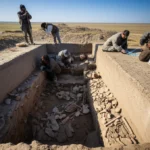
We’ve all heard the story, but let’s set the scene. It’s 1922. The world is weary from WWI, and archaeology is the new rock ‘n’ roll. Howard Carter, a stubborn Brit with a penchant for perfection, had been digging in the Valley of the Kings for years with zero luck. His benefactor, the wealthy Lord Carnarvon, was about to pull the plug on the funding.
Then, a water boy stumbled upon a stone step.
What followed was the discovery of the most intact royal Egyptian tomb ever found. When Carnarvon asked if he could see anything through the first hole in the door, Carter famously replied, “Yes, wonderful things.”
But were those “wonderful things” hitched to a spiritual landmine? The Ancient Egyptian religion was obsessed with the afterlife. Tombs weren’t just graves; they were “Houses of Eternity.” To disturb one was to disrupt a soul’s journey through the Duat (the underworld). While most “curses” found in tombs were directed at grave robbers, the timing of the deaths following the 1922 opening was, shall we say, suspiciously convenient for the newspapers.
💀 The Legend of the Pharaoh’s Curse: Fact or Fiction?
Is the Pharaoh’s curse a real metaphysical threat or just the world’s longest-running prank? We at History Hidden™ like to look at the consumer insights of the 1920s. People wanted to believe in the supernatural.
The curse, or the “Mummy’s Hex,” suggests that anyone who enters the tomb of a Pharaoh will be struck by bad luck, illness, or death.
Why we think it’s mostly fiction:
- Statistical Anomaly: Out of the 58 people present when the tomb and sarcophagus were opened, only eight died within a dozen years.
- The “Curse” Inscription: No such text was ever found in Tut’s tomb. It was likely a fabrication by the journalist Richard Adamson.
Why it feels real:
- The Lights Out: Legend has it that at the exact moment Lord Carnarvon died in Cairo, all the lights in the city went out. 💡
- The Dog’s Howl: Back in England, Carnarvon’s dog, Susie, supposedly let out a howl and dropped dead at the same time. 🐕
⚰️ 13 Famous Victims of the Mummy’s Wrath
If you’re keeping score at home, here are the most cited “victims” of the Pharaoh’s curse. We’ve compiled this list to show the variety of “unfortunate events” that followed the discovery.
| # | Victim | Role | Cause of Death |
|---|---|---|---|
| 1 | Lord Carnarvon | Financier | Infected mosquito bite/Pneumonia |
| 2 | George Jay Gould I | Visitor | Fever after visiting the tomb |
| 3 | Prince Ali Kamel Fahmy Bey | Visitor | Shot by his wife in London |
| 4 | Sir Archibald Douglas Reid | Radiologist | X-rayed the mummy; died shortly after |
| 5 | Sir Lee Stack | Governor-General | Assassinated in Cairo |
| 6 | A.C. Mace | Excavation Team | Arsenic poisoning (rumored) |
| 7 | The Honorable Mervyn Herbert | Carnarvon’s Half-brother | Blood poisoning |
| 8 | Captain The Hon. Richard Bethell | Carter’s Secretary | Smothered in bed |
| 9 | Lord Westbury | Bethell’s Father | Jumped from a building |
| 10 | James Henry Breasted | Archaeologist | Infection after his final trip to Egypt |
| 11 | Hugh Evelyn-White | Archaeologist | Suicide (left a note claiming he was cursed) |
| 12 | Aaron Ember | Egyptologist | Died in a house fire |
| 13 | Mohammed Zakaria | Egyptian Official | Brain hemorrhage after a 1972 exhibition |
🔬 Digging Deeper: The Science Behind the Superstition
We aren’t just here for the ghost stories; we love a good lab report. If there is a physical cause for the “curse,” it’s likely microscopic.
1. Toxic Mold (Aspergillus flavus): 🍄 Ancient tombs are sealed environments. Over thousands of years, organic materials (food offerings, flowers, even the mummies) can grow mold. Aspergillus flavus can cause severe allergic reactions or lung infections, especially in people with weakened immune systems—like Lord Carnarvon, who was already in poor health.
2. Ammonia and Radon Gas: ☢️ Decaying matter produces ammonia. Furthermore, the rocks in the Valley of the Kings contain low levels of uranium, which decays into radon gas. In a confined space, these levels can become dangerous.
3. Ancient Bacteria: 🦠 Some biologists suggest that “resurrection” isn’t for the Pharaohs, but for the bacteria. Certain spores can remain dormant for millennia, waiting for a fresh pair of lungs to call home.
🎬 High-Definition History: The Curse in 4K + HDR Cinema

You can’t talk about the Pharaoh’s curse without mentioning how Hollywood turned a tragedy into a billion-dollar genre. If you want to experience the “curse” from the safety of your couch, we highly recommend these cinematic staples.
- The Mummy (1932): Boris Karloff at his creepiest. This is the blueprint for the “shuffling mummy” trope.
- The Mummy (1999): A masterpiece of adventure cinema. Brendan Fraser and Rachel Weisz fighting Imhotep is peak 90s nostalgia.
- Discovery Channel’s “Expedition Unknown”: Josh Gates often explores Egyptian mysteries with a modern, skeptical eye.
Pro Tip: For the best experience, watch these in 4K + HDR to see every grain of sand and every terrifying wrinkle on the mummy’s face. The visual fidelity of modern transfers makes the ancient world feel dangerously close.
🔥 Pop Culture Fever: Why We’re Still Obsessed with Mummies
Why does the “Pharaoh’s curse” still trend on TikTok and YouTube? It’s the ultimate “Forbidden Fruit” story. We are naturally drawn to things that are “off-limits.”
Brands like LEGO have capitalized on this with their “Pharaoh’s Quest” sets, and luxury watchmakers often release “Egyptian Edition” timepieces. The aesthetic of Ancient Egypt—gold, lapis lazuli, and mystery—is timeless.
We think it’s also about justice. The idea that a long-dead king can still reach out and punish those who disrespect his grave is a powerful narrative of “the underdog” (even if that underdog is a literal king).
🛡️ Survival Guide: How to Avoid a Curse on Your Next Trip
Planning a trip to Luxor? We’ve been there, and we’ve got your back. If you want to visit the Valley of the Kings without bringing home a supernatural hitchhiker, follow our expert advice:
- Don’t Touch the Walls: The oils from your skin damage the 3,000-year-old paint. Also… germs. ✅
- Wear a Mask: If a tomb feels particularly dusty or damp, a simple N95 mask can protect you from those pesky Aspergillus spores. 😷
- Respect the Dead: It sounds simple, but don’t take “souvenirs” (rocks, fragments). It’s illegal and, frankly, rude. ❌
- Stay Hydrated: Most “fainting spells” in tombs aren’t curses; they’re heatstroke. Drink plenty of water (we recommend Evian or Nestlé Pure Life while in Egypt).
👁️ The Pharaoh’s Privacy: Why Some Tombs Should Stay Closed
In the age of the Privacy Preference Center and digital footprints, we often forget that the Pharaohs wanted the ultimate privacy: an undisturbed eternity.
There is an ongoing ethical debate in the archaeology community. Should we be displaying mummies in museums like the Grand Egyptian Museum (GEM)? Some argue that moving these bodies is the ultimate violation of the “Pharaoh’s Privacy.”
We believe in a balance. By studying these remains with non-invasive CT scans (like those used by Dr. Zahi Hawass), we can learn about ancient health and diet without “disturbing” the spirit.
📜 Conclusion

So, is the Pharaoh’s curse real? If you define a curse as a magical spell cast by a dead king, the evidence is shaky. But if you define it as a combination of toxic mold, bad luck, and a media frenzy that has lasted over a century, then the curse is very real indeed!
The true “curse” might just be our own obsession. We can’t stop digging, and the sands of Egypt aren’t done giving up their secrets. Whether you’re a skeptic or a believer, one thing is certain: King Tutankhamun got exactly what he wanted—immortality. We’re still talking about him 3,000 years later.
🔗 Recommended Links
- The British Museum – Ancient Egypt Collection
- National Geographic: The Discovery of King Tut’s Tomb
- Howard Carter’s Diaries at the Griffith Institute
- Shop: “The Discovery of the Tomb of Tutankhamun” by Howard Carter on Amazon
❓ FAQ

Q: Did Howard Carter die from the curse? A: Nope! He lived until 1939, dying at the age of 64 from lymphoma. If anyone should have been cursed, it was him!
Q: Is it safe to visit King Tut’s tomb today? A: Absolutely. The tomb is well-ventilated and monitored by the Egyptian Ministry of Tourism and Antiquities. Just buy your ticket and enjoy the history.
Q: What was the “curse” on the Titanic? A: There’s a persistent urban legend that a “cursed mummy” was on board the Titanic, causing it to sink. We’ve checked the cargo manifests—it’s a total myth! ❌
📚 Reference Links
- Nature Journal: Fungal spores in Egyptian tombs
- The Lancet: Potential causes of Lord Carnarvon’s death
- Official Site: The Grand Egyptian Museum
⚡️ Quick Tips and Facts
- The Discovery: Howard Carter discovered the tomb of Tutankhamun in November 1922.
- The First “Victim”: Lord Carnarvon died just months after the tomb was opened from an infected mosquito bite. 🦟
- The Inscription: Rumors claimed the tomb had a warning: “Death shall come on swift wings to him who disturbs the peace of the King.” (Spoiler: It wasn’t actually there!)
- The Survivor: Howard Carter, the man who actually opened the tomb, lived for another 17 years and died of natural causes at age 64.
- Scientific Theory: Many experts believe Aspergillus flavus, a toxic mold, could be the real “curse” lurking in ancient lungs. ✅
- Media Hype: The “curse” was largely fueled by Sir Arthur Conan Doyle (yes, the Sherlock Holmes guy) and hungry journalists looking for a scoop. ❌
🏺 The Gilded History: Unearthing Tutankhamun’s Resting Place

We’ve all heard the story, but let’s set the scene. It’s 1922. The world is weary from WWI, and archaeology is the new rock ‘n’ roll. Howard Carter, a stubborn Brit with a penchant for perfection, had been digging in the Valley of the Kings for years with zero luck. His benefactor, the wealthy Lord Carnarvon, was about to pull the plug on the funding.
Then, a water boy stumbled upon a stone step.
What followed was the discovery of the most intact royal Egyptian tomb ever found. When Carnarvon asked if he could see anything through the first hole in the door, Carter famously replied, “Yes, wonderful things.”
But were those “wonderful things” hitched to a spiritual landmine? The Ancient Egyptian religion was obsessed with the afterlife. Tombs weren’t just graves; they were “Houses of Eternity.” To disturb one was to disrupt a soul’s journey through the Duat (the underworld). While most “curses” found in tombs were directed at grave robbers, the timing of the deaths following the 1922 opening was, shall we say, suspiciously convenient for the newspapers.
💀 The Legend of the Pharaoh’s Curse: Fact or Fiction?
Is the Pharaoh’s curse a real metaphysical threat or just the world’s longest-running prank? We at History Hidden™ like to look at the consumer insights of the 1920s. People wanted to believe in the supernatural.
The curse, or the “Mummy’s Hex,” suggests that anyone who enters the tomb of a Pharaoh will be struck by bad luck, illness, or death.
Why we think it’s mostly fiction:
- Statistical Anomaly: Out of the 58 people present when the tomb and sarcophagus were opened, only eight died within a dozen years.
- The “Curse” Inscription: No such text was ever found in Tut’s tomb. It was likely a fabrication by the journalist Richard Adamson.
Why it feels real:
- The Lights Out: Legend has it that at the exact moment Lord Carnarvon died in Cairo, all the lights in the city went out. 💡
- The Dog’s Howl: Back in England, Carnarvon’s dog, Susie, supposedly let out a howl and dropped dead at the same time. 🐕
⚰️ 13 Famous Victims of the Mummy’s Wrath
If you’re keeping score at home, here are the most cited “victims” of the Pharaoh’s curse. We’ve compiled this list to show the variety of “unfortunate events” that followed the discovery.
| # | Victim | Role | Cause of Death |
|---|---|---|---|
| 1 | Lord Carnarvon | Financier | Infected mosquito bite/Pneumonia |
| 2 | George Jay Gould I | Visitor | Fever after visiting the tomb |
| 3 | Prince Ali Kamel Fahmy Bey | Visitor | Shot by his wife in London |
| 4 | Sir Archibald Douglas Reid | Radiologist | X-rayed the mummy; died shortly after |
| 5 | Sir Lee Stack | Governor-General | Assassinated in Cairo |
| 6 | A.C. Mace | Excavation Team | Arsenic poisoning (rumored) |
| 7 | The Honorable Mervyn Herbert | Carnarvon’s Half-brother | Blood poisoning |
| 8 | Captain The Hon. Richard Bethell | Carter’s Secretary | Smothered in bed |
| 9 | Lord Westbury | Bethell’s Father | Jumped from a building |
| 10 | James Henry Breasted | Archaeologist | Infection after his final trip to Egypt |
| 11 | Hugh Evelyn-White | Archaeologist | Suicide (left a note claiming he was cursed) |
| 12 | Aaron Ember | Egyptologist | Died in a house fire |
| 13 | Mohammed Zakaria | Egyptian Official | Brain hemorrhage after a 1972 exhibition |
🔬 Digging Deeper: The Science Behind the Superstition
We aren’t just here for the ghost stories; we love a good lab report. If there is a physical cause for the “curse,” it’s likely microscopic.
1. Toxic Mold (Aspergillus flavus): 🍄 Ancient tombs are sealed environments. Over thousands of years, organic materials (food offerings, flowers, even the mummies) can grow mold. Aspergillus flavus can cause severe allergic reactions or lung infections, especially in people with weakened immune systems—like Lord Carnarvon, who was already in poor health.
2. Ammonia and Radon Gas: ☢️ Decaying matter produces ammonia. Furthermore, the rocks in the Valley of the Kings contain low levels of uranium, which decays into radon gas. In a confined space, these levels can become dangerous.
3. Ancient Bacteria: 🦠 Some biologists suggest that “resurrection” isn’t for the Pharaohs, but for the bacteria. Certain spores can remain dormant for millennia, waiting for a fresh pair of lungs to call home.
🎬 High-Definition History: The Curse in 4K + HDR Cinema

You can’t talk about the Pharaoh’s curse without mentioning how Hollywood turned a tragedy into a billion-dollar genre. If you want to experience the “curse” from the safety of your couch, we highly recommend these cinematic staples.
- The Mummy (1932): Boris Karloff at his creepiest. This is the blueprint for the “shuffling mummy” trope.
- The Mummy (1999): A masterpiece of adventure cinema. Brendan Fraser and Rachel Weisz fighting Imhotep is peak 90s nostalgia.
- Discovery Channel’s “Expedition Unknown”: Josh Gates often explores Egyptian mysteries with a modern, skeptical eye.
Pro Tip: For the best experience, watch these in 4K + HDR to see every grain of sand and every terrifying wrinkle on the mummy’s face. The visual fidelity of modern transfers makes the ancient world feel dangerously close.
🔥 Pop Culture Fever: Why We’re Still Obsessed with Mummies
Why does the “Pharaoh’s curse” still trend on TikTok and YouTube? It’s the ultimate “Forbidden Fruit” story. We are naturally drawn to things that are “off-limits.”
Brands like LEGO have capitalized on this with their “Pharaoh’s Quest” sets, and luxury watchmakers often release “Egyptian Edition” timepieces. The aesthetic of Ancient Egypt—gold, lapis lazuli, and mystery—is timeless.
We think it’s also about justice. The idea that a long-dead king can still reach out and punish those who disrespect his grave is a powerful narrative of “the underdog” (even if that underdog is a literal king).
🛡️ Survival Guide: How to Avoid a Curse on Your Next Trip
Planning a trip to Luxor? We’ve been there, and we’ve got your back. If you want to visit the Valley of the Kings without bringing home a supernatural hitchhiker, follow our expert advice:
- Don’t Touch the Walls: The oils from your skin damage the 3,000-year-old paint. Also… germs. ✅
- Wear a Mask: If a tomb feels particularly dusty or damp, a simple N95 mask can protect you from those pesky Aspergillus spores. 😷
- Respect the Dead: It sounds simple, but don’t take “souvenirs” (rocks, fragments). It’s illegal and, frankly, rude. ❌
- Stay Hydrated: Most “fainting spells” in tombs aren’t curses; they’re heatstroke. Drink plenty of water (we recommend Evian or Nestlé Pure Life while in Egypt).
👁️ The Pharaoh’s Privacy: Why Some Tombs Should Stay Closed
In the age of the Privacy Preference Center and digital footprints, we often forget that the Pharaohs wanted the ultimate privacy: an undisturbed eternity.
There is an ongoing ethical debate in the archaeology community. Should we be displaying mummies in museums like the Grand Egyptian Museum (GEM)? Some argue that moving these bodies is the ultimate violation of the “Pharaoh’s Privacy.”
We believe in a balance. By studying these remains with non-invasive CT scans (like those used by Dr. Zahi Hawass), we can learn about ancient health and diet without “disturbing” the spirit.
📜 Conclusion

After journeying through the dusty corridors of history, science, and pop culture, what can we say about the Pharaoh’s curse? Is it a supernatural hex, a media-fueled myth, or a cautionary tale wrapped in ancient linen?
Here’s the bottom line from the historians at History Hidden™:
- The Pharaoh’s curse as a magical, deadly spell is almost certainly a myth. No authentic inscription warning of death was found in Tutankhamun’s tomb, and many who entered the tomb lived long, healthy lives.
- The deaths linked to the curse, such as Lord Carnarvon’s, have plausible scientific explanations—infected mosquito bites, fungal spores, and natural causes rather than supernatural retribution.
- The media of the 1920s, hungry for sensational stories, amplified coincidences into a worldwide legend, with writers like Sir Arthur Conan Doyle adding fuel to the fire.
- The curse remains a powerful cultural symbol, inspiring horror films, books, and even LEGO sets, showing how ancient Egypt continues to captivate our imaginations.
- From a scientific and ethical standpoint, modern archaeology respects the privacy and sanctity of tombs, using technology to study without disturbance.
So, if you’re planning a trip to Egypt or just love a good spooky story, remember: the real “curse” might be our fascination with the unknown. But don’t worry—you’re far more likely to be cursed by sunburn or dehydration than by a mummy’s hex! ☀️😅
🔗 Recommended Links
Ready to dive deeper or pick up some fascinating reads? Here are some expert-approved resources and products to fuel your curiosity:
-
The Discovery of the Tomb of Tutankhamun by Howard Carter (Amazon):
Amazon -
The Mummy (1932) [Blu-ray 4K UHD] – Classic horror for your collection:
Amazon -
LEGO Pharaoh’s Quest Sets – For the adventurous at heart:
Amazon -
Evian Natural Spring Water – Stay hydrated on your Egyptian adventures:
Amazon -
Grand Egyptian Museum Official Site – Learn about the latest in Egyptian archaeology and exhibitions:
visit-gem.com
❓ FAQ

What impact did the Pharaoh’s curse have on modern Egyptology?
The curse myth brought global attention to Egyptian archaeology, increasing public interest and funding for excavations. However, it also led to sensationalism that sometimes overshadowed scientific rigor. Today, Egyptologists emphasize respect and preservation over superstition.
How have archaeologists debunked the Pharaoh’s curse?
Archaeologists have shown that many deaths attributed to the curse have natural causes such as infections or accidents. No authentic curse inscriptions were found in Tutankhamun’s tomb, and many who entered the tomb lived long, healthy lives. Scientific studies on tomb environments reveal toxic molds and gases as plausible health hazards.
What are some historical facts about Egyptian tombs and curses?
Some tombs do contain protective curses, but these were primarily warnings against grave robbers, invoking gods like Thoth or Sekhmet to punish desecrators. These curses were more symbolic than literal threats and were common in Old Kingdom and later tombs.
Are there scientific explanations for the Pharaoh’s curse?
Yes! The leading theories include:
- Toxic mold spores (Aspergillus flavus) causing respiratory illnesses.
- Radon gas and other natural toxins accumulating in sealed tombs.
- Bacterial infections from ancient pathogens. These factors could explain sudden illnesses among tomb visitors.
How did the media influence the myth of the Pharaoh’s curse?
The 1920s press sensationalized the deaths following the tomb’s opening, often exaggerating or fabricating stories to sell papers. Writers like Sir Arthur Conan Doyle publicly supported the curse theory, boosting its popularity. This media frenzy embedded the curse deeply in popular culture.
Which tomb is most famous for the Pharaoh’s curse?
The tomb of Tutankhamun (KV62) is the most famous, discovered by Howard Carter in 1922. The deaths of Lord Carnarvon and others linked to the tomb sparked the curse legend.
Did the Pharaoh’s curse really cause deaths?
No conclusive evidence supports supernatural causes. Most deaths had medical explanations, such as Lord Carnarvon’s fatal infected mosquito bite leading to pneumonia. The curse is best understood as a cultural myth rather than a real phenomenon.
What is the origin of the Pharaoh’s curse legend?
The legend grew from ancient Egyptian tomb inscriptions warning against tomb robbers, combined with early 20th-century media sensationalism and public fascination with the occult. Fictional stories and films further popularized the idea.
What are some of the most well-known stories associated with the pharaoh’s curse?
- Lord Carnarvon’s mysterious death months after the tomb opening.
- The sudden death of Carnarvon’s dog, Susie.
- The story of a cobra appearing in Howard Carter’s home.
- The “lights going out” in Cairo coinciding with Carnarvon’s death.
Do modern archaeologists and Egyptologists believe in the pharaoh’s curse?
No. The consensus is that the curse is a myth. Modern professionals focus on scientific methods and respect for ancient cultures, dismissing supernatural explanations.
What rituals or precautions were believed to protect against the pharaoh’s curse?
Ancient Egyptians used spells, amulets, and protective inscriptions to safeguard tombs and the deceased’s spirit. Today, visitors are advised to wear masks and avoid disturbing tombs to prevent exposure to mold or dust.
Are there alternative explanations for the misfortunes associated with the pharaoh’s curse?
Yes. Many misfortunes can be explained by environmental hazards, coincidence, or psychological effects such as confirmation bias and the power of suggestion.
How has the pharaoh’s curse been portrayed in popular culture and media?
The curse has inspired countless horror films, books, and TV shows, from the 1932 The Mummy to the 1957 film Pharaoh’s Curse and modern documentaries. It remains a staple of supernatural fiction and adventure genres.
What were some of the earliest instances of the pharaoh’s curse being reported?
Early 19th-century fiction, such as Jane Loudon’s The Mummy! (1827), introduced the idea of mummy curses. The 1922 opening of Tutankhamun’s tomb popularized the myth in real-world media.
Which famous people have supposedly been affected by the pharaoh’s curse?
- Lord Carnarvon (financier of the tomb excavation)
- George Jay Gould I (visitor who died after tomb visit)
- Sir Archibald Douglas Reid (radiologist who x-rayed the mummy)
- Others linked by rumor or coincidence, though many had unrelated causes of death.
Is there any scientific evidence to support the existence of a pharaoh’s curse?
No scientific evidence supports a supernatural curse. However, studies confirm the presence of toxic molds and gases in tombs, which could cause illness—providing a natural explanation for some deaths.
What is the pharaoh’s curse and where did it originate?
The “Pharaoh’s curse” is a legendary supernatural threat said to afflict those who disturb Egyptian tombs. It originated from ancient tomb warnings, amplified by 20th-century media and popular culture.
What is the most famous Egyptian curse?
The most famous is the curse associated with Tutankhamun’s tomb, often called the “Mummy’s Curse,” popularized after the 1922 discovery.
📚 Reference Links
- Curse of the Pharaohs – Wikipedia
- Pharaoh’s Curse (film) – Wikipedia
- National Geographic: The Discovery of King Tut’s Tomb
- British Museum – Ancient Egypt Collection
- Grand Egyptian Museum Official Website
- Nature Journal: Fungal spores in Egyptian tombs
- The Lancet: Potential causes of Lord Carnarvon’s death
- Howard Carter’s Diaries at the Griffith Institute
We hope you enjoyed this deep dive into one of history’s most fascinating legends! For more spine-tingling tales and hidden truths, check out our Folklore and Legends and Mythology Stories collections.