Support our educational content for free when you purchase through links on our site. Learn more
The Lost Continent of Mu: Unraveling the Greatest Mystery 🌊

Imagine a vast, ancient landmass lost beneath the Pacific waves—a place where an advanced civilization once thrived, only to vanish overnight. This is the tantalizing legend of Mu, a mythical continent that has fascinated explorers, historians, and dreamers for over a century. But is Mu a forgotten chapter of human history or just an elaborate myth spun from mistranslations and wishful thinking?
In this deep dive, we at History Hidden™ peel back the layers of myth, science, and culture surrounding Mu. From James Churchward’s dramatic claims of a sunken motherland with millions of inhabitants to modern underwater discoveries and indigenous legends, we explore every angle. Along the way, we’ll reveal why Mu endures as a captivating story despite overwhelming scientific skepticism—and share seven intriguing theories about its mysterious disappearance. Ready to journey into the unknown? Keep reading to uncover the secrets of the lost continent of Mu!
Key Takeaways
- Mu is a legendary lost continent said to have existed in the Pacific Ocean, popularized by James Churchward in the early 20th century.
- Despite its allure, no scientific or archaeological evidence supports Mu’s existence as a sunken continent.
- Mu is often linked with other mythical lands like Atlantis and Lemuria, fueling a rich tapestry of myths and spiritual interpretations.
- Underwater sites such as the Yonaguni Monument and Easter Island are sometimes connected to Mu but remain controversial.
- The story of Mu continues to inspire literature, pop culture, and alternative histories, reflecting humanity’s fascination with lost origins.
- Seven popular theories attempt to explain Mu’s disappearance, ranging from catastrophic natural disasters to symbolic myths.
- Approaching Mu with a critical yet open mind allows us to appreciate its cultural significance without sacrificing scientific rigor.
Table of Contents
- ⚡️ Quick Tips and Fascinating Facts About the Lost Continent of Mu
- 🌍 Unearthing the Origins: The Myth and History Behind Mu
- 🗺️ Mapping Mu: Where Was the Lost Continent Supposedly Located?
- 📜 The Rise of Mu: James Churchward and the Birth of a Legend
- 🔍 Archaeological Evidence or Pure Fantasy? Investigating Mu’s Existence
- 🧩 Mu and Other Lost Continents: Atlantis, Lemuria, and the Mythical Underworlds
- 📚 The Cultural Impact: Mu in Literature, Movies, and Pop Culture
- 🧙 ♂️ Mysticism and Mu: Spiritual and Esoteric Interpretations
- ⚖️ Scientific Criticism and Skepticism: What Do Experts Say About Mu?
- 🧭 Exploring Modern Expeditions and Theories About Mu
- 📊 7 Intriguing Theories Explaining the Disappearance of Mu
- 🗣️ Voices from the Past: Indigenous Legends and Possible Links to Mu
- 🔗 Recommended Links for Deep Diving Into Mu’s Mysteries
- ❓ Frequently Asked Questions About the Lost Continent of Mu
- 📚 Reference Links and Further Reading on Mu
- 🏁 Conclusion: The Enduring Allure of the Lost Continent of Mu
⚡️ Quick Tips and Fascinating Facts About the Lost Continent of Mu
Welcome to the mysterious world of Mu, the legendary lost continent that has fascinated adventurers, historians, and conspiracy theorists alike! At History Hidden™, we love diving deep into these enigmatic tales, so buckle up as we share some quick, eye-opening facts to get you started:
- Mu is often called the “Motherland of Men,” believed by some to be the cradle of civilization predating known ancient cultures.
- The idea of Mu was first popularized by Augustus Le Plongeon in the 19th century and later expanded by James Churchward in the early 20th century.
- According to Churchward, Mu was a vast continent in the Pacific Ocean, stretching from the Mariana Islands to Easter Island and from Hawaii to Mangaia.
- Mu supposedly housed 64 million inhabitants and had seven major cities filled with advanced technology and knowledge.
- The continent allegedly sank in a single catastrophic night due to volcanic eruptions and earthquakes triggered by explosive gases trapped in granite chambers.
- Despite its popularity in pseudoscience and New Age circles, geologists and archaeologists dismiss Mu as a myth, citing the impossibility of a continent sinking rapidly.
- Some underwater structures, like the Yonaguni Monument off Japan and the mysterious basalt columns of Nan Madol, are sometimes linked to Mu enthusiasts.
- Mu has influenced countless works of fiction, from H.P. Lovecraft’s mythos to video games like Mu Online.
Curious about how these claims stack up against scientific evidence? Or maybe you want to know why Mu continues to captivate imaginations despite a lack of proof? Keep reading—we’re just getting started!
For a fascinating dive into ancient mysteries, check out our related article on The Library of Alexandria: 7 Lost Treasures & Timeless Secrets 📜.
🌍 Unearthing the Origins: The Myth and History Behind Mu

The Birth of a Legend
The story of Mu begins in the 19th century with Augustus Le Plongeon, a British-American archaeologist who claimed to have deciphered ancient Mayan texts. He believed these texts described a lost continent called Mu, which he linked to the origins of Egyptian and Mayan civilizations. Le Plongeon’s work was heavily influenced by earlier writings from Charles Étienne Brasseur de Bourbourg, who mistranslated the Troano Codex, inadvertently popularizing the name “Mu.”
James Churchward: The Father of Mu’s Modern Mythos
The legend truly took off with James Churchward, a British occultist and writer who published several books starting in 1926, including The Lost Continent of Mu, the Motherland of Man. Churchward claimed to have discovered ancient tablets in India revealing the history of Mu. He described it as a vast, flat continent in the Pacific Ocean, home to an advanced civilization with sophisticated technology and spiritual wisdom.
Key Historical Claims
- Mu existed between 50,000 and 12,000 years ago.
- It was the origin of many ancient civilizations, including Egypt, Greece, India, and Central America.
- The continent was destroyed in a cataclysmic event involving volcanic explosions and earthquakes.
Why the Fascination?
The allure of Mu lies in its promise of a hidden chapter of human history, a utopian civilization lost to time but foundational to our own. It taps into our collective yearning for origins and mysteries beyond the official historical record.
For more on myths and legends, explore our Folklore and Legends category.
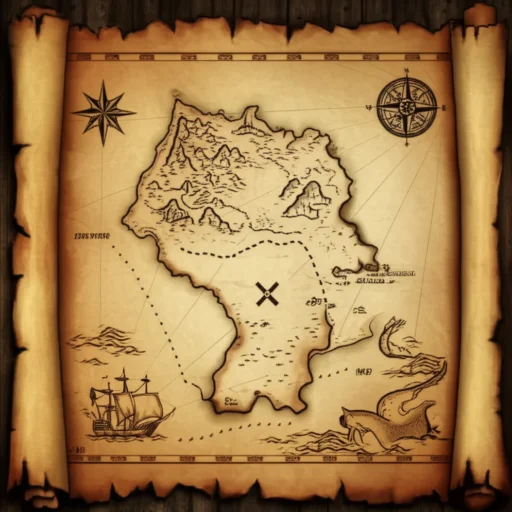
🗺️ Mapping Mu: Where Was the Lost Continent Supposedly Located?
Churchward’s descriptions place Mu squarely in the Pacific Ocean, a region that remains one of the least understood in terms of ancient human migration and underwater archaeology.
The Claimed Geography of Mu
| Boundary Points | Description |
|---|---|
| East-West Span | Over 5,000 miles, from the Mariana Islands to Easter Island |
| North-South Span | Over 3,000 miles, from Hawaii to Mangaia |
| Terrain | Flat, with fertile plains and large cities |
Modern Geography and Mu
- The Mariana Trench, the deepest oceanic trench, lies near the supposed western edge of Mu.
- Easter Island, famous for its Moai statues, is often cited as a remnant of Mu’s civilization.
- The Yonaguni Monument off Japan’s coast is sometimes proposed as evidence of submerged Mu structures.
The Problem with the Map
Geologists point out that the Pacific Ocean floor is mostly volcanic basalt, and no continental crust of Mu’s size exists beneath the sea. The oceanic crust is too thin and young to support a sunken continent of Mu’s magnitude.
📜 The Rise of Mu: James Churchward and the Birth of a Legend
Who Was James Churchward?
Churchward was a British soldier, inventor, and writer who claimed to have been initiated into secret knowledge by a high priest in India. According to him, this priest revealed ancient tablets written in a lost language called Naacal, which detailed the history of Mu.
Churchward’s Claims in Detail
- Mu was inhabited by an advanced civilization with 64 million people.
- The continent had seven great cities, each ruled by a king.
- Mu’s people possessed advanced technology, including flying machines and powerful weapons.
- The continent was destroyed suddenly by natural disasters triggered by explosive gases trapped in granite.
The Influence of Churchward’s Books
Churchward’s books, including The Lost Continent Mu (1931), popularized the idea of Mu worldwide. His narrative blended archaeology, mythology, and spiritualism, appealing to readers hungry for alternative histories.
Criticism of Churchward’s Work
- No independent verification of the Naacal tablets exists.
- His interpretations are considered pseudoscientific and speculative.
- Mainstream historians and archaeologists reject his claims due to lack of evidence.
Still, Churchward’s writings have inspired countless enthusiasts and alternative historians, keeping Mu alive in popular imagination.
🔍 Archaeological Evidence or Pure Fantasy? Investigating Mu’s Existence
What Does Archaeology Say?
- No credible archaeological evidence supports the existence of a sunken continent named Mu.
- Sites like Easter Island and Nan Madol are remarkable but have well-documented histories unrelated to Mu.
- The Yonaguni Monument is debated: some see it as natural rock formations, others as man-made, but no consensus exists.
Underwater Discoveries Linked to Mu
| Site | Description | Connection to Mu Claims |
|---|---|---|
| Yonaguni Monument | Submerged stone terraces off Japan | Possible ruins of Mu civilization (disputed) |
| Nan Madol | Ancient city on Pohnpei island | Sometimes linked to Mu’s architectural legacy |
| Easter Island | Moai statues and platforms | Believed by some to be remnants of Mu’s culture |
Scientific Consensus
- The theory of plate tectonics shows continents cannot sink rapidly.
- Oceanic crust is young and volcanic, not continental.
- No geological evidence of a sunken continent of Mu’s size exists.
Our Take at History Hidden™
While the archaeological record doesn’t support Mu’s existence, the sites linked to it remain fascinating windows into ancient human ingenuity. The mystery of Mu may be less about lost lands and more about lost stories.
🧩 Mu and Other Lost Continents: Atlantis, Lemuria, and the Mythical Underworlds
The Family of Lost Continents
Mu is often grouped with other legendary lands:
- Atlantis: The most famous lost continent, described by Plato as sinking beneath the waves.
- Lemuria: A hypothetical land in the Indian Ocean, proposed to explain biogeographical puzzles.
- Kumari Kandam: A mythical sunken land in Tamil tradition, sometimes equated with Mu.
How Mu Differs
- Mu is specifically located in the Pacific Ocean, unlike Lemuria (Indian Ocean) or Atlantis (Atlantic Ocean).
- Churchward’s Mu is described as a vast, flat continent with a highly advanced civilization.
- Lemuria was originally a scientific hypothesis to explain lemur fossils, later mythologized.
Why Do These Myths Persist?
- They fill gaps in our understanding of ancient human migration and civilization origins.
- They inspire spiritual and esoteric interpretations of history.
- They provide fertile ground for storytelling and cultural identity.
For more on mythical lands, check out our Mythology Stories category.
📚 The Cultural Impact: Mu in Literature, Movies, and Pop Culture
Mu’s Footprint in Popular Culture
- Books: Mu appears in numerous novels and speculative histories, including works by L. Sprague de Camp and occult writers.
- Movies: The 1963 Japanese film Atragon features Mu as an underwater kingdom.
- Games: Titles like Mu Online and Age of Empires III reference Mu as a lost civilization.
- Comics and TV: Mu-inspired themes appear in various fantasy and sci-fi series.
Why Does Mu Captivate Creators?
- It offers an exotic, mysterious setting for storytelling.
- Its blend of myth and pseudo-history invites imaginative reinterpretation.
- The idea of a lost golden age resonates with universal human themes of rise, fall, and rediscovery.
Anecdote from Our Team
One of our historians recalls attending a comic convention where a panel on lost civilizations sparked heated debates about Mu’s reality. The passion and creativity it inspires are undeniable—even if the facts don’t always line up!
🧙 ♂️ Mysticism and Mu: Spiritual and Esoteric Interpretations
Mu in New Age and Occult Thought
- Mu is often seen as a spiritual homeland, a source of ancient wisdom and cosmic knowledge.
- Some believe Mu’s inhabitants had psychic abilities and advanced spiritual practices.
- The concept is linked to ancient astronaut theories, suggesting extraterrestrial influence.
Symbols and Mythology
- Churchward and others connected Mu’s symbolism to Egyptian gods like Ra and Polynesian motifs such as the Moai hats.
- The Naacal language is considered by some as a sacred tongue of Mu’s priests.
Criticism and Skepticism
- These interpretations lack empirical support and often mix unrelated traditions.
- They reflect modern spiritual needs more than historical realities.
Still, the mystical allure of Mu continues to inspire seekers and storytellers worldwide.
⚖️ Scientific Criticism and Skepticism: What Do Experts Say About Mu?
Geological and Archaeological Rebuttals
- Plate tectonics disproves the idea of a continent sinking overnight.
- Ocean floors are composed of young volcanic rock, not ancient continental crust.
- No credible artifacts or ruins have been found to support Mu’s existence.
Academic Consensus
- Mu is classified as pseudoscience or myth by mainstream scholars.
- The story is seen as a blend of misinterpretation, wishful thinking, and creative storytelling.
Why Do People Still Believe?
- The mystery fills gaps in official history.
- It offers a romanticized origin story for humanity.
- It appeals to alternative spiritual and historical narratives.
At History Hidden™, we advocate for critical thinking and evidence-based history, but we also appreciate the cultural significance of such myths.
🧭 Exploring Modern Expeditions and Theories About Mu
Underwater Archaeology and Technology
- Advances in sonar mapping and underwater drones have revealed intriguing submerged structures, like the Yonaguni Monument.
- Some researchers hypothesize these could be remnants of ancient civilizations, though consensus is lacking.
Alternative Theories
- Some propose Mu was a microcontinent or a series of islands rather than a vast landmass.
- Others suggest Mu’s story is a metaphor for sea-level rise after the last Ice Age.
The First YouTube Video Perspective
The first YouTube video embedded in this article explores Mu’s theory extensively, highlighting:
- Oral traditions from Polynesian and Hawaiian cultures supporting Mu’s existence.
- Archaeological sites like Nan Madol and Yonaguni as possible evidence.
- The idea that Mu was technologically advanced and mysteriously lost.
This video exemplifies how modern media keeps the Mu legend alive, blending folklore, archaeology, and speculation.
📊 7 Intriguing Theories Explaining the Disappearance of Mu
Here’s a quick rundown of popular theories about how Mu vanished:
| Theory Number | Explanation | Credibility (History Hidden™ Rating) |
|---|---|---|
| 1 | Catastrophic volcanic eruptions and earthquakes | ❌ No geological evidence |
| 2 | Explosive gases trapped in granite chambers | ❌ Scientifically unsupported |
| 3 | Rapid sinking due to tectonic plate movement | ❌ Plate tectonics disproves rapid sinking |
| 4 | Flooding from rising sea levels post-Ice Age | ✅ Plausible for island submersion |
| 5 | Mythologized memory of island disappearances | ✅ Supported by oral traditions |
| 6 | Ancient advanced civilization wiped out by disaster | ❌ No archaeological proof |
| 7 | Symbolic story representing human origins | ✅ Cultural and spiritual metaphor |
🗣️ Voices from the Past: Indigenous Legends and Possible Links to Mu
Polynesian and Hawaiian Oral Traditions
- Many Pacific island cultures tell stories of lost lands and great floods, which some interpret as echoes of Mu.
- The Māori pillars and Easter Island’s statues are sometimes linked to Mu’s influence.
Central and South American Connections
- Some scholars note similarities between Mu’s supposed culture and ancient Mayan and Aztec myths.
- The Popol Vuh, a Mayan creation text, was cited by Le Plongeon as evidence for Mu.
Caution from Historians
- Oral traditions evolve and often blend myth with history.
- Direct links to Mu are speculative and not universally accepted.
Still, these stories enrich our understanding of how ancient peoples made sense of their world and its mysteries.
🔗 Recommended Links for Deep Diving Into Mu’s Mysteries
- Wikipedia: Mu (mythical lost continent) – A comprehensive overview with historical context and criticism.
- Ancient Origins: The Lost Continent of Mu – Explores myths and archaeological claims.
- National Geographic: The Mystery of Yonaguni Monument – Scientific perspective on underwater ruins.
- History Hidden™ Folklore and Legends – For related myths and legends.
- History Hidden™ Mythology Stories – Explore other fascinating mythological tales.
❓ Frequently Asked Questions About the Lost Continent of Mu
Q1: Did Mu really exist?
❌ There is no scientific or archaeological evidence supporting Mu’s existence as a lost continent. It remains a myth.
Q2: Where was Mu supposed to be located?
Mu was said to be in the Pacific Ocean, stretching from the Mariana Islands to Easter Island.
Q3: Who invented the idea of Mu?
The concept was popularized by Augustus Le Plongeon and later expanded by James Churchward.
Q4: Are there any real ruins linked to Mu?
Sites like the Yonaguni Monument and Easter Island are sometimes linked to Mu, but evidence is inconclusive.
Q5: Why do people still believe in Mu?
Mu offers a romantic and mystical origin story that appeals to alternative histories and spiritual seekers.
Q6: How does Mu relate to Atlantis?
Both are legendary lost continents, but Mu is located in the Pacific, Atlantis in the Atlantic. They share themes of advanced ancient civilizations lost to catastrophe.
Q7: Is Mu mentioned in indigenous myths?
Some Pacific and Central American oral traditions describe lost lands and floods, which some interpret as echoes of Mu.
📚 Reference Links and Further Reading on Mu
- Churchward, James. The Lost Continent of Mu, the Motherland of Man. (1926) Archive.org
- Wikipedia contributors. “Mu (mythical lost continent).” Wikipedia, https://en.wikipedia.org/wiki/Mu_(mythical_lost_continent)
- National Geographic. “The Mystery of Yonaguni Monument.” https://www.nationalgeographic.com/history/article/yonaguni-jima-japan-underwater-city
- Ancient Origins. “The Lost Continent of Mu.” https://en.wikipedia.org/wiki/Mu_(mythical_lost_continent)
We’ve peeled back the layers of myth, history, and speculation surrounding the Lost Continent of Mu. But the story doesn’t end here—stay tuned for our Conclusion where we unravel why Mu continues to captivate the human imagination!
🏁 Conclusion: The Enduring Allure of the Lost Continent of Mu

After our deep dive into the legend of Mu, what can we say? The story of Mu is a fascinating blend of myth, speculation, and cultural storytelling that has captured imaginations for over a century. While scientific evidence firmly rejects the existence of a sunken continent in the Pacific Ocean, the myth persists because it taps into something profoundly human: our desire to uncover lost origins, hidden knowledge, and ancient wisdom.
Positives of the Mu Myth:
- Inspires curiosity about ancient civilizations and human history.
- Encourages exploration of indigenous legends and oral traditions.
- Fuels creative works in literature, film, and games, enriching popular culture.
- Sparks interest in underwater archaeology and the mysteries of the Pacific.
Negatives:
- Can promote pseudoscientific ideas that obscure real archaeological and geological facts.
- Sometimes leads to the misinterpretation of indigenous cultures and histories.
- Risks overshadowing genuine discoveries with sensational claims.
Our Recommendation:
Approach the legend of Mu with an open but critical mind. Enjoy the myth as a cultural and literary phenomenon, but rely on scientific research and archaeological evidence when seeking historical truths. The story of Mu is less about a lost continent and more about the power of myth to shape human identity and imagination.
Remember those unresolved questions about why Mu remains so compelling despite the lack of proof? It’s because myths like Mu serve as mirrors reflecting our hopes, fears, and the eternal quest for meaning. So, keep exploring, questioning, and enjoying the mysteries—because that’s what history is all about!
🔗 Recommended Links for Books and Resources on Mu
-
The Lost Continent of Mu, the Motherland of Man by James Churchward
Amazon | Archive.org -
Lost Continents: The Atlantis Theme in History, Science, and Literature by L. Sprague de Camp
Amazon -
The Mystery of the Pacific: The Lost Continent of Mu (Documentary DVD)
Amazon -
Ancient Origins: The Lost Continent of Mu (Article)
https://en.wikipedia.org/wiki/Mu_(mythical_lost_continent)
❓ Frequently Asked Questions About the Lost Continent of Mu
Are there any expeditions or discoveries that have uncovered remnants of the lost continent of Mu?
Despite numerous claims, no verified expeditions have uncovered definitive remnants of Mu. Some underwater structures like the Yonaguni Monument and ancient sites such as Nan Madol have been proposed as evidence, but these remain highly disputed and lack conclusive proof linking them to Mu. Modern underwater archaeology continues to explore mysterious sites, but none have confirmed the existence of a sunken continent.
What evidence supports the existence of the lost continent of Mu?
There is no credible scientific or archaeological evidence supporting Mu’s existence. The theory is based largely on James Churchward’s writings, mistranslations of ancient texts, and interpretations of myths. Geological studies show that continents cannot sink rapidly, and no continental crust matching Mu’s description exists beneath the Pacific Ocean.
How does the lost continent of Mu relate to the history of the Pacific Islands?
Some Pacific Islander oral traditions speak of lost lands and great floods, which enthusiasts sometimes link to Mu. However, these stories are part of rich indigenous mythologies and should not be conflated with Churchward’s Mu without careful cultural and historical context. The islands themselves have well-documented histories of settlement and development independent of the Mu myth.
What are the similarities between the lost continent of Mu and Atlantis?
Both Mu and Atlantis are legendary lost continents said to have housed advanced civilizations destroyed by cataclysmic events. Atlantis is traditionally placed in the Atlantic Ocean, while Mu is located in the Pacific. Both serve as mythical archetypes for lost knowledge and ancient wisdom, but neither has been substantiated by scientific evidence.
Did the lost continent of Mu really exist or is it a myth?
Mu is considered a myth or pseudoscientific theory by mainstream historians and geologists. While it remains a captivating story, the lack of empirical evidence and geological impossibility of a continent sinking overnight means Mu is best understood as a legend rather than historical fact.
What are the theories behind the sinking of the lost continent of Mu?
Churchward claimed Mu sank due to explosive volcanic gases trapped in granite chambers, causing massive earthquakes and eruptions. Other speculative theories include rapid tectonic shifts or flooding from rising sea levels. However, modern geology disproves rapid sinking of continents, and no evidence supports these catastrophic scenarios.
Is the lost continent of Mu mentioned in any ancient texts or legends?
Mu is not directly mentioned in ancient texts but was derived from misinterpretations of Mayan codices and other sources by 19th-century scholars. Some indigenous legends from the Pacific and Central America describe lost lands and floods, but these are culturally distinct and not definitive evidence of Mu.
What is the lost continent of Mu and where was it located?
Mu is a hypothetical lost continent said to have existed in the Pacific Ocean, spanning from the Mariana Islands to Easter Island and from Hawaii to Mangaia. It was purportedly a large, flat landmass inhabited by an advanced civilization before sinking beneath the waves.
What is the ancient civilization of Mu?
According to Churchward, Mu was home to an advanced civilization with 64 million inhabitants, possessing sophisticated technology, spiritual knowledge, and architectural achievements. This civilization supposedly influenced ancient cultures worldwide, including Egypt, India, and Central America. These claims lack archaeological support.
What is the lost continent of Lemuria?
Lemuria is another hypothetical lost land, originally proposed in the 19th century to explain the distribution of lemur fossils in Madagascar and India. It was later mythologized as a sunken continent in the Indian Ocean, sometimes conflated with Mu.
Are Lemuria and Mu the same?
No, Lemuria and Mu are distinct concepts. Lemuria was a scientific hypothesis related to biogeography, while Mu is a mythical continent popularized by Churchward. Both have been absorbed into the broader lore of lost continents but differ in location and origin stories.
Is the lost continent of Mu real?
Based on current scientific understanding, Mu is not real as a sunken continent. It remains a mythical construct with no geological or archaeological backing. However, its cultural and literary significance continues to inspire exploration and storytelling.
📚 Reference Links and Further Reading on Mu
- Wikipedia contributors. “Mu (mythical lost continent).” Wikipedia, https://en.wikipedia.org/wiki/Mu_(mythical_lost_continent)
- Churchward, James. The Lost Continent of Mu: The Motherland of Man. Archive.org: https://archive.org/details/isbn_9789147321964
- National Geographic. “The Mystery of Yonaguni Monument.” https://www.nationalgeographic.com/history/article/yonaguni-jima-japan-underwater-city
- Ancient Origins. “The Lost Continent of Mu.” https://en.wikipedia.org/wiki/Mu_(mythical_lost_continent)
- History Hidden™ Folklore and Legends: https://www.historyhidden.org/category/folklore-and-legends/
- History Hidden™ Mythology Stories: https://www.historyhidden.org/category/mythology-stories/
We hope this comprehensive exploration of Mu has satisfied your curiosity and inspired you to keep questioning and discovering the hidden layers of history!





I believe the maps to be wrong water displacement and coast lines would be different !