Support our educational content for free when you purchase through links on our site. Learn more
🗺️ Where is El Dorado? The Shocking Truth Behind the Lost City (2026)

For centuries, the map of South America was dotted with a phantom: a city paved with solid gold, hidden in the heart of the jungle. From the misty peaks of the Andes to the sweltering depths of the Amazon, explorers like Sir Walter Raleigh and Gonzalo Pizaro sacrificed their lives, their fortunes, and their sanity chasing a mirage. But what if the greatest treasure hunt in history was based on a simple, tragic misunderstanding? The answer lies not in a hidden metropolis, but in a single, sacred lake in Colombia and a ritual that turned a man into gold.
In this deep dive, we unravel the tangled threads of the El Dorado legend, separating the brutal reality of the Muisca conquest from the glittering myths that fueled the Age of Exploration. We’ll reveal the precise coordinates of the ritual that started it all, expose the cartographic errors that placed a non-existent lake on maps for 20 years, and explain why the “City of Gold” was never a city at all. By the end, you’ll understand why the real gold was never buried in the ground, but lost in the translation of history itself.
Key Takeaways
- The Origin: The legend began with a Muisca ritual at Lake Guatavita in Colombia, where a new leader was covered in gold dust, not a city made of gold.
- The Myth: The concept of a “City of Gold” (Manoa) was a European distortion that migrated to the Guianas and the Amazon, leading to the myth of Lake Parime.
- The Reality: No city of gold has ever been found; the search resulted in the deaths of hundreds of explorers and the devastation of indigenous populations.
- The Evidence: The Muisca Raft, a golden artifact discovered in 1969, is the primary physical proof of the ritual, now housed in Bogotá’s Gold Museum.
- The Verdict: El Dorado is a powerful symbol of human greed and imagination, but geographically, it exists only in the pages of history books and the depths of Lake Guatavita.
Table of Contents
- ⚡️ Quick Tips and Facts
- 🏛️ Background: Unearthing the Origins of the El Dorado Legend
- 🗺️ Where is El Dorado Actually Located? The Geographic Reality
- 👑 The Muisca Ritual: How the “Gilded Man” Became a City of Gold
- 🏺 Rumors of Gold: The Evolution from Man to Metropolis
- ⚔️ The Conquest of the Muisca: Hernán de Quesada and the Search for the Sacred Lake
- 🚣 ♂️ Pizaro, Orellana, and the Amazonian Detour
- 🛡️ Philip von Huten and the German Quest for the Golden City
- 🔥 Pedro de Ursúa, Lope de Aguire, and the Madman’s Rebellion
- 👑 Antonio de Berio: The Man Who Almost Found It (Or Did He?)
- 👑 Sir Walter Raleigh: The Englishman’s Final Gamble in Guiana
- 🌊 Lake Parime: The Phantom Lake That Vanished from Maps
- 🗺️ 7 Major Expeditions That Failed to Find El Dorado (And Why)
- 🧭 Modern Archaeology: What Science Says About the Lost City
- 🎭 El Dorado in Pop Culture: From Literature to Hollywood
- 💡 Quick Tips for Aspiring Treasure Hunters (Don’t Try This at Home)
- 🏁 Conclusion: The Real Gold Was the Friends We Made Along the Way?
- 🔗 Recommended Links
- ❓ FAQ: Your Burning Questions About El Dorado Answered
- 📚 Reference Links
⚡️ Quick Tips and Facts
Before we dive into the muddy, gold-dusted waters of history, let’s hit the highlights. If you’re looking for a quick cheat sheet on the world’s most elusive treasure, you’ve come to the right place.
- It wasn’t originally a city: The term El Dorado literally translates to “The Golden One” (referring to a person), not a place. The city came later as a result of European misunderstanding.
- The Real Location: The ritual that sparked the legend took place at Lake Guatavita in the Andean Mountains of modern-day Colombia.
- The “City” Myth: The idea of a city made of gold, often called Manoa, was a distortion that migrated south to the Guianas and the Amazon.
- The Cost: Hundreds of explorers died, and millions of pesos in gold were spent searching for a mirage.
- The Artifact: The Muisca Raft, a golden artifact found in 1969, is the closest physical evidence we have of the ritual. You can see it today at the Gold Museum in Bogotá.
- Modern Status: Lake Guatavita is now a protected National Monument in Colombia; draining it is strictly forbidden.
For a deeper dive into the specific rituals and the transformation of the legend, check out our detailed guide on El Dorado city of gold.
🏛️ Background: Unearthing the Origins of the El Dorado Legend

To understand where El Dorado is located, we first have to understand what it was. The story begins not with a map, but with a misunderstanding of a ceremony.
The Muisca People: Masters of the Andes
Long before the Spanish arrived, the Muisca civilization thrived on the high plateau of the Cundiboyacan region in Colombia. They were sophisticated traders, astronomers, and, crucialy, master metallurgists. They didn’t just work gold; they worshipped it.
Unlike the Aztecs or Incas, the Muisca didn’t have a single emperor. Instead, they were led by a Zipa (ruler of the south) and a Zaque (ruler of the north). The legend of El Dorado centers specifically on the Zipa of Bacatá (modern-day Bogotá).
The Ritual of the “Gilded Man”
Every time a new Zipa was crowned, a spectacular ceremony took place at Lake Guatavita. Here is how it unfolded, according to the chronicler Juan Rodríguez Freyle:
- Preparation: The new leader was stripped of his clothes and covered in a sticky resin or gum.
- The Dusting: Attendants dusted his entire body with gold powder until he shone like a living statue.
- The Journey: He was placed on a raft with four elders, rowed to the center of the sacred lake.
- The Offering: As trumpets blared, the raft stopped. The Zipa dove into the water, washing off the gold dust, while the people on the shore threw gold and emerald offerings into the depths.
“He anoints himself every morning with a certain gum or resin that sticks very well. The powdered gold adheres to that unction … until his entire body is covered from the soles of his feet to his head. He looks as resplendent as a gold object worked by the hand of a great artist.” — Juan Rodríguez Freyle, 1638
This was a religious act of purification and dedication to the sun god Sué. But to the Spanish, who had just conquered the Inca and were dripping in gold, this looked like a city of gold. They saw the man, heard the stories of the offerings, and their imaginations ran wild.
🗺️ Where is El Dorado Actually Located? The Geographic Reality
So, where is it? If you pack your bags and head to South America, where do you go? The answer depends entirely on which version of the legend you believe.
The Historical Reality: Lake Guatavita, Colombia
If we are talking about the origin of the legend, the location is precise:
- Location: Lake Guatavita, approximately 30 miles (48 km) northeast of Bogotá, Colombia.
- Coordinates: 4°54′N 73°52′W
- Status: A protected National Natural Park.
The lake is a crater lake, roughly 50 meters in diameter. The Spanish attempted to drain it multiple times (more on that later), but the sheer volume of water and the risk of collapse made it impossible to empty completely.
The Mythical Reality: Lake Parime and the Guianas
As the legend spread, the location shifted. By the late 16th century, the “Golden Man” had transformed into a “Golden City” named Manoa, supposedly located on the shores of a massive inland lake called Lake Parime.
- Proposed Location: The Guiana Highlands, bordering modern-day Venezuela, Guyana, and Brazil.
- The Map Error: For over 20 years, Lake Parime appeared on maps of South America. It was only in the early 19th century that Alexander von Humboldt proved it was a myth, likely a misinterpretation of the seasonal flooding of the Rupuni savannah around Lake Amucu.
The Amazonian Detour
Some explorers, convinced the city was further south, pushed into the Amazon Rainforest. They believed the city was hidden deep within the jungle, protected by warlike tribes. While there is no evidence of a city of gold in the Amazon, the region is rich in gold deposits, which kept the hope alive.
👑 The Muisca Ritual: How the “Gilded Man” Became a City of Gold
How does a man covered in dust become a city made of solid gold? It’s a classic case of “telephone game” meets “gred.”
The Linguistic Shift
The Spanish word El Dorado means “The Golden One.”
- 1530s: Refers to the Zipa (the man).
- 1540s: Refers to the kingdom he ruled.
- 150s: Refers to a city made of gold.
- 1560s: Refers to a kingdom of gold in the unknown interior.
The Role of the Chroniclers
The primary source for the Muisca ritual is Juan Rodríguez Freyle, who wrote El Carnero in 1638, decades after the events. He likely heard the stories from older conquistadors. While the core of the ritual is supported by archaeological evidence (like the Muisca Raft), the details may have been exaggerated to justify the Spanish conquest.
The “Tumbaga” Factor
The Muisca didn’t use pure gold. They used tumbaga, an alloy of gold and copper. This alloy was harder and could be cast into intricate shapes. When polished, it looked like solid gold, but it was much more durable. This technical detail was lost on the Spanish, who assumed the entire civilization was made of the precious metal.
🏺 Rumors of Gold: The Evolution from Man to Metropolis
The transformation of the legend wasn’t instantaneous. It evolved through a series of rumors, exaggerations, and desperate lies.
The First Rumors
When Gonzalo Jiménez de Quesada arrived in the Muisca territory in 1536, he found a people with significant gold reserves. However, the gold was mostly in the form of ornaments and ritual objects, not a city. The rumor of a “Golden City” likely started with indigenous guides who, perhaps to mislead the Spanish or simply to describe the wealth of the Zipa, spoke of a place where gold was as common as dirt.
The “Manoa” Legend
By the 1540s, the legend had migrated. The city was no longer in the Andes but in the lowlands of the Guianas. The name Manoa appeared in reports, described as a city where the king’s palace was made of gold and the streets were paved with it.
The Role of Indigenous Guides
Indigenous guides often played a double role. Some were coerced into leading expeditions, while others may have used the legend to lead the Spanish into traps or away from their own villages. The “Golden City” became a convenient excuse for the Spanish to justify their brutal conquests.
⚔️ The Conquest of the Muisca: Hernán de Quesada and the Search for the Sacred Lake
The first major expedition to the Muisca territory was led by Gonzalo Jiménez de Quesada.
The Expedition of 1536
Quesada left Santa Marta on the Caribbean coast with an army of 80 men. They marched through the swamps and mountains of the Magdalena River valley, facing disease, starvation, and hostile tribes.
The Discovery of Bacatá
In 1537, Quesada reached the Altiplano Cundiboyacense. He found the Muisca cities of Bacatá, Tunja, and Sogamoso. He conquered them with relative ease, thanks to superior weapons and the help of indigenous allies.
The Search for the Lake
Quesada heard rumors of the sacred lake and the “Golden Man.” He sent a detachment to Lake Guatavita. They managed to recover some gold, but the lake was too deep and the mud too thick to retrieve the bulk of the offerings.
The Founding of Bogotá
In 1538, Quesada founded Santa Fe de Bogotá on the site of Bacatá. He returned to Spain with a massive amount of gold, but the legend of El Dorado had already taken on a life of its own.
🚣 ♂️ Pizaro, Orellana, and the Amazonian Detour
While Quesada was in the Andes, another expedition was heading south from Quito.
Gonzalo Pizaro’s Expedition (1541)
Gonzalo Pizaro, the brother of the conqueror of the Inca, set out to find the “Land of Cinnamon” (La Canela). He was accompanied by Francisco de Orellana.
The Split
The expedition was a disaster. They were starving and lost in the jungle. Orellana was sent down a tributary of the Amazon River to find food. Instead of returning, he sailed down the entire length of the Amazon, becoming the first European to navigate the river.
The Myth of the Amazons
Orellana reported encountering a tribe of warrior women, which he compared to the Amazons of Greek mythology. This added another layer of mystery to the region. He also heard rumors of a city of gold, but he never found it.
The Aftermath
Pizaro returned to Quito with nothing but a few cinnamon sticks and a broken army. The legend of El Dorado had now merged with the legend of the Amazons and the Land of Cinnamon.
🛡️ Philip von Huten and the German Quest for the Golden City
In the 16th century, the Welsers, a German banking family, were granted the right to colonize parts of Venezuela by the Spanish Crown. They sent Philip von Huten to find El Dorado.
The Expedition of 1534
Von Huten led an expedition from Coro into the interior. He heard rumors of a golden city in the Guianas.
The Failure
The expedition was plagued by disease, starvation, and attacks from indigenous tribes. Von Huten was eventually killed in a battle with the Omagua people.
The Legacy
Despite the failure, the German quest added a new dimension to the legend. It suggested that El Dorado was not just in the Andes, but in the vast, unexplored interior of South America.
🔥 Pedro de Ursúa, Lope de Aguire, and the Madman’s Rebellion
One of the most infamous expeditions was led by Pedro de Ursúa in 1560.
The Goal
Ursúa set out to find El Dorado in the Amazon. He was accompanied by Lope de Aguire, a notorious and unstable soldier.
The Mutiny
As the expedition struggled through the jungle, Aguire grew increasingly paranoid and power-hungry. He led a mutiny, killed Ursúa, and declared himself the “Prince of Freedom.”
The Madness
Aguire and his followers sailed down the Amazon and into the Orinoco River. They attacked indigenous villages and Spanish settlements, leaving a trail of destruction. Eventually, Aguire was killed by his own men, but the legend of El Dorado had been further cemented in the minds of the Spanish.
👑 Antonio de Berio: The Man Who Almost Found It (Or Did He?)
Antonio de Berio was a Spanish explorer who spent years searching for El Dorado in the Guianas.
The Three Attempts
Berio made three separate attempts to cross the Orinoco River and reach the mythical city. He heard rumors of a lake called Parime and a city called Manoa.
The Capture
In 1595, Berio was captured by Sir Walter Raleigh, who was also searching for El Dorado. Berio shared his knowledge with Raleigh, but Raleigh eventually imprisoned him.
The Legacy
Berio’s reports were the primary source for Raleigh’s expeditions. He believed that El Dorado was located on the shores of Lake Parime, a belief that would persist for centuries.
👑 Sir Walter Raleigh: The Englishman’s Final Gamble in Guiana
Sir Walter Raleigh is perhaps the most famous seeker of El Dorado.
The First Expedition (1595)
Raleigh sailed to the Orinoco River with the goal of finding the city of gold. He relied on the information provided by Antonio de Berio.
The Second Expedition (1617)
Raleigh returned with a larger fleet, but this time he was determined to find the city. He sent a detachment up the Esequibo River.
The Failure and Execution
The expedition failed to find El Dorado. Raleigh’s son was killed in a skirmish with the Spanish. Upon his return to England, Raleigh was executed for treason, partly because of the failure of the expedition.
The Map of Lake Parime
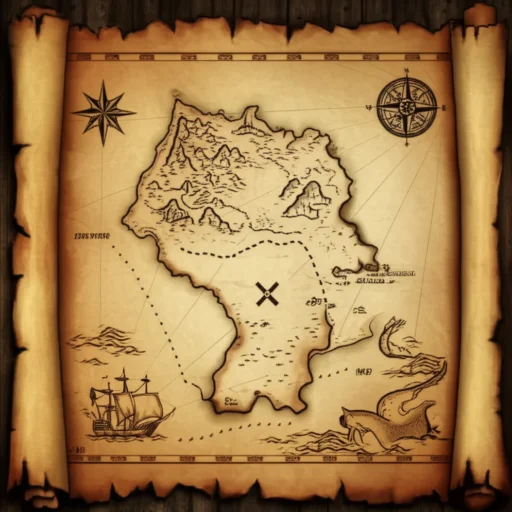
Raleigh’s lieutenant, Lawrence Kemys, drew a map that included Lake Parime. This map was used by cartographers for over 20 years, perpetuating the myth.
🌊 Lake Parime: The Phantom Lake That Vanished from Maps
Lake Parime is the most enduring myth associated with El Dorado.
The Origin of the Myth
The legend of Lake Parime likely originated from the seasonal flooding of the Rupuni savannah in Guyana. During the rainy season, the area becomes a vast inland sea, which could have been misinterpreted as a permanent lake.
The Map Error
Cartographers like Hondius and Blaeu included Lake Parime on their maps. It was depicted as a massive lake in the interior of South America, with the city of Manoa on its shores.
The Disproof
In the early 19th century, Alexander von Humboldt and Robert Schomburgk explored the region and found no evidence of a permanent lake. They concluded that Lake Parime was a myth.
The Modern Theory
Some modern researchers suggest that the legend of Lake Parime may have been inspired by the Lake Amucu or the Rupuni savannah, but the city of gold was never there.
🗺️ 7 Major Expeditions That Failed to Find El Dorado (And Why)
Let’s take a look at the seven most famous expeditions that searched for El Dorado and why they failed.
| # | Explorer | Year | Location Searched | Reason for Failure |
|---|---|---|---|---|
| 1 | Gonzalo Jiménez de Quesada | 1536 | Lake Guativa, Colombia | Found the ritual site, but the lake was too deep to drain. |
| 2 | Gonzalo Pizaro | 1541 | Amazon River | Starvation, disease, and the mutiny of Orellana. |
| 3 | Philip von Huten | 1534 | Guiana Highlands | Disease, starvation, and death of the leader. |
| 4 | Pedro de Ursúa | 1560 | Amazon River | Mutiny led by Lope de Aguire. |
| 5 | Antonio de Berio | 1580s | Orinoco River | Captured by Raleigh; never reached the target. |
| 6 | Sir Walter Raleigh | 1595, 1617 | Guiana Highlands | Failed to find the city; executed upon return. |
| 7 | Alexander von Humboldt | 180s | Lake Parime | Proved the lake was a myth; found no city. |
Why They Failed
- Geographic Misunderstanding: The explorers were looking for a city in the wrong place.
- Environmental Challenges: The jungle, rivers, and mountains were deadly.
- Indigenous Resistance: Many tribes fought back against the invaders.
- The Myth Itself: The city didn’t exist.
🧭 Modern Archaeology: What Science Says About the Lost City
What does modern science say about El Dorado?
The Muisca Raft
The Muisca Raft, discovered in 1969, is the most important artifact. It depicts the ritual of the “Golden Man” and is now in the Gold Museum in Bogotá.
Satellite Imagery
In 2019, a team led by Jose Miguel Perez-Gomez used NASA’s Shuttle Radar Topography Missions (SRTM) and Landsat data to search for the outlines of Lake Parime. They found a shape that resembled the map drawn by Raleigh, but no city.
The Orinoco Mining Arc
In 2016, the Venezuelan government designated the Orinoco Mining Arc, a region rich in gold, bauxite, and diamonds. While this is not El Dorado, it shows that the region is indeed rich in minerals.
The Verdict
There is no evidence of a city made of gold. The legend is a myth, but it is based on a real ritual that took place at Lake Guatavita.
🎭 El Dorado in Pop Culture: From Literature to Hollywood
The legend of El Dorado has inspired countless works of art, literature, and film.
Literature
- Voltaire’s Candide (1759): In this satire, Candide and Cacambo find a utopian city called El Dorado, where gold is used for paving stones and the people are happy.
- H.G. Wells’ The Island of Doctor Moreau: References the search for El Dorado.
Film
- The Road to El Dorado (20): An animated film by DreamWorks about two con artists who find a city of gold.
- Apocalypto (206): Features a search for a mythical city.
Music
- Neil Young’s “El Dorado” (1989): A song about the search for the city.
- Cadillac Eldorado: A famous car model named after the legend.
Video Games
- Uncharted 2: Among Thieves: Features a search for El Dorado.
- Assassin’s Creed IV: Black Flag: Includes references to the legend.
💡 Quick Tips for Aspiring Treasure Hunters (Don’t Try This at Home)
If you’re still dreaming of finding El Dorado, here are a few tips from the historians at History Hidden™:
- Don’t Drain Lakes: Draining Lake Guatavita is illegal and environmentally destructive.
- Respect Indigenous Rights: The Muisca people are still around, and their heritage must be protected.
- Use Technology: Modern archaeology uses satellite imagery and ground-penetrating radar, not shovels.
- Read the Maps: Many maps of El Dorado are based on myths, not reality.
- Visit the Gold Museum: The best place to see Muisca gold is in Bogotá, not in the jungle.
👉 CHECK PRICE on:
- Books on El Dorado: Amazon | Barnes & Noble | Book Depository
- Travel Guides to Colombia: Amazon | Lonely Planet
🏁 Conclusion: The Real Gold Was the Friends We Made Along the Way?

So, where is El Dorado? The answer is both simple and complex. The city of gold never existed. It was a myth born from a misunderstanding of a Muisca ritual at Lake Guatavita. The “Golden Man” was a real person, but the city of gold was a product of European greed and imagination.
However, the search for El Dorado changed the world. It led to the exploration of the Amazon, the mapping of the Orinoco, and the discovery of new lands. It inspired literature, art, and film. And it reminds us that sometimes, the greatest treasures are not made of gold, but of the stories we tell and the history we uncover.
The real El Dorado is not a place on a map, but a symbol of human curiosity and the enduring power of myth.
🔗 Recommended Links
If you want to learn more about El Dorado, here are some great resources:
- Books:
- The Search for El Dorado by John Heming
- El Dorado: The Quest for the Golden City by Richard Hall
- Documentaries:
- El Dorado: The Lost City of Gold on Netflix
- The Search for El Dorado on History Channel
- Travel:
- Metropolitan Touring: The Mystery of El Dorado
- Visit Colombia: Lake Guatavita
❓ FAQ: Your Burning Questions About El Dorado Answered
What is the true origin story of the El Dorado legend?
The legend originated from the Muisca ritual at Lake Guatavita in Colombia, where a new leader was covered in gold dust and dove into the lake. The Spanish misinterpreted this as a city of gold.
Read more about “🗺️ Where is El Dorado? The Lost City’s Real Location Revealed”
Did any explorers ever actually find the city of gold?
No. No explorer ever found a city made of gold. The search was based on a myth.
Read more about “Did They Find Gold in El Dorado? The Shocking Truth 🏆”
Where is the real location of the Muisca tribe’s ritual site?
The ritual site is Lake Guatavita, located in the Cundiboyacan Plateau of Colombia, near Bogotá.
How did the myth of El Dorado change over centuries?
The myth evolved from a “Golden Man” to a “Golden City” in the Andes, then to a “Golden City” in the Guianas (Lake Parime), and finally to a symbol of any place of great fortune.
What archaeological evidence exists for El Dorado?
The Muisca Raft is the primary evidence. It depicts the ritual of the “Golden Man” and is now in the Gold Museum in Bogotá.
Read more about “🏆 El Dorado: The 5 Explorers Who Chased the City of Gold”
Why did so many conquistadors fail to find El Dorado?
They failed because the city didn’t exist. They were searching for a myth in the wrong places, facing deadly environments and indigenous resistance.
Is there a modern city named El Dorado in South America?
Yes, there are several towns named El Dorado in South America, but none are the mythical city of gold. They are named after the legend.
What role did the Muisca Raft play in confirming the legend?
The Muisca Raft, discovered in 1969, provided physical evidence of the ritual described in the legend. It shows a chief on a raft surrounded by attendants, confirming the core of the story.
How did the legend influence European exploration?
The legend of El Dorado drove European exploration of South America, leading to the discovery of the Amazon River and the mapping of the Guianas.
📚 Reference Links