Support our educational content for free when you purchase through links on our site. Learn more
🪨 Why Was Stonehenge Built? The Best Evidence

Does anyone know why the Stonehenge was built? Not for certain—but the strongest evidence suggests it served several purposes over time, including burial, ceremony, and community gatherings, with its solstice alignments adding seasonal significance.
Stonehenge wasn’t built in a single burst. Its earliest known earthwork dates to around 300 BCE, and people continued reshaping the monument for centuries. The stones are only part of the story: nearby settlements, burial sites, and pathways suggest the whole landscape mattered.
The clues don’t reveal one tidy answer, but they do let us separate archaeology from legend—and see why the monument may have meant different things to different generations.
Key Takeaways
- There’s no definitive explanation for why Stonehenge was built; no written account from its builders survives.
- Burial and ceremonial use have strong archaeological support, including evidence of cremated human remains.
- The solstice alignments are real, but they don’t prove Stonehenge was only an astronomical observatory.
- Stonehenge was built and changed over many centuries, likely serving evolving social and ritual purposes.
- The wider landscape matters: nearby monuments and settlements suggest Stonehenge was part of a larger prehistoric world.
Table of Contents
- ⚡ Quick Tips and Facts About Stonehenge
- 🪨 Stonehenge’s Origins: A Brief History of the Monument
- Before Stonehenge: The Sacred Landscape of Salisbury Plain
- The Earliest Monument: Ditches, Posts, and Cremation Burials
- How the Stone Circles Took Shape
- What Happened After Stonehenge Was Built?
- Stonehenge Through the Centuries
- 🔎 Why Was Stonehenge Built? The Leading Theories
- 1. A Place for Ancestor Worship and Burial
- 2. A Temple for Religious Rituals
- 3. A Monument Aligned with the Sun
- 4. A Gathering Place for Communities
- 5. A Healing Site for the Sick
- 6. A Symbol of Power, Unity, or Political Authority
- Which Stonehenge Theory Has the Strongest Evidence?
- 🌞 Stonehenge and the Solstices: How the Sun Alignments Work
- Summer Solstice Sunrise
- Winter Solstice Sunset
- Did Ancient Builders Understand Astronomy?
- 🧱 How Was Stonehenge Built? Stones, Tools, and Engineering
- Sarsen Stones and Bluestones: What Are They?
- Where Did Stonehenge’s Stones Come From?
- How Were the Stones Transported and Raised?
- What Stonehenge’s Construction Reveals About Neolithic Britain
- 🗺️ Stonehenge in Its Wider Landscape
- The Avenue, Durrington Walls, and Nearby Monuments
- Stonehenge and Avebury: A World Heritage Landscape
- 🧑 🔬 What Archaeology Has Revealed About Stonehenge
- Human Remains, Burials, and Cremation Evidence
- Feasting, Farming, and Daily Life at Durrington Walls
- Recent Discoveries and New Research
- 🤔 What We Still Don’t Know About Stonehenge
- 📜 Stonehenge Myths, Legends, and Popular Misconceptions
- 🎟️ Visiting Stonehenge: Practical Tips for Your Trip
- What to See at the Stonehenge Visitor Centre
- Can You Touch or Walk Among the Stones?
- Solstice Visits, Access, and Visitor Etiquette
- ✅ Conclusion
- 🔗 Recommended Links
- ❓ FAQ
- 📚 Reference Links
⚡ Quick Tips and Facts About Stonehenge
So, does anyone know why Stonehenge was built? Not for certain. The best-supported answer is that it served more than one purpose, and that its role changed over the many centuries in which people built, altered, and used it.
At History Hidden™, our historians start with the evidence rather than the fanciest theory: Stonehenge’s changing layout, its human burials, its solstice alignments, and its place within a much larger prehistoric landscape. For a closer look at the engineering puzzles, see our article on Stonehenge construction mysteries.
| Quick fact | What the evidence tells us |
|---|---|
| Where is Stonehenge? | On Salisbury Plain in Wiltshire, England. |
| When was it built? | Its earliest known earthwork dates to around 300 BCE. Construction and modification continued for many centuries, with major stone settings taking shape during the third millennium BCE. |
| Who built it? | Neolithic and Bronze Age communities in Britain, using tools and methods available at the time. No surviving written account names the builders. |
| Why was it built? | The purpose is not conclusively known. Burial, ceremonial, seasonal, astronomical, healing, and communal interpretations have all been proposed. |
| What are the main stones? | The larger sarsens and smaller bluestones, arranged in several different settings. |
| What is its most famous alignment? | The monument’s principal axis relates to the summer-solstice sunrise and winter-solstice sunset. |
| Is it just a circle of stones? | No. It is part of a wider prehistoric landscape containing earthworks, settlements, burial sites, and other monuments. |
| Is the mystery solved? | Not completely. Archaeology has narrowed the possibilities, but it cannot tell us precisely what every builder believed. |
English Heritage describes Stonehenge as a monument built and remodeled over time, while archaeological research has uncovered evidence of burials and activity across the surrounding landscape. That combination matters: it makes a single-purpose explanation less convincing than one that allows different meanings at different times. English Heritage’s Stonehenge history and UNESCO’s Stonehenge, Avebury and Associated Sites listing offer useful overviews.
Our short version: Stonehenge was probably a significant ceremonial and social place, with strong connections to burial and seasonal events. Exactly how those functions fitted together is where the arguments begin.
🪨 Stonehenge’s Origins: A Brief History of the Monument

Stonehenge wasn’t built in one grand construction season. It developed in stages, and later communities inherited, altered, and reinterpreted what earlier people had made. Think less “one architect with one master plan,” more “a sacred place under renovation for generations.”
Archaeologists distinguish construction phases by studying the earthworks, postholes, stone sockets, and objects found at the site. Dates are approximate, and different accounts sometimes group phases differently. That’s why a neat, single-date answer can be misleading. English Heritage’s historical overview explains the monument’s long development.
Before Stonehenge: The Sacred Landscape of Salisbury Plain
Stonehenge did not appear in an empty field. People had used the surrounding area for generations, and the wider landscape includes burial mounds, avenues, earthworks, settlements, and other prehistoric monuments.
Nearby Durrington Walls, for example, was a major settlement and ceremonial site. Archaeologists have found evidence there of houses and large-scale feasting. The relationship between Durrington Walls, the River Avon, and Stonehenge has led some researchers to propose a ceremonial route connecting places associated with the living and the dead. That is a compelling interpretation, not a confirmed map of ancient belief. Historic England’s research on Stonehenge and its landscape provides more context.
Why this matters: If the stones were part of a larger ritual landscape, asking “What was Stonehenge for?” may be a little like asking what a cathedral was for while ignoring its town, procession routes, and cemetery.
The Earliest Monument: Ditches, Posts, and Cremation Burials
The earliest major known monument at Stonehenge was an earthwork enclosure, usually dated to around 300 BCE. It included a circular ditch and bank, with entrances and pits known as the Aubrey Holes. The site also has evidence of cremated human remains.
That evidence gives the burial theory real weight. But it does not prove that burial was the monument’s only purpose. A place where people buried the dead could also have hosted ceremonies, seasonal gatherings, or community events.
| Evidence | What it may suggest | What it cannot prove alone |
|---|---|---|
| Cremated human remains | Stonehenge had a funerary role, especially in its earlier use | That the entire monument was exclusively a cemetery |
| Ditch, bank, and formal entrances | People deliberately marked and organized a special place | The exact beliefs or rituals associated with it |
| Long use and repeated changes | The site remained significant across generations | That its meaning stayed the same throughout |
For research on the monument’s archaeology and changing layout, consult English Heritage’s Stonehenge history and research references.
How the Stone Circles Took Shape
The familiar stone monument emerged through several stages. Smaller bluestones were brought to the site and rearranged, while large sarsens were set into the monumental outer circle and inner horseshoe. The builders shaped some stones and fitted horizontal lintels onto upright supports, using joints that resemble carpentry.
That detail is easy to miss from a distance. Stonehenge is not simply a collection of heavy rocks: its design shows planning, skilled stoneworking, and knowledge of how to stabilize massive structures. The exact sequence of construction remains a subject of archaeological study, and parts of the original arrangement have been lost or changed.
A popular video linked at the featured video emphasizes the ingenuity and enormous labor involved, while also acknowledging that the precise construction method is unsettled. Its playful suggestions about moving stones are entertainment, not established archaeological evidence. For the evidence-based version, see our guide to Stonehenge construction mysteries and English Heritage’s history and research page.
What Happened After Stonehenge Was Built?
Stonehenge continued to change after its main stone settings were established. Stones were moved, rearranged, or removed; people continued to visit the area; and new monuments and settlements developed nearby. This is one reason archaeologists resist treating Stonehenge as a finished object with one fixed purpose.
A later burial nearby, the famous Amesbury Archer, belongs to the Bronze Age and is not one of Stonehenge’s original builders. Finds like this help reveal that the area remained important long after the earliest phases. English Heritage’s overview of Stonehenge’s history discusses the monument alongside archaeological work in the wider region.
Stonehenge Through the Centuries
The monument’s meaning did not stop evolving in prehistory. It became a subject of medieval legend, antiquarian debate, archaeological investigation, conservation, and modern public celebration. Stories about Merlin and giants, for instance, belong to medieval tradition rather than evidence about Neolithic construction. They are fascinating cultural history, but not reliable construction records.
To explore the stories without confusing folklore with archaeology, browse History Hidden’s Folklore and Legends and Mythology Stories collections. For the site’s documented history and archaeological references, start with English Heritage.
🔎 Why Was Stonehenge Built? The Leading Theories
There is no surviving written explanation from Stonehenge’s builders. Theories have to be tested against archaeological evidence, and the evidence points toward a site with several possible roles, rather than a tidy, universally accepted answer.
The History article on Stonehenge puts the uncertainty plainly: its “original purpose is unknown.” That caution is well founded. The presence of burials supports a funerary role; the solstice alignment supports a connection to seasonal observation or ceremony; and the wider landscape suggests large gatherings and shared practices. None, on its own, proves the whole story. History’s overview of Stonehenge theories and English Heritage’s research references are useful starting points.
1. A Place for Ancestor Worship and Burial
The evidence: Cremated human remains were buried at Stonehenge, particularly during its earlier phases. That makes a funerary function one of the strongest pieces of the puzzle.
Some archaeologists interpret the monument as a place where communities commemorated ancestors or maintained connections with the dead. Mike Parker Pearson has argued for a contrast between Stonehenge and nearby Durrington Walls: in one interpretation, Stonehenge was associated with the dead and Durrington Walls with the living. It is a thoughtful model, but researchers continue to debate how directly the archaeological evidence supports it.
A useful distinction: Evidence for burial does not automatically mean “cemetery and nothing else.” Many societies use the same place for memorials, religious observances, and gatherings.
2. A Temple for Religious Rituals
Stonehenge’s scale, carefully organized spaces, and long-term maintenance strongly suggest that it held special significance. That makes ritual or ceremonial use plausible. But calling it a temple can imply a known religion or building type that the evidence cannot establish.
We have no written record identifying a deity, priesthood, or ritual calendar. “Ceremonial monument” is therefore a safer description than a confidently named temple. It leaves room for religious activity without pretending we know exactly what people did there.
3. A Monument Aligned with the Sun
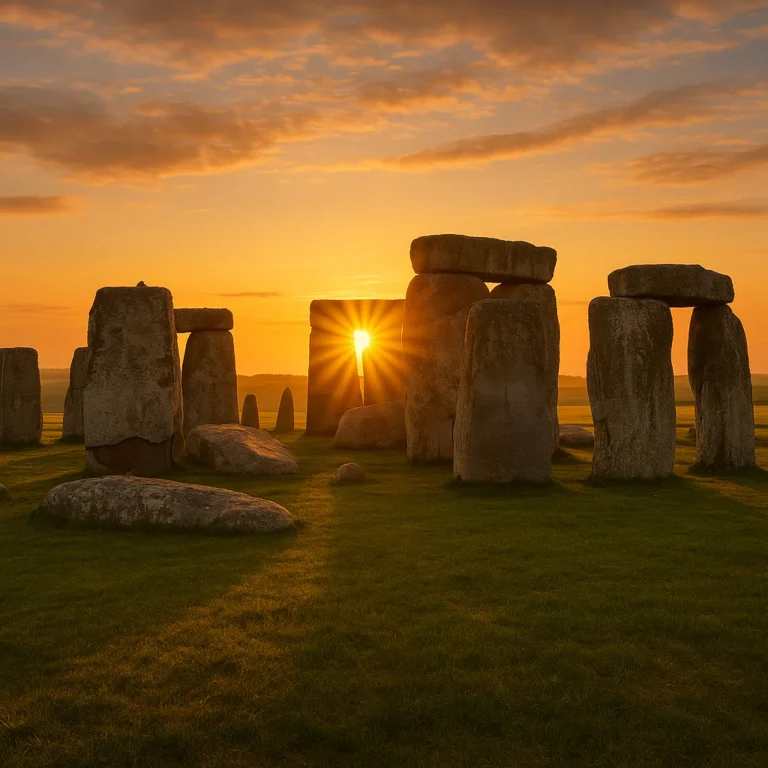
Stonehenge’s central axis is associated with the summer-solstice sunrise and winter-solstice sunset. This alignment is real and is one of the most striking features of the monument. It may have helped people mark seasonal change organize ceremonies around important points in the year.
But a solar alignment does not, by itself, prove that Stonehenge was primarily an observatory or a “calendar.” People can build a monument to face a meaningful horizon for ritual, symbolic, or practical reasons. The History article describes the solar-calendar idea as a theory; that is the right level of certainty. History’s discussion of astronomical theories offers a readable overview.
4. A Gathering Place for Communities
The effort required to build and maintain Stonehenge points to cooperation on a remarkable scale. Nearby Durrington Walls, with evidence of settlement and feasting, strengthens the case that this landscape hosted gatherings. People may have travelled to meet, share food, carry out ceremonies, or renew social ties.
This theory can sit alongside the others. A communal gathering might include honoring ancestors, marking the seasons, and strengthening relationships between groups. Ancient life rarely kept its categories as neatly separated as modern museum labels do.
5. A Healing Site for the Sick
Archaeologists Geoffrey Wainwright and Timothy Darvill proposed that Stonehenge may have been a prehistoric healing place. They highlighted evidence including human remains and the long-distance movement of bluestones, which may have held special significance to people who brought them from Wales.
Some bluestones can produce ringing sounds when struck, prompting further speculation about their perceived properties. The healing interpretation is intriguing, but the stones’ sound does not prove that people used them for healing. It is one hypothesis among several, not a settled archaeological finding. For the broader debate, see History’s summary of proposed purposes.
6. A Symbol of Power, Unity, or Political Authority
Organizing labor, transporting stone, and building a monument visible across generations may have helped communities express shared identity or authority. Some researchers have interpreted Stonehenge as a symbol of unity among groups in prehistoric Britain.
That idea has appeal, but it should not be turned into a story of a single king issuing orders. There is no evidence identifying one ruler, workforce, or political system responsible for the entire monument. The strongest point is more modest: Stonehenge required cooperation, and its construction likely mattered socially as well as practically.
Which Stonehenge Theory Has the Strongest Evidence?
The safest ranking separates direct evidence from interpretation:
| Interpretation | Evidence that supports it | Caution |
|---|---|---|
| Burial and funerary use | Cremated human remains at the site | Does not explain every phase or every stone setting |
| Ceremonial use | Monumental design, formal layout, long-term use | The specific ceremonies are unknown |
| Seasonal or solar significance | Alignment with solstice sunrise and sunset | Alignment does not prove the site was an observatory |
| Community gathering place | Nearby settlements, feasting evidence, monumental labor | Exact gatherings and participants remain uncertain |
| Healing place | Proposed connections between remains and bluestones | Evidence is suggestive, not conclusive |
| Political or social symbol | Scale and coordinated construction | No known ruler or political structure explains it |
Our evidence-led view: Stonehenge most likely combined ceremonial, funerary, and communal significance, with seasonal alignments shaping how people understood or used it. That conclusion is stronger than picking one theory and declaring the mystery solved.
🌞 Stonehenge and the Solstices: How the Sun Alignments Work
Stonehenge’s solstice connection is not just a modern tourist story. The monument’s main axis aligns broadly with the direction of the midsummer sunrise and midwinter sunset. What remains uncertain is the meaning people attached to that alignment.
Summer Solstice Sunrise
At the summer solstice, the sun rises at its northernmost point on the horizon. From the monument, the sunrise is associated with the Heel Stone and the avenue’s alignment. Crowds gather at Stonehenge for the event today, but modern celebrations should not be treated as a perfect reconstruction of Neolithic practice.
The alignment makes seasonal observation a plausible part of Stonehenge’s significance. It does not tell us whether people used it to count days, hold a ceremony, mark a festival, or express a religious idea—or some combination of those things. English Heritage’s Stonehenge visitor information explains contemporary access and events.
Winter Solstice Sunset
The monument’s principal alignment also relates to the midwinter sunset. The shortest day of the year may have carried particular importance to people whose lives depended closely on seasons, food, and weather.
Animal remains at nearby sites and the broader archaeological landscape have helped researchers investigate seasonal gatherings. Still, a winter ritual remains an interpretation, not a transcript of ancient ceremony. UNESCO’s account of the wider Stonehenge landscape places the monument in its broader setting.
Did Ancient Builders Understand Astronomy?
The builders clearly had enough observational knowledge to create a monument with meaningful solar alignments. That is not the same as proving they operated an advanced astronomical observatory or predicted complex celestial events.
| Claim | What we can say |
|---|---|
| Stonehenge aligns with the solstices | Supported by the monument’s orientation |
| The builders observed the sun’s seasonal movement | Plausible and consistent with the alignment |
| Stonehenge was a precise modern-style calendar | Not established by alignment alone |
| The builders possessed advanced astronomy beyond their contemporaries | Not demonstrated by the available evidence |
The featured video at the video’s anchor raises a useful caution: impressive engineering does not automatically mean the builders had mysterious or uniquely advanced technology. The same principle applies to astronomy. We can admire their observations without inventing evidence they left no trace of.
🧱 How Was Stonehenge Built? Stones, Tools, and Engineering
Stonehenge was built with extraordinary effort, but the engineering was human, not supernatural. Its construction involved selecting stone, moving it across difficult terrain, shaping it, raising it, and fitting components together with care. The exact methods remain debated—especially the routes and techniques used to transport some stones.
Sarsen Stones and Bluestones: What Are They?
The monument uses two broad categories of stone:
| Stone type | General description | Role at Stonehenge |
|---|---|---|
| Sarsen | Large, hard sandstone blocks, many sourced from the Marlborough Downs | Form the monumental outer circle and inner horseshoe |
| Bluestone | A broad archaeological label for several kinds of stone, including dolerite | Used inner settings and rearranged during the monument’s history |
The sarsens are the giants of the site; some are estimated to weigh around 25–30 tonnes. Bluestones are smaller, but their origins and transport routes remain a major research topic. English Heritage’s Stonehenge research and history pages summarize the different building phases.
Where Did Stonehenge’s Stones Come From?
Many sarsens are associated with the Marlborough Downs, about 25 kilometres north of Stonehenge. Several bluestones came from sources in west Wales, hundreds of kilometres away by modern road distance. That long-distance movement may have reflected practical, social, or symbolic importance—we cannot assume which.
Researchers continue to investigate whether stones were transported by people, moved naturally by glaciers, or reached the site through a combination of processes. The fact that stones came from distant sources is well established; the route and method are more contested. The Stonehenge construction mysteries article explores those open questions.
How Were the Stones Transported and Raised?
No single proven recipe survives, but archaeologists can develop plausible methods from the materials, terrain, and engineering evidence.
- Quarry or select the stone. Builders chose blocks and prepared them for movement.
- Move the stone over land or water. Sledges, ropes, timber trackways, or boats have been proposed for different stages. The evidence does not confirm one method for every stone.
- Prepare the setting. Workers dug sockets and shaped the ground to receive the stones.
- Raise the uprights. A combination of leverage, earth ramps, timber supports, and coordinated pulling has been proposed.
- Fit the lintels. Sarsen lintels were shaped and placed across uprights, using interlocking joints that helped keep them in position.
- Rearrange the monument over time. Some stones were moved or reset as the site changed.
| Construction question | What is reasonably supported | What remains uncertain |
|---|---|---|
| Were the stones shaped by people? | Yes, evidence of shaping and fitting is visible | The exact tools and work sequence |
| Did construction require coordinated labor? | Almost certainly | The size and organization of each work group |
| Were rollers used? | Often proposed as a possible technique | Whether they were used for particular stones |
| Were the Welsh bluestones transported entirely by people? | Long-distance movement is clear; human transport is a major explanation | The precise route and role of waterways or natural movement |
| Was magic or advanced lost technology necessary? | No evidence requires either explanation | The exact practical methods are still investigated |
A video may make a clever joke about “Levi-Slinky” magnetism, but that is not a credible archaeological explanation. The serious mystery is impressive enough: how did people coordinate such a project with stone-age technology? The answer is likely a mix of skilled planning, local knowledge, and substantial collective labor. See English Heritage for archaeological context.
What Stonehenge’s Construction Reveals About Neolithic Britain
Stonehenge tells us that prehistoric communities could plan major projects, work stone with skill, and maintain shared traditions over generations. It also suggests that people, materials, and ideas moved across significant distances.
What it doesn’t tell us by itself is whether a king commanded the work, whether every worker was a specialist, or whether construction happened as one continuous campaign. The monument’s phased development points instead to a long-lived project shaped by successive communities.
🗺️ Stonehenge in Its Wider Landscape
Stonehenge makes more sense when we stop treating it as an isolated circle. It belongs to a landscape of monuments, pathways, settlements, burial sites, and natural features that together show how people used and understood Salisbury Plain.
The Avenue, Durrington Walls, and Nearby Monuments
The Stonehenge Avenue connects the monument to the River Avon. Nearby, Durrington Walls was a large prehistoric settlement and ceremonial site; other features include the cursus and burial mounds. Archaeologists have proposed that movement between these places formed part of ritual activity.
The theory that Durrington Walls represented the living and Stonehenge the dead is influential, but it is not a proven ancient belief system. It is a way of interpreting the distribution of buildings, burials, and routes. Historic England’s Stonehenge landscape research is a strong source for exploring the complex.
Stonehenge and Avebury: A World Heritage Landscape
Stonehenge forms part of the Stonehenge, Avebury and Associated Sites UNESCO World Heritage property. The designation recognizes a wider collection of prehistoric monuments and landscapes, not just the famous stones.
| Place or feature | Why it matters |
|---|---|
| Stonehenge | Monumental stone settings and long archaeological history |
| Avebury | A vast henge and stone-circle complex |
| Durrington Walls | Evidence of settlement, feasting, and ceremonial activity |
| The River Avon and Avenue | A possible route linking monuments and landscape features |
| Burial mounds and earthworks | Evidence of sustained ceremonial and funerary activity |
UNESCO describes the property as an exceptional prehistoric landscape, while also showing why interpretations should consider multiple monuments together. Read the UNESCO World Heritage listing for the full site context.
🧑 🔬 What Archaeology Has Revealed About Stonehenge
Archaeology turns the mystery into a set of testable questions. Excavation, dating, scientific analysis of bones and stone, and landscape surveys have revealed how the monument changed and how people used its surroundings.
English Heritage’s history page links to studies on remodeling, burials, nearby settlements, and excavations. That range matters: no single dig or discovery supplies a complete answer. Explore English Heritage’s research references.
Human Remains, Burials, and Cremation Evidence
Human remains are central to the burial interpretation. Cremated remains were deposited at the site, and their presence demonstrates that Stonehenge had a funerary role during at least part of its history.
Researchers have also studied burials in the wider area, including the Amesbury Archer and Boscombe Bowmen. These individuals lived in later periods and should not be casually described as Stonehenge’s original builders. Their burials instead show that this part of Wiltshire remained important across changing communities. English Heritage’s history and research bibliography points readers toward studies of burials at Stonehenge and nearby sites.
Feasting, Farming, and Daily Life at Durrington Walls
Durrington Walls adds a human dimension to the monumental stones. Archaeological work has found evidence of houses and large-scale feasting, helping researchers picture people gathering in the landscape—not simply a mysterious workforce appearing to haul stones.
Feasting evidence can support the idea of seasonal or communal gatherings, but it cannot tell us exactly what people celebrated. Food remains reveal activity; meaning has to be interpreted carefully. This is where historians and archaeologists have to resist turning a plausible event into a confidently narrated ancient festival.
Recent Discoveries and New Research
New excavation and scientific techniques can change how researchers understand old finds. Stonehenge has been studied through excavations, landscape surveys, dating methods, and analysis of materials and remains. English Heritage’s bibliography includes research on the monument’s remodeling, excavations, and nearby archaeological discoveries. See the research references.
A useful rule when you encounter a dramatic “new discovery” headline:
- Check what was actually found.
- Separate the discovery from the interpretation attached to it.
- Look for a named research team or archaeological institution.
- Ask whether the finding changes the evidence, or only adds another possible explanation.
Archaeology is cumulative. One new result can sharpen a theory without proving the monument’s entire purpose.
🤔 What We Still Don’t Know About Stonehenge
Even after centuries of research, important questions remain open:
- What did the builders call the site? We do not know its Neolithic name.
- What beliefs shaped its design? No written account survives.
- Who organized the construction? The scale suggests cooperation, but no known leader or political system can be identified.
- How exactly were all the stones moved? Several methods are plausible; no complete transport record exists.
- Did its meaning change? The construction phases suggest change, but the details of each shift are uncertain.
- What happened at ceremonies? Burials and alignments are evidence of use, not a full description of ritual.
The most responsible answer to “Does anyone know why Stonehenge was built?” is therefore not yet, in a single definitive sense. Archaeologists can identify probable functions and test explanations. They cannot recover beliefs that left no direct record.
📜 Stonehenge Myths, Legends, and Popular Misconceptions
Stonehenge has inspired stories for centuries, and some are more memorable than the archaeology. Medieval writers associated the stones with Merlin and giants; modern pop culture has added aliens, lost technologies, and magical construction methods. These tales can be fun, but they belong to the history of how people imagined Stonehenge—not to evidence of who built it.
| Claim | What the evidence supports |
|---|---|
| Merlin moved the stones | A medieval legend, not a prehistoric construction record |
| Aliens built Stonehenge | No credible archaeological evidence supports this |
| The stones prove a lost super-technology | The monument shows skilled human engineering; no exotic technology is needed |
| Solstice alignment proves it was only an observatory | The alignment is real; its purpose remains open to interpretation |
| One theory explains every phase | The monument developed over a long period and may have served changing roles |
For the legends and stories, see History Hidden’s Folklore and Legends and Mythology Stories. For evidence-based history, compare those traditions with English Heritage’s archaeological overview.
🎟️ Visiting Stonehenge: Practical Tips for Your Trip
A visit can make the monument’s scale and landscape much easier to understand than any photograph. The visitor experience is managed by English Heritage, and access arrangements can vary by date, event, and ticket type. Check the official Stonehenge visitor page before travelling.
What to See at the Stonehenge Visitor Centre
The visitor centre offers exhibitions, archaeological interpretation, and context for the landscape. It is worth taking time there before heading to the stones: otherwise, it is easy to arrive, admire the famous view, and miss the evidence that makes the site fascinating.
A helpful visit sequence:
- Check current access and transport information on the official English Heritage page.
- Explore the exhibition to understand the building phases and the stone types.
- Look at the reconstructed Neolithic houses to picture life beyond the monument.
- Use the audio or interpretation material to connect individual stones with the archaeological story.
- Allow time for the surrounding landscape, not just the central circle.
Can You Touch or Walk Among the Stones?
For ordinary visits, visitors generally view the stones from a managed route and cannot wander freely among them. Special access arrangements may apply at certain times, including solstice events, but rules can change. Always verify current conditions with English Heritage.
The restrictions protect an ireplaceable monument. Please don’t climb, touch, or mark the stones when access rules prohibit it; a few seconds of souvenir contact can cause damage that lasts far longer than the visit.
Solstice Visits, Access, and Visitor Etiquette
Solstice gatherings draw visitors who come for the sunrise, sunset, or the atmosphere of a shared event. Access, facilities, transport, and rules may differ from a standard visit, so check official information rather than relying on an old social post. Start with the Stonehenge visitor page.
A few practical reminders:
- Plan transport early, especially for major events.
- Dress for exposed weather on Salisbury Plain.
- Follow staff instructions and site rules.
- Respect the monument and other visitors, including people observing the occasion for spiritual reasons.
- Keep folklore, modern ritual, and archaeological evidence distinct—all can be meaningful, but they are not the same kind of historical claim.
The stones do not give us a recorded explanation of their purpose. They do give us an extraordinary set of clues—and a good reason to keep asking careful questions.