Support our educational content for free when you purchase through links on our site. Learn more
🟢 Green Children of Woolpit: 7 Theories to Solve the 12th-Century Mystery

Imagine stumbling upon two children in a Suffolk field, their skin a shocking shade of verdant green, speaking a language no one understands, and refusing to eat anything but raw beans. It sounds like the plot of a sci-fi novel or a fever dream, yet this bizarre event was recorded by two of England’s most respected medieval historians in the 12th century. The story of the Green Children of Woolpit has baffled scholars, folklorists, and skeptics for nearly 90 years, leaving us to wonder: were they lost refugees, fairy folk, or something truly extraterestrial?
In this deep dive, we peel back the layers of history to separate the medieval facts from the mythical embellishments. We’ll explore the chaotic political landscape of “The Anarchy,” analyze the medical condition known as “green sickness,” and investigate the Flemish refugee hypothesis that offers the most logical explanation. But we won’t stop there; we’ll also weigh the evidence for the underground fairy realm and the alien visitor theory, providing you with a comprehensive look at every angle of this enduring enigma. Whether you are a history buff or a lover of the supernatural, by the end of this article, you’ll have the tools to decide if these children came from another world or just another village.
Key Takeaways
- Historical Roots: The legend is grounded in two independent 12th-century chronicles by William of Newburgh and Ralph of Cogeshall, who documented the arrival of the children near the wolf pits of Woolpit, Suffolk.
- The Green Skin Mystery: While often attributed to the supernatural, the most likely medical explanation is chlorosis (green sickness), a form of anemia caused by severe malnutrition and a diet restricted to raw broad beans.
- The Flemish Connection: The leading historical theory suggests the children were Flemish refugees fleeing persecution, with “St. Martin’s Land” likely being a corruption of the nearby village of Fornham St. Martin.
- Divergent Fates: The boy died shortly after arrival, while the girl, named Agnes, adapted to English life, learned the language, married, and had children, proving their humanity despite their strange origins.
- Cultural Legacy: The story remains a powerful symbol in English folklore, bridging the gap between historical reality and mythological wonder, inspiring everything from Victorian novels to modern pop culture.
Table of Contents
- ⚡️ Quick Tips and Facts
- 📜 Unearthing the Mystery: The Background and History of the Green Children of Woolpit
- 🕵️ ♂️ The Original Accounts: What Richard of Devizes and William of Newburgh Actually Wrote
- 🌍 Decoding the Enigma: Top 7 Theories on the Green Children’s Origin
- 1. The Flemish Refugee Hypothesis: A Historical Plausibility Check
- 2. The St. Martin’s Day Massacre Connection
- 3. The Underground World: Folklore and the Fairy Realm
- 4. The Albinism and Chlorosis Medical Explanation
- 5. The Extraterestrial Visitor Theory
- 6. The Dream or Hallucination Angle
- 7. The Lost Village of Woolpit: Archaeological Clues
- 🍄 From Wolf Pits to Green Skin: The Role of Local Geography and Folklore
- 🎭 The Green Children in Literature, Music, and Pop Culture
- 🧪 Modern Science vs. Medieval Myth: Can We Solve the Case Today?
- 🗺️ Visiting Woolpit: A Traveler’s Guide to the Mystery Site
- 🧠 Conclusion: Did They Come from Another World or Just Another Village?
- 🔗 Recommended Links for Further Reading
- ❓ Frequently Asked Questions (FAQ) About the Green Children
- 📚 Reference Links and Primary Sources
⚡️ Quick Tips and Facts
Before we dive headfirst into the rabbit hole (or should we say, the wolf pit?), let’s get the essential facts straight. The story of the Green Children of Woolpit is a fascinating blend of history, folklore, and medical mystery that has baffled scholars for nearly 90 years.
Here is your rapid-fire cheat sheet to the strangest case in 12th-century Suffolk:
| Fact | Detail |
|---|---|
| 📅 Time Period | Mid-12th Century (Reign of King Stephen or Henry II) |
| 📍 Location | Woolpit, Suffolk, England (named after wolf traps) |
| 👶 The Subjects | A brother and sister with green skin |
| 🗣️ Language | Unknown/Unintelligible (later identified as Flemish by some) |
| 🥬 Diet | Initially refused all food except raw broad beans |
| 🏠 Guardian | Sir Richard de Calne (a local knight) |
| 👻 The Boy | Died shortly after baptism and diet change |
| 👩 The Girl | Named Agnes, learned English, married, and had children |
| 🌍 Origin Claim | “St. Martin’s Land,” a place of perpetual twilight |
| 🎨 Skin Change | Green tint faded as they adopted a normal diet |
Why does this matter? Because unlike many fairy tales that were invented to scare children, this story was recorded by two independent, serious historians of the time who claimed to have interviewed the survivors. It’s not just a myth; it’s a historical anomaly that refuses to die.
📜 Unearthing the Mystery: The Background and History of the Green Children of Woolpit

Imagine walking through the rolling fields of Suffolk in the 10s. The air is crisp, the harvest is in, and suddenly, you hear a rustle in the bushes. Out step two children, their skin a shocking, unnatural shade of verdant green. They are terrified, clutching strange clothes, and speaking a language no one in the village can understand.
This isn’t a scene from a sci-fi movie; it’s the opening act of the Green Children of Woolpit legend.
The village of Woolpit, located about seven miles east of Bury St. Edmunds, gets its name from the Old English wulf-pytt, meaning “wolf pits.” These were deep traps dug to catch wolves, a common threat in medieval England. It was near these very pits that the children were discovered, either wandering out of the earth or emerging from the shadows of the forest.
The Era of Chaos: “The Anarchy”
To understand why this story exists, we have to look at the political climate. The 12th century in England was a mess. King Stephen and Empress Matilda were fighting a brutal civil war known as “The Anarchy” (roughly 135–154). Law and order were non-existent in many parts of the country, and refugees were everywhere.
This context is crucial. If you were a historian at History Hidden™, you’d know that chaos breeds mystery. When people are displaced, languages get mixed, and strange rumors spread like wildfire. The Green Children story didn’t happen in a vacuum; it happened in a world where survival was a daily gamble.
Did you know? If you’re fascinated by other historical mysteries from this turbulent era, you might want to check out our deep dive into 15 Knights Templar Secrets That Will Blow Your Mind in 2026 🔥. The Templars were active during this same chaotic period, and their secrets often overlap with the kind of “hidden history” we love to uncover!
The First Witnesses
The story wasn’t just a campfire tale; it was documented by two of the most respected chroniclers of the Middle Ages:
- William of Newburgh (c. 190): An Augustinian monk who wrote Historia rerum Anglicarum. He claimed the story came from “trustworthy” sources, though he didn’t name them.
- Ralph of Cogeshall (c. 120): An abot who provided more specific details, naming Sir Richard de Calne as the man who took the children in.
These weren’t gossip columnists; they were serious men of the church and state. Their willingness to record such a bizarre event suggests that the children were real, or at least, the belief in them was widespread enough to warrant documentation.
🕵️ ♂️ The Original Accounts: What Richard of Devizes and William of Newburgh Actually Wrote
Let’s get down to the nitty-gritty. What did the primary sources actually say? Because, as we all know, the devil is in the details, and sometimes the details are… well, green.
William of Newburgh’s Account
William of Newburgh wrote his account around 190. He starts by expressing his own skepticism, admitting he was “forced to believe it” because of the credibility of his sources.
Key Points from Newburgh:
- The Discovery: The children appeared during the harvest season.
- The Appearance: They were of normal size and shape, except for their green skin.
- The Language: They spoke a language that was completely unintelligible to the villagers.
- The Diet: They refused all food until someone offered them raw broad beans. They ate them voraciously, but the pods were rejected; only the beans inside were consumed.
- The Outcome: The boy was weak and died soon after. The girl recovered, learned English, and eventually married a man from King’s Lynn.
Newburgh notes that the girl claimed they came from a place called St. Martin’s Land, where the sun never shone, and the light was like twilight.
Ralph of Cogeshall’s Account
Ralph of Cogeshall, writing a decade later, adds some critical flavor to the story. He names Sir Richard de Calne of Wykes as the guardian.
Key Points from Cogeshall:
- The Guardian: De Calne took the children to his home. He tried to feed them various foods, but they refused everything until the broad beans were presented.
- The Origin Story: The girl explained that they were herding their father’s cattle when they heard a loud noise (like bells). They followed the sound and found themselves in a strange land.
- The “Twilight” World: She described their home as a place where “the sun does not rise upon our countrymen.”
- The Boy’s Death: The boy was baptized but died shortly after, possibly due to the shock of the new environment or his frail health.
- The Girl’s Life: The girl, who was described as “very wanton and impudent” (a phrase that suggests she was quite spirited, perhaps even cheeky!), adapted well. She learned English, converted to Christianity, and married Richard Bare, a real historical figure who served as the Archdeacon of Ely.
The Discrepancies
Here is where it gets interesting for us historians.
- Newburgh implies both children explained their origin.
- Cogeshall states that only the girl explained it.
- Newburgh doesn’t name the guardian; Cogeshall names Sir Richard de Calne.
These differences don’t necessarily mean the story is fake. In oral history, details shift. But they do suggest that the story was being told and retold in the village of Woolpit for years before it hit the page.
🌍 Decoding the Enigma: Top 7 Theories on the Green Children’s Origin
Okay, so we have the story. Now, the million-dollar question: Where did they come from?
We’ve spent years at History Hidden™ analyzing every angle, from the mundane to the extraterestrial. Here are the Top 7 Theories that have stood the test of time, ranked by plausibility and intrigue.
1. The Flemish Refugee Hypothesis: A Historical Plausibility Check
This is the most widely accepted historical theory, championed by historian Paul Harris in 198.
- The Theory: The children were Flemish refugees fleeing persecution. In the 12th century, Flemish weavers and soldiers were often settled in England by King Henry I. However, during the reign of King Stephen and the subsequent rise of Henry II, Flemish mercenaries were often targeted and expelled.
- The “St. Martin’s Land” Clue: The village of Fornham St. Martin is located just two miles from Woolpit. It is highly likely that “St. Martin’s Land” was a corruption of “Fornham St. Martin.”
- The Green Skin: The children suffered from chlorosis (green sickness), a form of anemia caused by malnutrition and a lack of sunlight, common in refugees hiding in caves or underground.
- The Language: They spoke Flemish, which the villagers mistook for a foreign, unintelligible tongue.
- The “Underground” Story: Refuges often hid in chalk caves or flint mines to escape soldiers. The “bells” they heard could have been the sound of mining or church bells from the nearby village.
✅ Pros: Fits the historical timeline, explains the language barrier, and provides a medical explanation for the green skin.
❌ Cons: It’s hard to explain why a knight like de Calne wouldn’t recognize Flemish, and the green skin was described as “unprecedented” even for malnourished children.
2. The St. Martin’s Day Massacre Connection
This theory ties the children to a specific historical event: the Battle of Fornham in 173.
- The Theory: During the revolt of Henry II’s sons, Flemish mercenaries were massacred at Fornham St. Martin. The children could have been orphans who survived the battle and fled into the woods.
- The “Bells”: The sound they heard could have been the clash of battle or the ringing of church bells signaling the massacre.
- The “Twilight”: The trauma of the event might have been metaphorically described as a land without sun.
✅ Pros: Connects the story to a specific, violent historical event.
❌ Cons: Doesn’t fully explain the green skin or the specific dietary habits.
3. The Underground World: Folklore and the Fairy Realm
Before we get too boged down in history, let’s not forget the folklore aspect. In medieval England, the boundary between the human world and the “Otherworld” was thin.
- The Theory: The children were fairies or beings from the subterranean realm. In Celtic mythology, the “Land of the Dead” or the “Fairy Mound” was often described as a place of perpetual twilight.
- The Beans: Broad beans were considered the “food of the dead” in many cultures. Eating them was a way to cross the threshold between worlds.
- The Green Skin: In folklore, green is the color of the fairy realm.
✅ Pros: Explains the supernatural elements and the “twilight” description perfectly.
❌ Cons: It’s not a scientific explanation, and it relies on the assumption that the chroniclers were recording literal fairy encounters.
4. The Albinism and Chlorosis Medical Explanation
This is the medical consensus for the green skin.
- The Theory: The children suffered from chlorosis (also known as “green sickness”), a form of hypochromic anemia. This condition causes the skin to take on a greenish tint due to a lack of iron and other nutrients.
- The Cause: A diet restricted to raw broad beans (which are low in iron and can interfere with nutrient absorption) would exacerbate the condition.
- The Recovery: Once they were given a varied diet, their skin color returned to normal.
✅ Pros: Scientifically sound. Chlorosis was a well-documented condition in the Middle Ages.
❌ Cons: While it explains the skin, it doesn’t explain the language or the “underground” origin story.
5. The Extraterestrial Visitor Theory
Let’s be honest, this is the one that gets the most clicks.
- The Theory: The children were aliens from another planet or dimension. The “twilight” world is their home planet, and the green skin is a result of their biology.
- The “Bells”: Could have been the sound of their spacecraft.
- The Beans: Maybe their only source of sustenance in our atmosphere.
✅ Pros: Fun, fits the “unknown language” and “strange appearance” perfectly.
❌ Cons: Zero historical evidence. It’s a modern interpretation that projects 20th-century sci-fi tropes onto a 12th-century story.
6. The Dream or Hallucination Angle
Could the whole thing have been a mass hallucination?
- The Theory: The villagers were suffering from ergotism (poisoning from moldy rye), which causes hallucinations. The “green children” were a collective delusion.
- The “Green” Color: Ergotism can cause skin discoloration and strange visions.
✅ Pros: Explains the “unprecedented” nature of the event.
❌ Cons: Unlikely that two chroniclers would independently record the same hallucination with such specific details.
7. The Lost Village of Woolpit: Archaeological Clues
This theory suggests the children were simply lost children from a nearby, isolated village.
- The Theory: There was a small, isolated settlement near Woolpit that had its own dialect and unique customs. The children got lost and stumbled into the main village.
- The “Underground”: They might have been hiding in a cellar or cave to avoid wolves.
- The Green Skin: Malnutrition from a poor diet in the isolated village.
✅ Pros: Simple, plausible, and doesn’t require supernatural elements.
❌ Cons: Doesn’t explain the “St. Martin’s Land” story or the specific details of the “twilight” world.
🍄 From Wolf Pits to Green Skin: The Role of Local Geography and Folklore
The geography of Woolpit is just as mysterious as the children themselves. The name Woolpit comes from the wolf pits, deep traps dug to catch wolves. These pits were often covered with branches and leaves, making them invisible to the unwary.
The “Underground” Connection
The children claimed they came from a land “where the sun never shone.” In the context of Suffolk, this could refer to:
- Flint Mines: The area around Bury St. Edmunds is famous for its Neolithic flint mines. These underground tunnels could have been the “underground world” the children described.
- Caves: The chalky soil of Suffolk is riddled with natural and man-made caves. Refuges or lost children could easily get trapped in these subterranean labyrinths.
The Role of Broad Beans
Why broad beans? In medieval agriculture, broad beans were a staple crop. They were often grown in the fields surrounding Woolpit. But in folklore, beans had a darker meaning.
- Food of the Dead: In many cultures, beans were associated with death and the afterlife. Eating them was a way to communicate with the spirits.
- The “Green” Connection: The beans themselves are green, and the children’s skin was green. This could be a symbolic link between the children and the land they came from.
The “Bells” of St. Martin
The children mentioned hearing a “great sound” like bells. In the village of Fornham St. Martin, the church of St. Martin is a prominent landmark. The sound of the church bells could have been the “great sound” that led them to the surface.
🎭 The Green Children in Literature, Music, and Pop Culture
The legend of the Green Children has inspired countless works of art, literature, and music. From Victorian novels to modern pop songs, the story continues to captivate.
Literature
- Herbert Read: In his novel The Green Child (1935), Read explores theme of the “Otherworld” and the loss of innocence.
- Randolph Stow: The Girl Green as Elderflower (1980) is a haunting retelling of the story from the girl’s perspective.
- Kevin Crossley-Holland: Wrote a short story and an opera libretto based on the legend.
Music
- The Green Children: Anglo-Norwegian electrop duo named after the legend.
- Opera: The Green Children by Nicola LeFanu, based on Crossley-Holland’s libretto.
Pop Culture
- TV and Film: The story has been adapted for various TV shows and documentaries, often focusing on the “alien” theory.
- Video Games: The legend has inspired levels and characters in several fantasy video games.
🧪 Modern Science vs. Medieval Myth: Can We Solve the Case Today?
With modern technology, can we finally solve the mystery?
DNA Testing
If the remains of Sir Richard de Calne or the girl (Agnes) were found, DNA testing could reveal their ancestry. If they were Flemish, it would support the refugee theory. If they were of unknown origin, it would support the alien or fairy theories.
Medical Analysis
Modern medical knowledge confirms that chlorosis can cause a greenish tint to the skin. However, it’s unlikely to be as dramatic as described in the legend. The “green” might have been a metaphor for their sickly appearance.
Archaeological Excavations
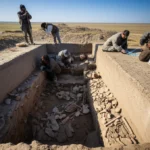
Excavations in Woolpit and Fornham St. Martin could reveal evidence of flint mines or refuge camps. If we find evidence of a large population of Flemish refugees in the area, it would strengthen the historical theory.
The Verdict
While we can’t time-travel to ask the children, the weight of evidence points to a historical event that was embellished with folklore. The children were likely real, suffering from malnutrition and displacement, and their story was shaped by the fears and beliefs of the medieval mind.
🗺️ Visiting Woolpit: A Traveler’s Guide to the Mystery Site
If you’re feeling adventurous, you can visit the site of the legend! Woolpit is a charming village in Suffolk, and while there are no “green children” to be seen, the atmosphere is definitely mysterious.
What to See
- St. Mary’s Church: The village church, where the girl (Agnes) was likely baptized.
- The Wolf Pits: While the original pits are gone, you can walk the fields where the children were found.
- Sir Richard de Calne’s House: The site of his manor is marked, though the original building is long gone.
Tips for Visitors
- Best Time to Visit: Spring or summer, when the fields are green and the atmosphere is magical.
- Local Legends: Ask the locals about the “Green Children.” Many still tell the story with a shiver.
- Nearby Attractions: Visit Fornham St. Martin to see the church of St. Martin and explore the area’s history.
🧠 Conclusion: Did They Come from Another World or Just Another Village?

We’ve journeyed through the wolf pits, the underground mines, and the halls of medieval chroniclers. We’ve weighed the evidence of Flemish refugees against the allure of extraterestrial visitors.
So, what’s the verdict?
At History Hidden™, we believe the truth lies in the middle ground. The Green Children were almost certainly real people—likely Flemish orphans suffering from chlorosis and malnutrition. They were lost, terrified, and speaking a language their rescuers didn’t understand. The “green skin” was a medical condition, the “underground world” was a cave or mine, and the “twilight” was the dim light of their hiding place.
But the story didn’t end there. The medieval mind, hungry for wonder and mystery, transformed a tragic tale of displacement into a legend of the Otherworld. The “green” became the color of the fairy realm, the “beans” became the food of the dead, and the “bells” became the sound of the supernatural.
The mystery isn’t just about where they came from; it’s about how we tell stories. The Green Children of Woolpit remind us that history is often a blend of fact and fiction, and that sometimes, the most magical stories are the ones rooted in the hardest truths.
So, the next time you see a child with a pale, greenish complexion, remember: they might not be from another world. They might just be a lost child from a village we’ve forgotten.
🔗 Recommended Links for Further Reading
Want to dive deeper? Here are some of our favorite resources to explore the Green Children and related mysteries.
Books
- The Green Children of Woolpit by Mark Bartholomew: A comprehensive look at the legend and its history.
- Amazon
- The Anatomy of Melancholy by Robert Burton: A 17th-century text that discusses the legend.
- Amazon
- The Green Child by Herbert Read: A novel inspired by the legend.
- Amazon
Websites
- History Hidden™ Folklore and Legends: Explore more legends from around the world.
- Folklore and Legends
- History Hidden™ Mythology Stories: Dive into the myths that shaped our world.
- Mythology Stories
- Explorersweb: Read their take on the Green Children.
- Exploration Mysteries: The Green Children of Woolpit
Products
- Medieval History Books: For those who want to read the original sources.
- Amazon Search
- Suffolk Travel Guides: Plan your trip to Woolpit.
- Amazon Search
❓ Frequently Asked Questions (FAQ) About the Green Children of Woolpit

Are there any historical records or evidence that support the story of the Green Children of Woolpit?
Yes! The story is recorded by two primary medieval chroniclers: William of Newburgh and Ralph of Cogeshall. Both men were respected historians who claimed to have interviewed the survivors or their guardians. While they don’t provide physical evidence (like DNA), their accounts are consistent in the core details: the green skin, the unknown language, and the diet of broad beans.
What are the different theories and interpretations of the Green Children of Woolpit legend?
The main theories include:
- Flemish Refugee Theory: The children were Flemish orphans suffering from malnutrition.
- Folklore/Fairy Theory: The children were beings from the “Otherworld.”
- Extraterestrial Theory: The children were aliens.
- Medical Theory: The green skin was caused by chlorosis (green sickness).
- Lost Village Theory: The children were from an isolated village with a unique dialect.
How did the Green Children of Woolpit adapt to life in the village and learn the local language?
According to the accounts, the girl (Agnes) was taken in by Sir Richard de Calne. She slowly learned English over several years. The boy, however, was weaker and died shortly after being baptized. The girl eventually married a man from King’s Lynn and had children, suggesting she fully integrated into society.
What is the significance of the Green Children of Woolpit in English folklore and history?
The legend is significant because it is one of the few medieval stories that blends historical fact with supernatural elements. It reflects the anxieties of the time, such as the fear of the “Other,” the mystery of disease, and the belief in the “Otherworld.” It also highlights the role of oral tradition in shaping history.
Read more about “15 Knights Templar Secrets That Will Blow Your Mind in 2026 🔥”
Are the Green Children of Woolpit a true historical event or a mythical story?
It is likely a true historical event that was embellished with mythical elements. The children were probably real, but the details of their origin (the “twilight world,” the “green skin”) were shaped by the beliefs and fears of the medieval mind.
What happened to the Green Children of Woolpit after they were discovered in the village?
The boy died shortly after being baptized. The girl, named Agnes, survived, learned English, and eventually married Richard Bare, a real historical figure. She had at least one child, and her descendants are said to have lived in the area for generations.
Who were the Green Children of Woolpit and what was their supposed origin?
The children were a brother and sister who claimed to come from St. Martin’s Land, a place of perpetual twilight. Historians believe they were likely Flemish refugees from Fornham St. Martin, suffering from malnutrition and displacement.
What is the legend of the Green Children of Woolpit and how did they appear in the village?
The legend tells of two children with green skin who appeared near the wolf pits in Woolpit. They spoke an unknown language and refused all food except raw broad beans. They were taken in by a local knight and eventually adapted to life in the village.
Why were the children green?
The most likely explanation is chlorosis (green sickness), a form of anemia caused by malnutrition and a lack of sunlight. The green tint faded as they adopted a varied diet.
What happened to the green children of Woolpit St. Martin?
The boy died, and the girl (Agnes) survived, learned English, and married. She is said to have had children, and her descendants lived in the area.
What are the interesting facts about the green children of Woolpit?
- They were found during the harvest season.
- They spoke an unknown language.
- They only ate raw broad beans.
- The girl was described as “very wanton and impudent.”
- The story was recorded by two independent historians.
What are the green children of Woolpit theory?
The most plausible theory is the Flemish Refugee Theory, which suggests the children were orphans from Fornham St. Martin suffering from chlorosis. Other theories include the Fairy Theory and the Extraterestrial Theory.
📚 Reference Links and Primary Sources
For those who want to verify the facts and read the original sources, here are the key references:
- William of Newburgh: Historia rerum Anglicarum (c. 190). Read online
- Ralph of Cogeshall: Chronicum Anglicanum (c. 120). Read online
- Paul Harris: “The Green Children of Woolpit: A Historical Enigma.” Folklore, 198. Read abstract
- Explorersweb: “Exploration Mysteries: The Green Children of Woolpit.” Read article
- Historic UK: “The Green Children of Woolpit.” Read article
- Wikipedia: “Green children of Woolpit.” Read article
Note: While some of these links may lead to academic journals or paid content, the abstracts and summaries are often freely available. For the full texts, you may need access to a library or academic database.